

Introduction
Living in a tiny home comes with its unique set of challenges, particularly when it comes to storage. Every square inch matters, and finding creative ways to organize your belongings becomes essential rather than optional. That’s where loft spaces come in as absolute game-changers. In my years of tiny home living and design consulting, I’ve found that **loft storage ideas** can transform what might seem like awkward overhead spaces into functional storage powerhouses.
When I first moved into my 400-square-foot tiny home, I was overwhelmed by how quickly my belongings seemed to fill the space. It wasn’t until I looked up and recognized the untapped potential above me that I truly began to maximize my living area. Today, I’ll share six proven **loft storage ideas** that have not only worked for me but have helped dozens of my clients reclaim their tiny spaces.
1. Install Built-in Shelving
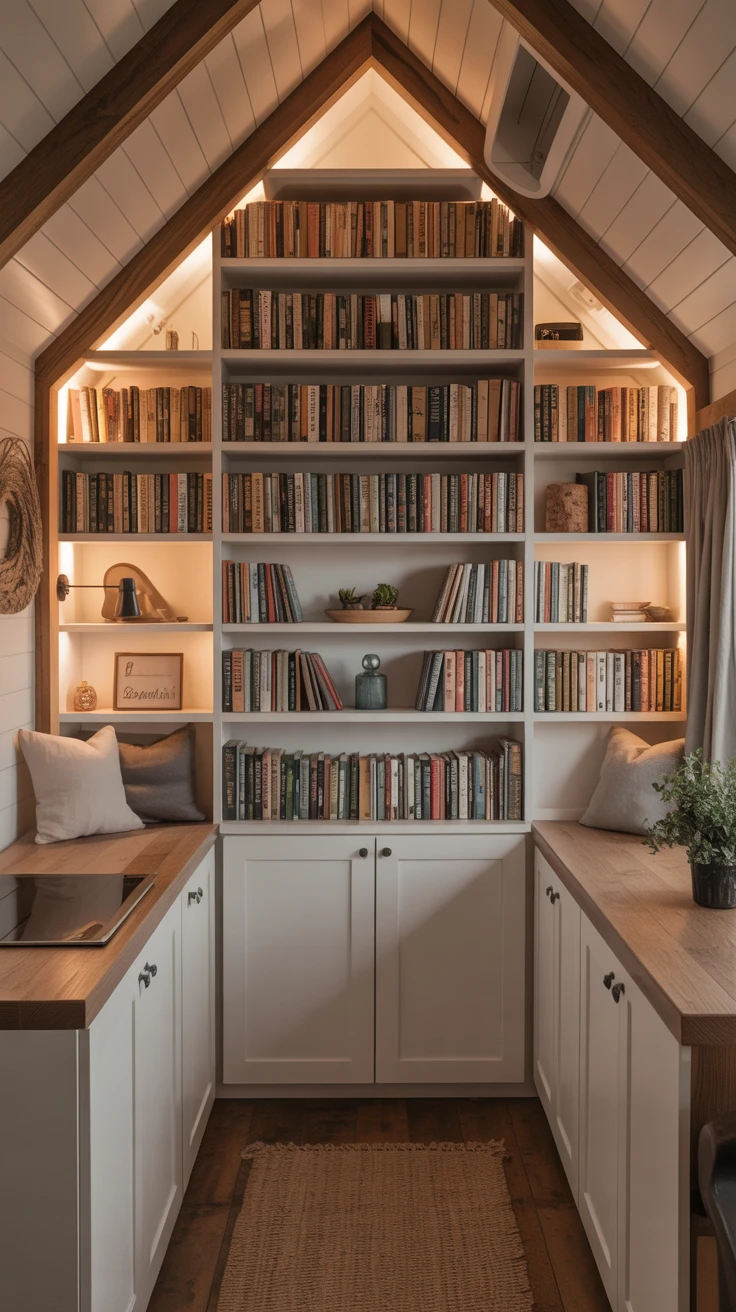
Built-in shelving transformed my loft from a cluttered catch-all space to an organized storage haven. Unlike standalone furniture that can make small spaces feel cramped, built-ins utilize existing wall space without encroaching on your precious floor area.
When designing built-in shelving for your loft, consider following the natural contours of your ceiling. I initially made the mistake of installing uniform shelving, only to realize that the sloped ceiling space could have been better utilized with graduated shelf depths.
- Custom bookshelves that follow roof angles maximize otherwise unusable space
- Wall-mounted cabinets with doors keep items dust-free and create a cleaner look
- Corner shelving units take advantage of often-wasted corner spaces
- Recessed shelving between wall studs creates storage without protruding into the room
Pro Tip: When designing built-ins for your loft, leave at least 18 inches of headroom above your bed or seating area. I learned this the hard way after bumping my head repeatedly on shelves that were installed too low!
2. Use Multi-functional Furniture
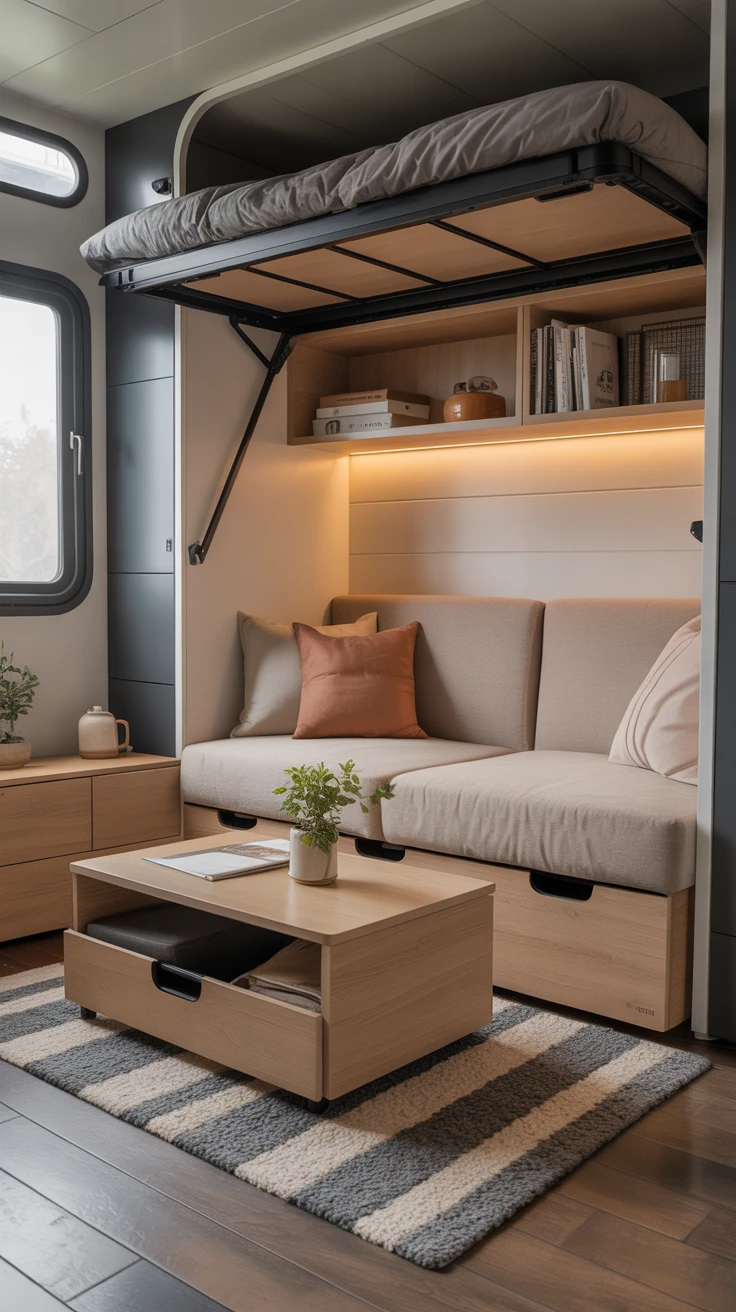
In tiny home lofts, furniture that serves only one purpose is a luxury you can rarely afford. Multi-functional pieces have become the backbone of my tiny home design philosophy after years of trial and error.
My favorite loft transformation involved replacing a standard bed frame with a platform bed featuring built-in drawers. This single change added nearly 20 cubic feet of storage without sacrificing any floor space. The key is thinking beyond traditional furniture categories and focusing instead on how each piece can pull double or even triple duty.
- Storage ottomans that serve as seating, tables, and storage containers
- Sofa beds with integrated storage drawers underneath
- Headboards with built-in shelving or cabinet space
- Coffee tables with lift-tops that reveal storage compartments
Pro Tip: Choose furniture with hidden compartments that don’t immediately read as “storage.” My guests are always surprised when I pull extra bedding from what appears to be a decorative bench at the foot of my loft bed.
3. Incorporate Hanging Storage Solutions
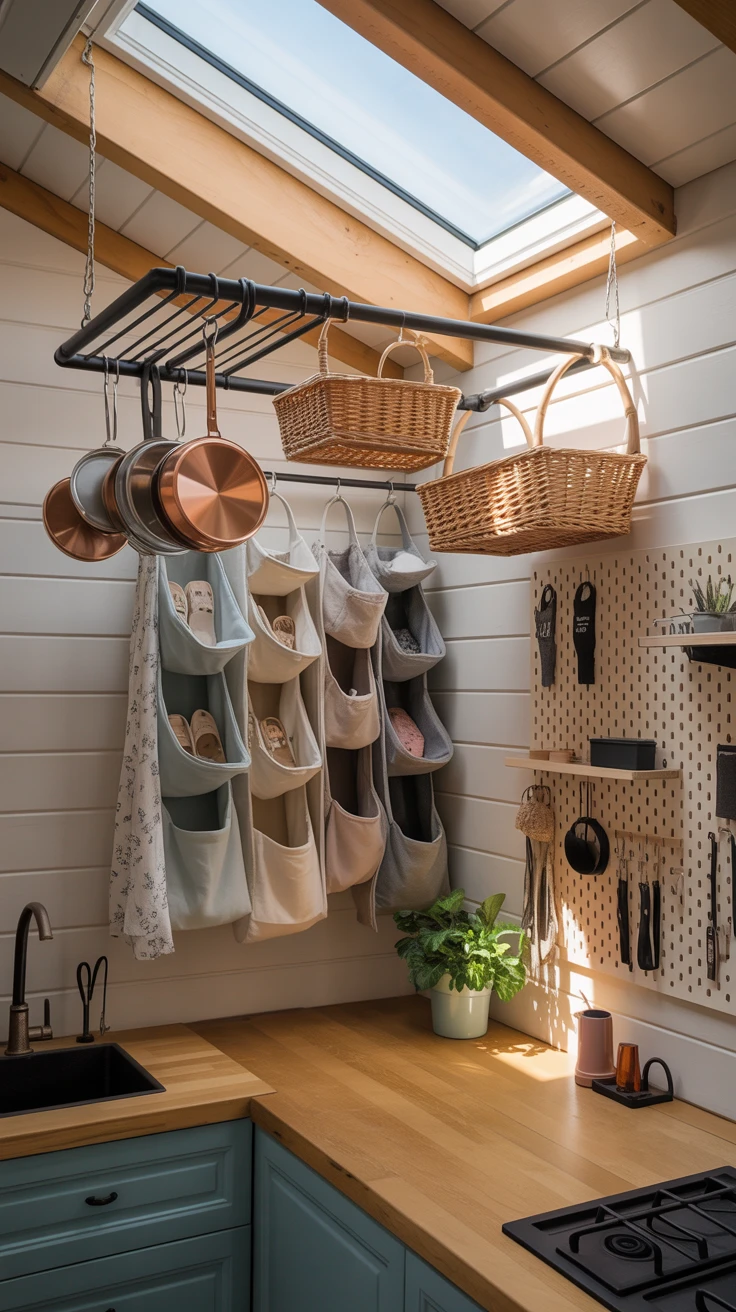
One of the most underutilized aspects of **loft storage** is the ceiling space. When floor and wall space are at a premium, looking up can reveal a wealth of storage opportunities. I’ve found that hanging storage solutions are particularly effective for items you need accessible but not necessarily on display.
After struggling with limited kitchen storage, I installed a hanging pot rack in my loft’s small kitchenette area. Not only did this free up an entire cabinet, but it also added a charming, professional look to the space. The key is ensuring your ceiling can support the weight and that items are hung at a height that doesn’t interfere with movement.
- Hanging fabric organizers for shoes, accessories, or toiletries
- Ceiling-mounted racks for cookware or sporting equipment
- Suspended baskets for lightweight items like linens or clothing
- Wall-mounted pegboards with hooks for frequently used tools or accessories
Pro Tip: Always check the weight capacity of your ceiling joists before installing hanging storage. I once had a basket system come crashing down because I overestimated what my drywall anchors could support!
4. Optimize Vertical Space
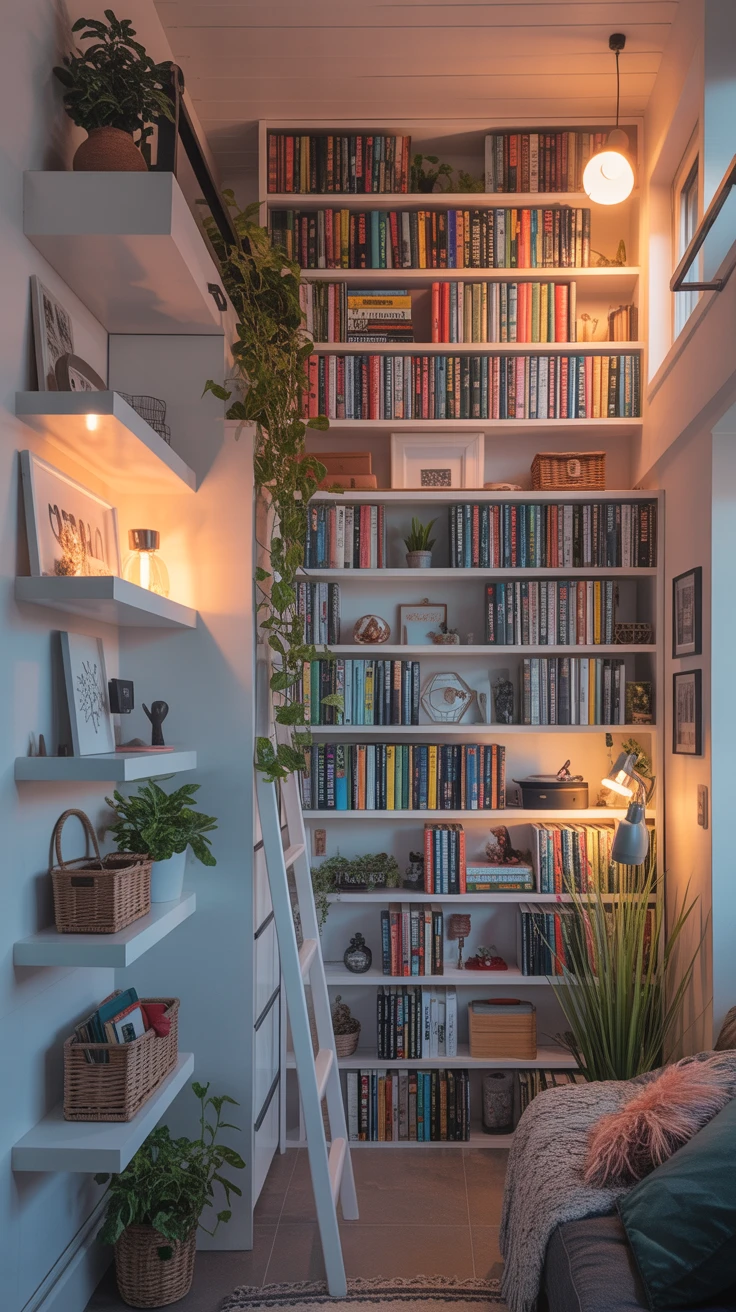
In lofts, vertical space is often abundant but underutilized. The wall height in my tiny home loft became my secret weapon for creating storage without making the space feel cluttered. Thinking vertically changed my entire approach to tiny home organization.
I remember the revelation I had when I replaced several small bookshelves with one floor-to-ceiling unit. Not only did it actually provide more storage, but it also made my ceiling appear higher and created a focal point that drew the eye upward, making the entire space feel larger.
- Floor-to-ceiling bookshelves that maximize wall height
- Tiered wall shelving that creates a visual ladder effect
- Staggered floating shelves that add dimension while providing storage
- Vertical file organizers for documents and magazines
Pro Tip: Place items you use less frequently on higher shelves and everyday items at eye level or below. I organize my bookshelves with decorative items at the top, books at eye level, and storage bins for less attractive necessities at the bottom.
5. Utilize Under-bed Storage
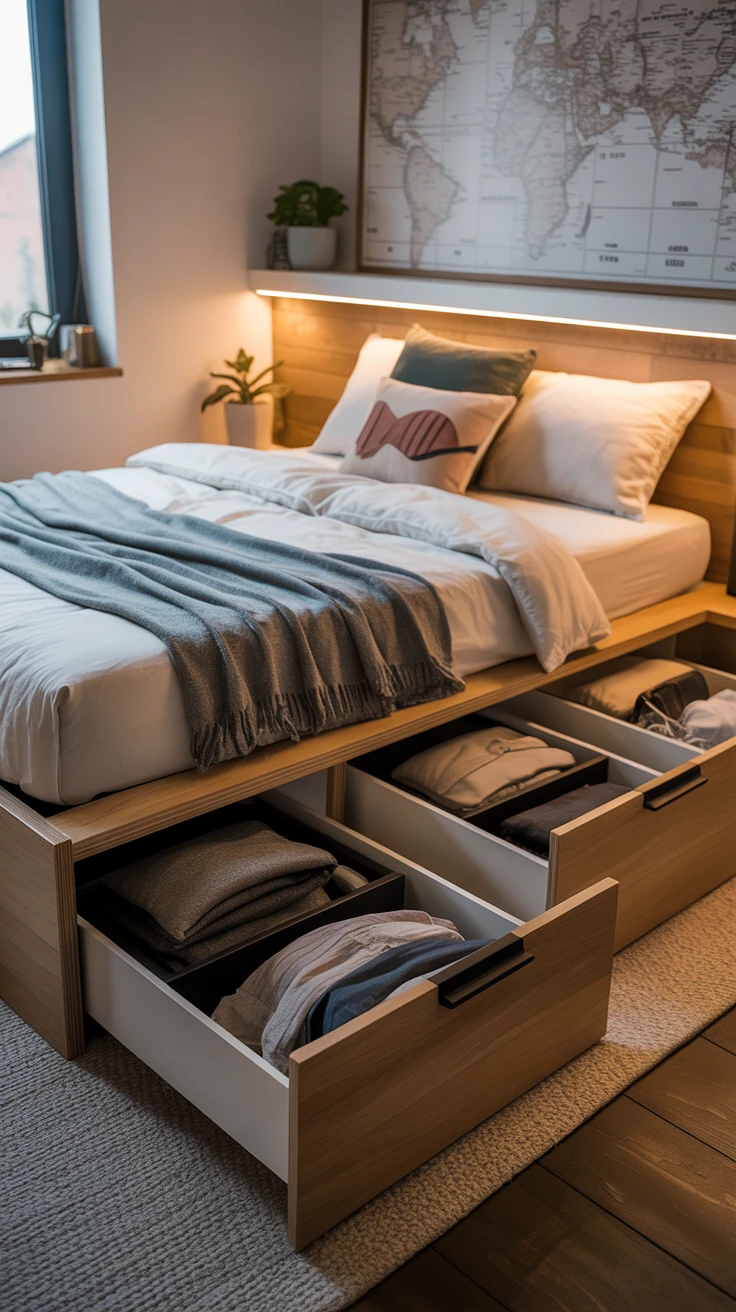
The space under your bed represents some of the most valuable real estate in a tiny home loft. When I realized how much potential storage area I was wasting beneath my mattress, it revolutionized my approach to loft organization.
Initially, I simply shoved plastic containers under my bed, creating an unsightly jumble that was difficult to access. After upgrading to a purpose-built storage bed, I gained organized, easily accessible storage that didn’t detract from the aesthetic of my loft space.
- Platform beds with integrated drawers for seamless storage
- Hydraulic lift beds that provide access to the entire under-bed area
- Custom-sized rolling bins that maximize the available space
- Vacuum-sealed bags for seasonal clothing or bedding
Pro Tip: Categorize under-bed storage by season or frequency of use, and create a map of what’s stored where. This saves you from having to pull everything out when you need just one item—a lesson I learned after emptying my entire under-bed storage to find a single sweater!
6. Implement Modular Storage Systems
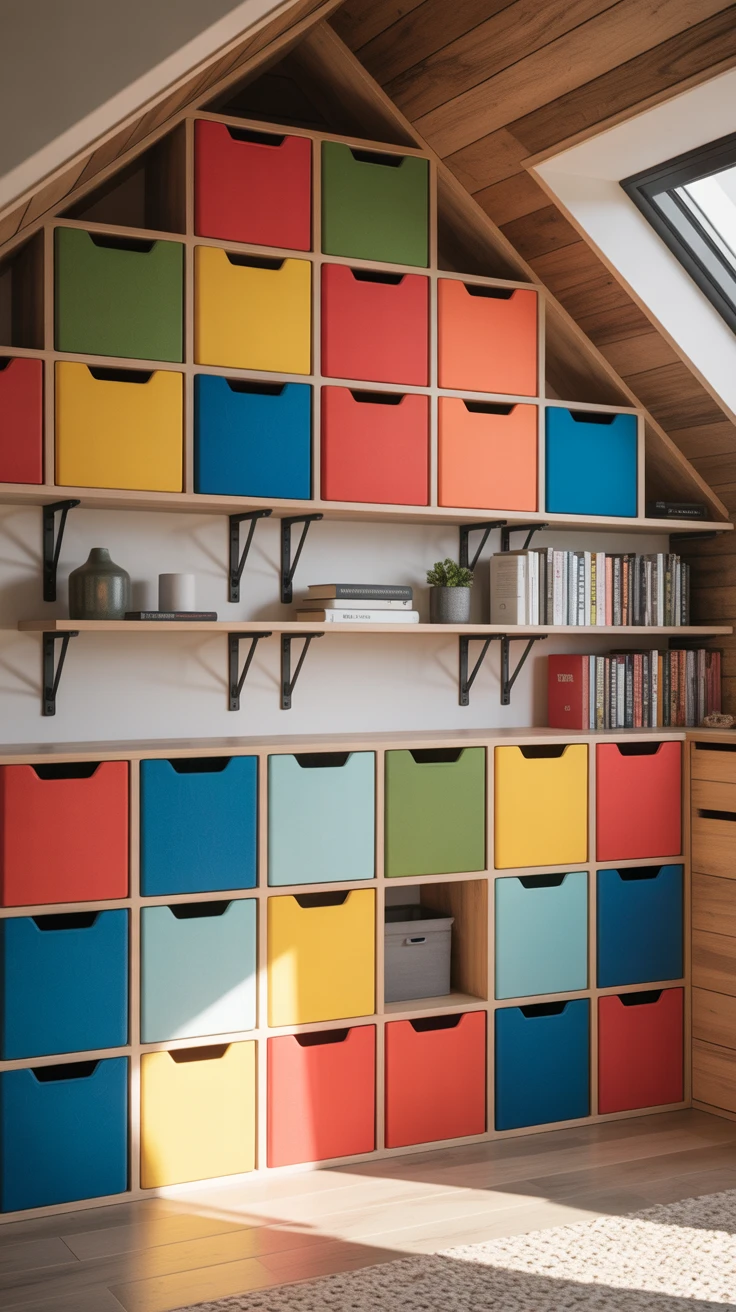
As your needs change, your storage should be able to adapt. Modular systems have become my go-to recommendation for **loft storage ideas** because they offer flexibility that built-ins sometimes can’t. This adaptability is particularly valuable in tiny homes, where needs can change dramatically with the addition or removal of just a few items.
When I first set up my home office in my loft, I installed a rigid shelving system that couldn’t accommodate my changing equipment needs. Switching to modular cubes allowed me to reconfigure my storage as my work evolved, without needing to drill new holes or replace entire units.
- Stackable storage cubes that can be rearranged as needed
- Adjustable shelving systems with movable brackets
- Interlocking bins that can be configured in multiple ways
- Expandable drawer organizers that grow with your collection
Pro Tip: Invest in modular systems from the same product line to ensure pieces will continue to work together as you add to your collection. I learned this lesson after buying mismatched components that wouldn’t connect properly, creating an unstable storage solution.
Conclusion
Maximizing loft storage in a tiny home isn’t just about finding places to put your stuff—it’s about creating systems that enhance your daily life and allow your small space to function like a much larger one. By implementing these six **loft storage ideas**, you can transform overhead areas from afterthoughts into essential components of your home’s organization system.
Remember that the best storage solutions are the ones that work with your specific needs and habits. What worked beautifully in my tiny home might need tweaking to fit yours perfectly. Be willing to experiment, adjust, and sometimes start over until you find the perfect balance of accessibility, functionality, and aesthetics for your unique loft space.
Frequently Asked Questions
What are some budget-friendly loft storage ideas?
If you’re on a tight budget, start with inexpensive hanging organizers, repurposed crates mounted as shelving, or DIY under-bed rolling containers made from plywood and casters. Tension rods with hanging baskets can create vertical storage without damaging walls, and fabric shoe organizers can be repurposed for storing a variety of small items. I’ve found that thrift stores are excellent sources for storage containers that can be painted or covered to match your decor.
How do I make my loft storage look stylish?
Consistency is key to stylish storage. Choose containers in complementary colors or materials, and consider using decorative boxes or baskets for visible storage. Incorporate your storage into the overall design scheme rather than treating it as an afterthought. In my loft, I use uniform wicker baskets on open shelving and have found that this simple consistency makes even utilitarian storage look intentional and attractive.
Can I install loft storage solutions myself?
Many loft storage solutions are DIY-friendly, particularly modular systems, under-bed storage, and some hanging organizers. However, built-in shelving and ceiling-mounted storage often require basic carpentry skills and an understanding of how to locate and use wall studs or ceiling joists. Always ensure you have the proper tools and knowledge before attempting installations that could affect structural elements or require significant mounting strength.
What should I consider when adding storage to my loft?
Consider accessibility, weight distribution, and how the storage will affect the feel of your space. Ensure frequently used items are easily reachable, and heavier items are supported by appropriate structures. Also, think about how light moves through your loft—too much bulky storage can make the space feel closed in. I once made the mistake of installing too many opaque storage containers that blocked natural light, making my loft feel like a cave rather than a cozy retreat.
Are there any safety concerns with loft storage?
Yes, several safety considerations are essential. Ensure all mounted storage is securely attached to studs or joists, not just drywall. Be mindful of head clearance, particularly around sleeping areas. Consider weight limits for loft floors, and distribute heavy items evenly. Finally, never store flammable materials near heat sources or items that might create moisture problems in enclosed spaces. Safety should always take precedence over storage capacity.
