

Introduction to DIY Closet Solutions
Living in a small space presents unique challenges, especially when it comes to storage. As someone who’s navigated the constraints of apartment living for years, I’ve learned that a well-organized closet can make all the difference in tiny living situations. When square footage is limited, your closet becomes prime real estate that demands strategic utilization.
I’ve spent countless weekends experimenting with various DIY closet solutions that maximize space without requiring major renovations or expensive custom installations. Through trial and error (and yes, a few collapsed shelving attempts), I’ve discovered that creativity and thoughtful planning can transform even the most cramped closet into an organizational masterpiece.
In this article, I’ll share ten practical and budget-friendly DIY closet solutions specifically designed for tiny living spaces. These projects require minimal tools and basic skills but deliver maximum impact for your storage challenges.
1. Maximizing Vertical Space
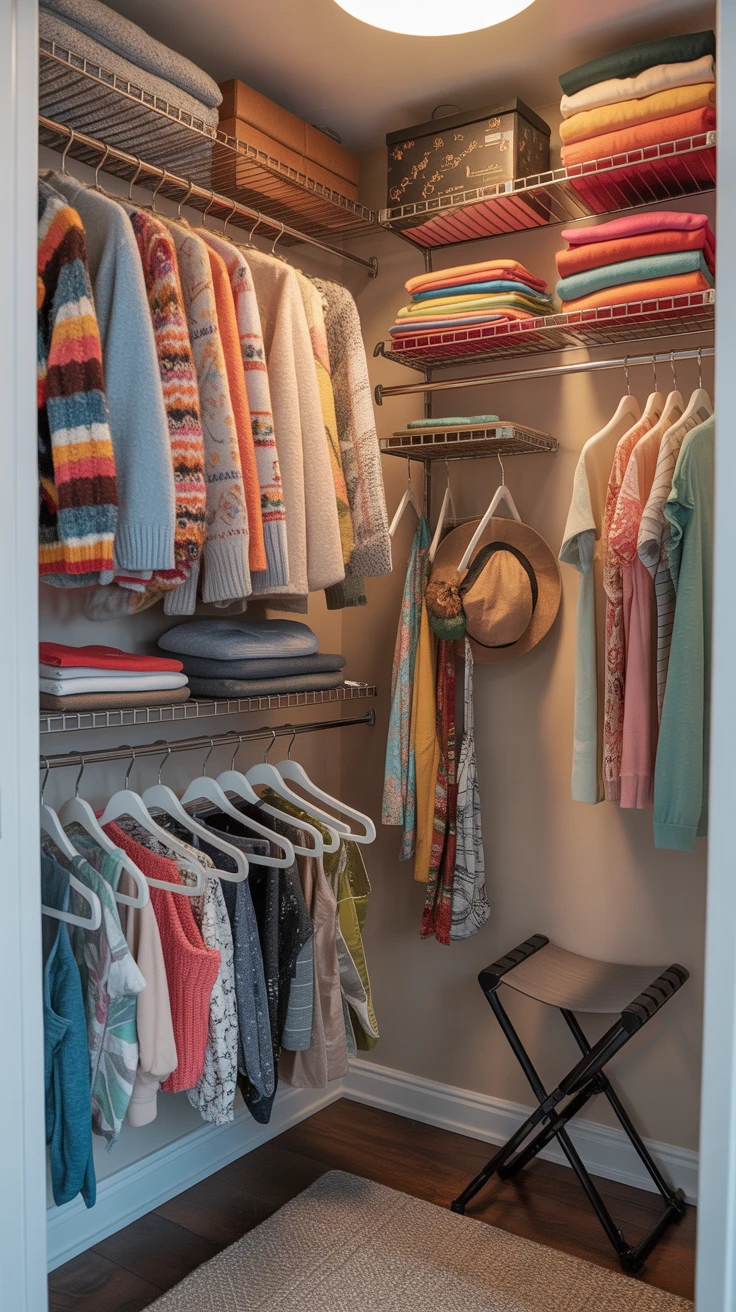
The most overlooked resource in any closet is vertical space. I learned this lesson the hard way after spending months frustrated with my cluttered closet floor before finally looking up!
Installing additional shelving toward the ceiling creates valuable storage for seasonal or less frequently used items. I personally use this area for winter sweaters during summer months and beach accessories during winter.
- Install tension rods at varying heights to create multiple hanging zones
- Add stackable wire shelves that require no permanent installation
- Use shelf dividers to prevent stacked clothes from toppling over
- Hang lightweight items from hooks attached to the underside of existing shelves
Pro Tip: Keep a small foldable step stool nearby to easily access items stored in higher spaces. I tuck mine into the narrow gap between my closet and bedroom wall.
2. Adjustable Shelving: A Versatile Option
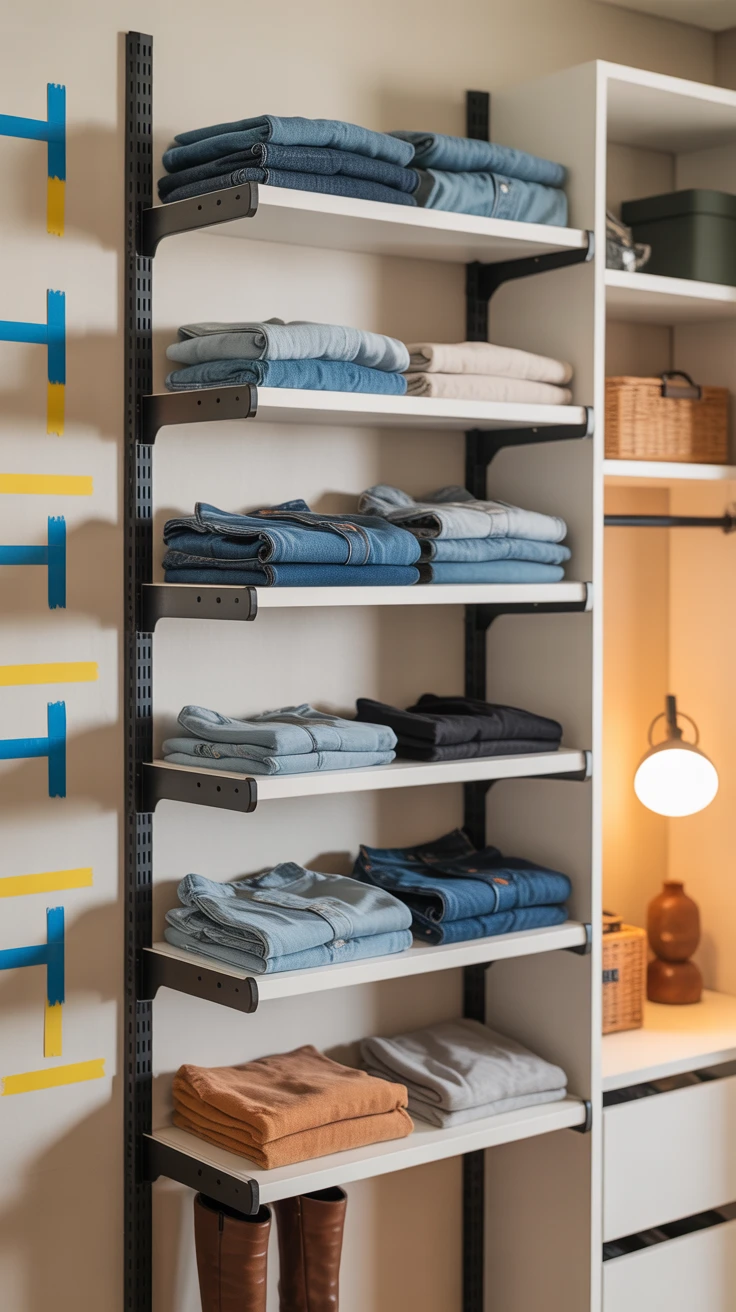
Fixed shelving rarely accommodates all your storage needs efficiently. After struggling with awkwardly spaced built-ins, I discovered the game-changing flexibility of adjustable systems.
Installing track-based adjustable shelving allows you to customize the height between shelves based on what you’re storing. This means you can create perfect spaces for folded jeans, stacked t-shirts, or taller items like boots without wasting valuable vertical space.
I installed my system using basic tools over a weekend, and the ability to reconfigure as my storage needs change has been invaluable. When I transitioned from corporate attire to work-from-home casual wear, I simply adjusted my shelving heights to accommodate more folded items and fewer hanging clothes.
Pro Tip: Before installing, use painter’s tape to mark different shelf configurations on your wall to visualize the most efficient layout for your specific items.
3. Behind-the-Door Magic
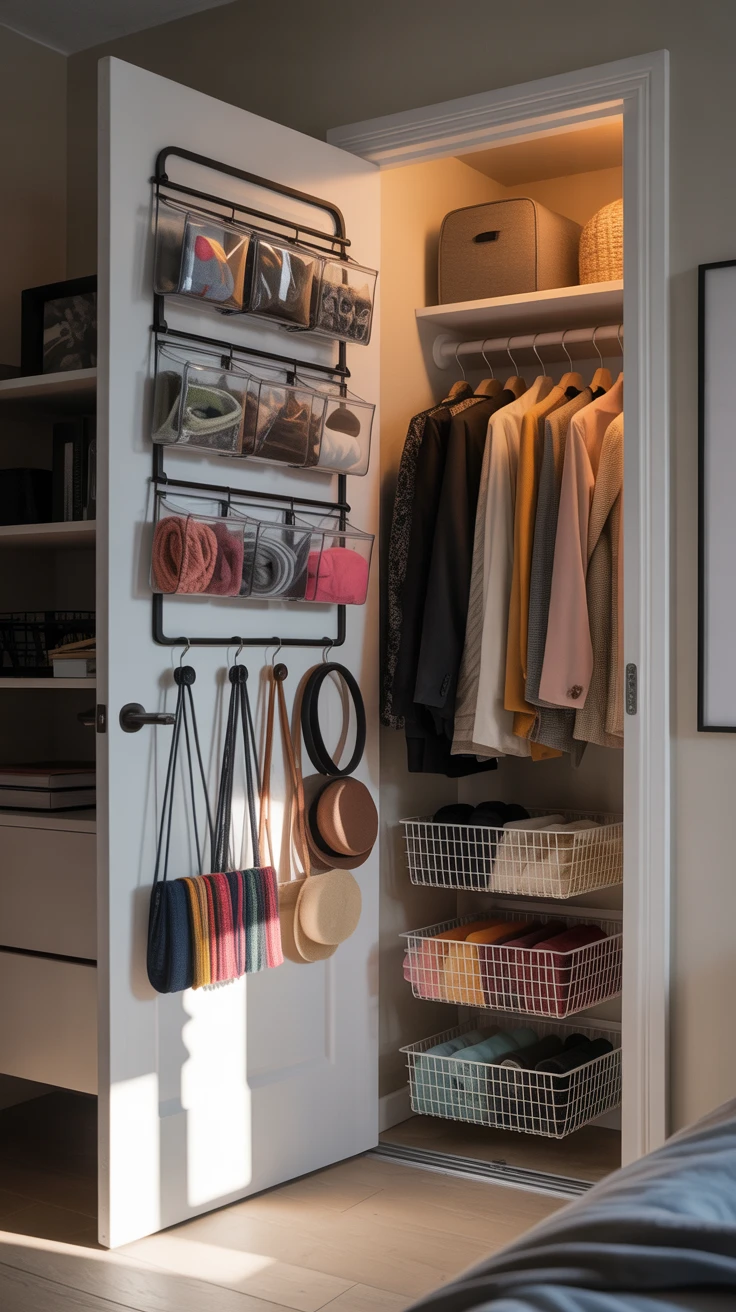
The back of your closet door represents valuable real estate that often goes unused. I’ve transformed this forgotten space into a storage powerhouse in my own tiny apartment.
Over-the-door organizers come in various styles and can hold an impressive amount of items without requiring permanent installation—perfect for renters like me. I use mine for accessories, but they’re equally effective for shoes, cleaning supplies, or even folded clothing.
- Shoe organizers with clear pockets work brilliantly for small accessories
- Hook racks can hold belts, scarves, or handbags
- Specialized jewelry organizers keep necklaces tangle-free
- Wire baskets can store socks or undergarments
Pro Tip: Measure the clearance between your door and any hanging clothes to ensure your organizer won’t cause the door to catch when closing. I learned this lesson after damaging several shirts before adjusting my setup!
4. Multi-Functional Hangers: Double the Space
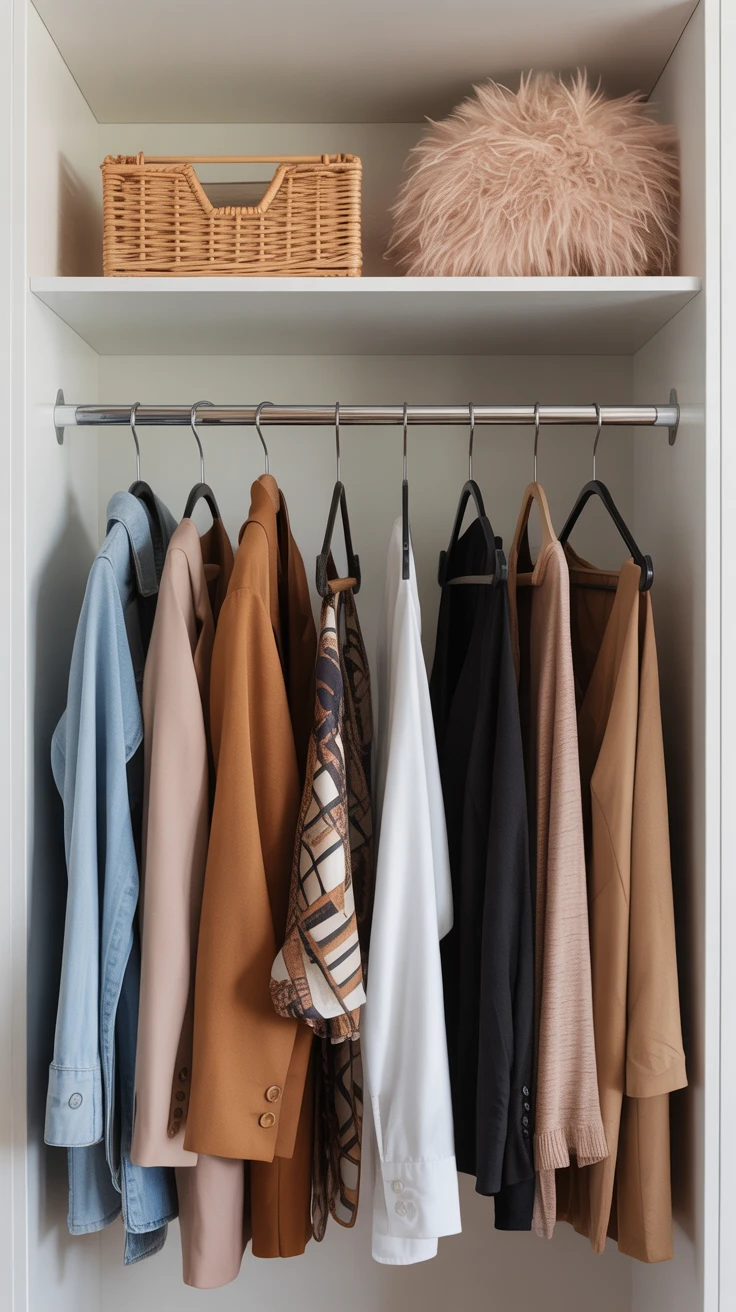
Traditional hangers are surprisingly inefficient. When I replaced mine with multi-functional alternatives, I instantly doubled my hanging capacity without any construction or permanent changes.
Cascading hangers allow multiple garments to hang vertically from a single hook point. S-type hangers can accommodate multiple pairs of pants or skirts in the space traditionally used for just one item.
I particularly love space-saving hangers with multiple loops for scarves or ties—they’ve eliminated the jumbled mess that used to plague my accessory collection. For bulkier items like coats and jackets, I use hangers with hooks that allow me to cascade multiple hangers vertically.
Pro Tip: Standardize your hanger style for a more visually organized closet and to ensure consistent spacing between garments. I switched to slim velvet hangers that prevent clothes from slipping while taking up minimal space.
5. Shoe Rack Innovations
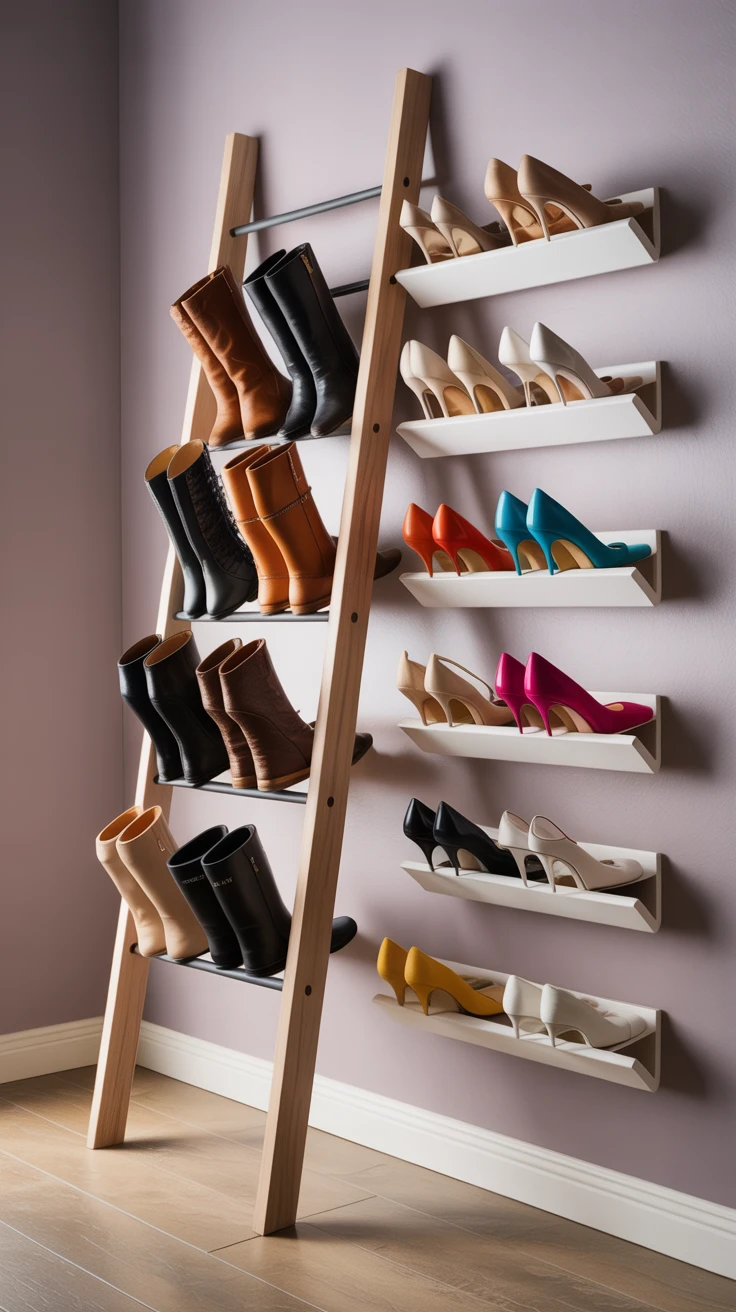
Shoes often create the most challenging storage puzzles in small closets. After trying numerous commercial solutions, I created a custom approach that maximized my unusual closet dimensions.
A DIY ladder-style shoe rack leans against the wall and provides angled storage that displays shoes while keeping them accessible. For boots, I use tension rods positioned horizontally to create a rack that keeps them upright and prevents creasing.
For my collection of flats and sandals, I mounted crown molding strips at an angle on the wall, creating a lip that holds shoes securely while displaying them in a space-efficient manner.
Pro Tip: Store seasonal shoes in under-bed containers to free up valuable closet space. I rotate my collection twice yearly, keeping only current-season footwear in my active closet area.
6. Hanging Organizers for Small Spaces
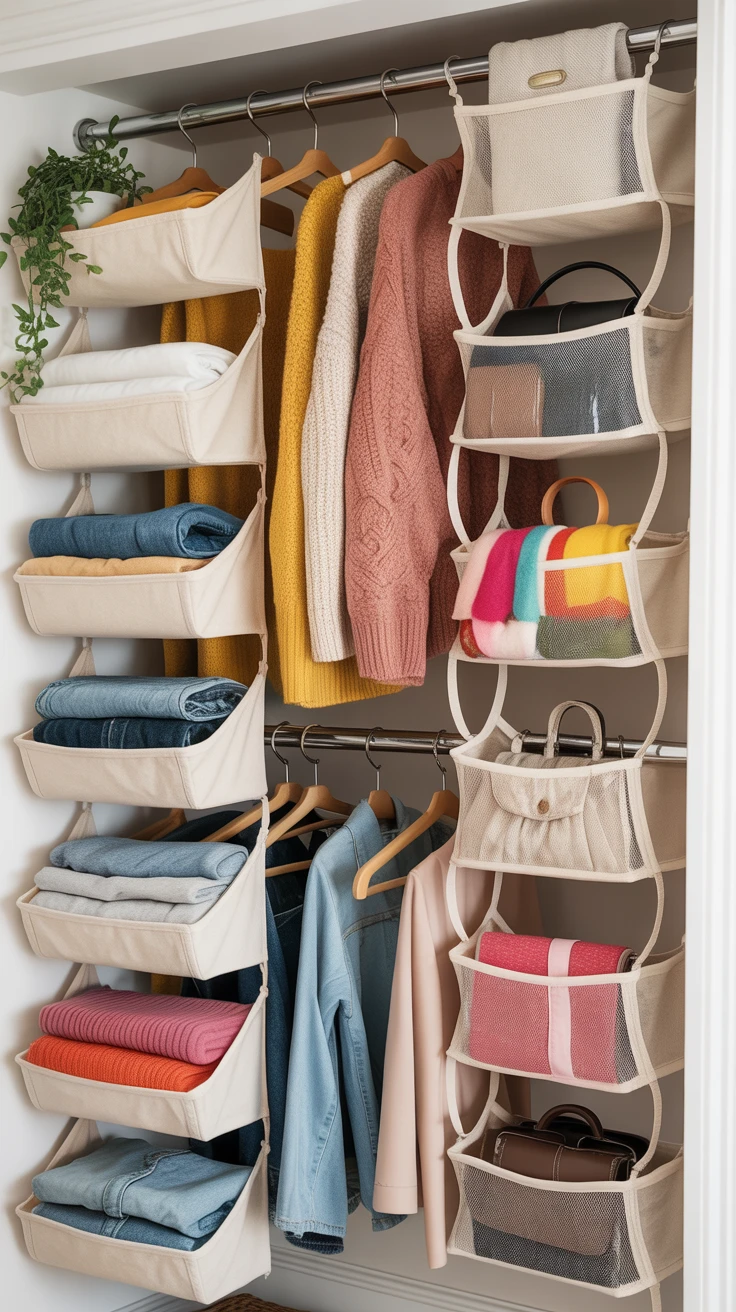
Fabric hanging organizers have revolutionized my DIY closet solutions toolkit. These versatile storage options attach to your existing closet rod and create instant shelving for folded items.
I use hanging organizers with various compartment sizes to store everything from sweaters and jeans to accessories and handbags. The vertical design maximizes space efficiency while keeping items visible and accessible.
- Canvas hanging shelves for heavy sweaters and jeans
- Mesh organizers for items that need visibility and airflow
- Hanging cubbies with dividers for smaller accessories
- Specialized hanging organizers for shoes or handbags
Pro Tip: Choose hanging organizers with reinforced hooks and sturdy construction. My first budget version collapsed under the weight of my sweaters, creating an avalanche of knitwear!
7. Custom Jewelry Display
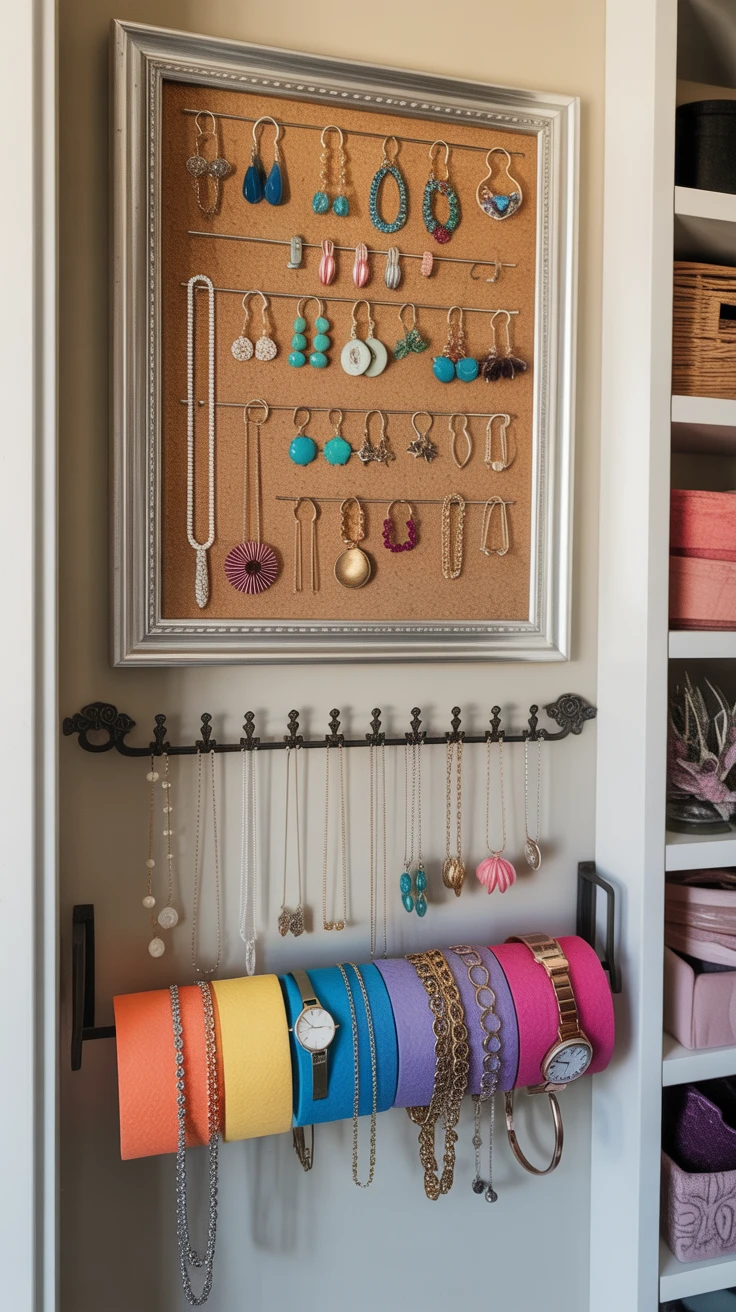
Jewelry storage presents unique challenges in small spaces. After untangling necklaces one too many times, I created a custom solution that keeps everything visible and accessible.
A simple corkboard framed and mounted inside my closet door provides the perfect surface for displaying earrings and pins. For necklaces, I installed small decorative hooks in a row, ensuring each piece hangs without tangling with others.
For bracelets and watches, I repurposed a paper towel holder mounted horizontally, creating an easy-access display that takes advantage of otherwise unused wall space.
Pro Tip: Organize jewelry by color or metal type for a visually appealing display that also makes coordinating with outfits more efficient. I use a color gradient approach that makes my jewelry display double as closet decor.
8. The Convenience of Pull-Out Drawers
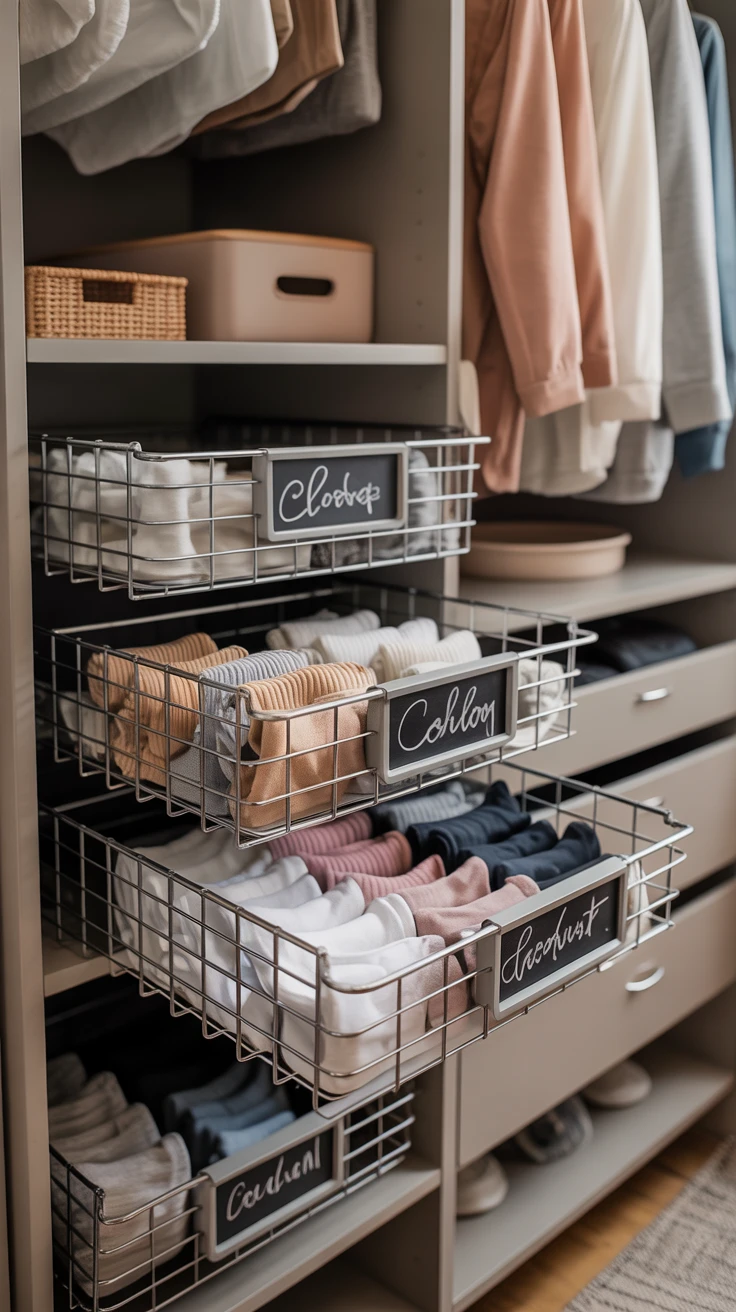
Adding pull-out functionality to existing shelves transformed my closet experience. After struggling to access items at the back of deep shelves, I installed simple drawer systems that slide out completely.
Wire baskets on drawer slides create accessible storage for smaller items like socks and undergarments. For a budget-friendly alternative, I use plastic bins with handles that function as makeshift drawers without requiring installation.
The ability to pull storage completely out means I can see all contents at once, eliminating the frustration of digging through piles to find what I need. This has been particularly game-changing for accessing items stored on higher or lower shelves.
Pro Tip: Label the front edge of each drawer or bin for at-a-glance identification of contents. I use small adhesive chalkboard labels that can be easily updated when I reorganize.
9. Creative Repurposing for Storage
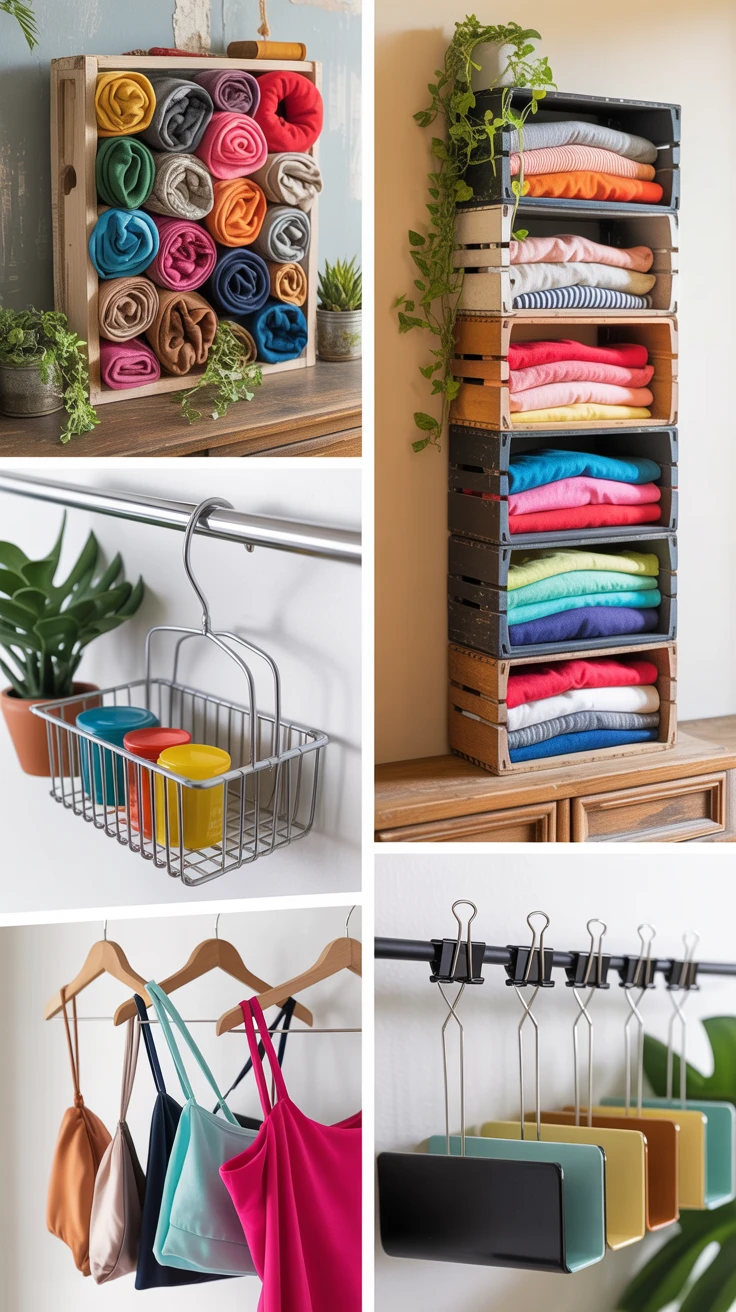
Some of my most effective DIY closet solutions involve repurposing everyday items in unexpected ways. This approach is budget-friendly and often results in storage solutions perfectly tailored to specific needs.
I’ve transformed an old spice rack into a holder for small accessories and watch bands. Wine crates mounted to the wall create perfect cubbies for folded t-shirts and tank tops. Even a shower caddy hung from a tension rod provides ideal storage for small items that would otherwise get lost.
Office supplies offer surprising storage potential—I use binder clips attached to hangers to keep strappy tops in place and document sorters to organize clutches and small handbags.
Pro Tip: Before purchasing new storage solutions, survey your home for items that could be repurposed. I’ve found that kitchen organizers often work brilliantly for clothing and accessories.
10. Seasonal Rotation System
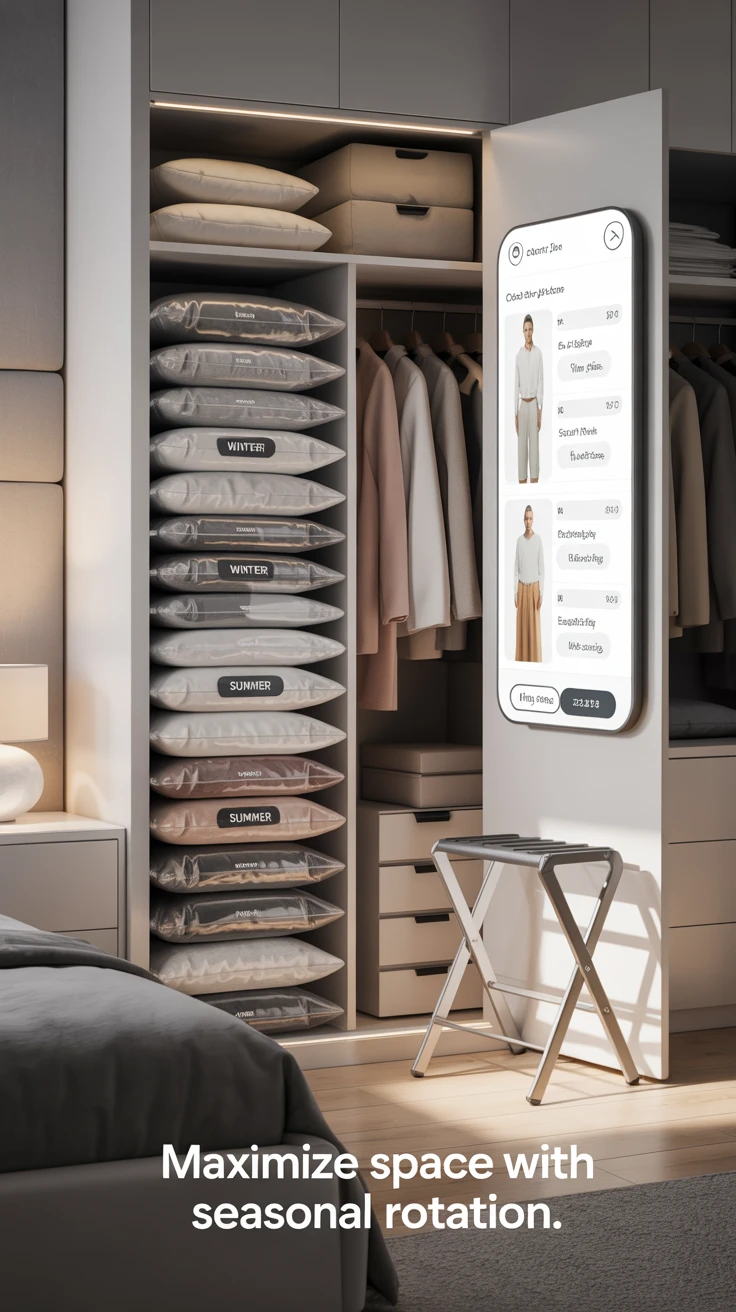
Implementing a seasonal rotation system has dramatically increased my functional closet space. Rather than cramming all clothing into my closet year-round, I maintain a curated selection of current-season items.
Using vacuum-sealed bags, I compress off-season clothing to a fraction of its normal size for storage under my bed or in a high closet shelf. This approach not only creates more space but also helps me evaluate my wardrobe more thoughtfully during transition periods.
I maintain a digital inventory (simple photos on my phone) of stored items to prevent unnecessary purchases and help plan for upcoming seasons without unpacking everything.
Pro Tip: When storing seasonal items, include a list of any pieces you found yourself missing or wishing you had. This becomes your targeted shopping list for next year rather than making impulse purchases.
Conclusion
Living in a small space doesn’t mean sacrificing organization or storage capacity. With these ten DIY closet solutions, you can transform even the tiniest closet into an efficient storage powerhouse that meets your specific needs.
I’ve implemented each of these solutions in my own small living spaces over the years, refining and customizing as I go. The beauty of DIY approaches is their flexibility—you can mix and match techniques based on your unique space constraints and storage priorities.
Remember that closet organization is an evolving process. As your needs change, don’t hesitate to reconfigure your space. The modest investment in time and materials for these projects yields tremendous returns in daily convenience and peace of mind.
What DIY closet solution will you tackle first? Start small, celebrate your progress, and watch as your tiny living space becomes more functional with each improvement!
Frequently Asked Questions
What tools do I need for basic DIY closet projects?
Most DIY closet projects require only basic tools: a screwdriver (both Phillips and flathead), measuring tape, level, stud finder, hammer, and drill. For many temporary solutions like tension rods or over-the-door organizers, you may need no tools at all. I completed most of my projects with just these essentials plus a small step ladder.
How can I create more closet space without construction?
Focus on maximizing existing space through multi-functional hangers, behind-door storage, hanging organizers, and under-shelf baskets. These solutions require no permanent changes but can double your functional storage space. Implementing a seasonal rotation system also creates significant additional capacity without any construction.
What’s the most cost-effective DIY closet solution?
Repurposing items you already own offers the best value. Office organizers, kitchen containers, and even cardboard boxes can become effective closet storage with minimal modification. If purchasing new items, tension rods and over-the-door organizers typically provide the most storage capacity for your investment.
How do I organize a closet that has to serve multiple purposes?
Zone your closet by function using visual dividers like shelf separators or different colored bins. Keep frequently used items at eye level, occasional-use items higher up, and rarely-used items in less accessible spaces. Clear labeling is essential for multi-purpose closets to maintain organization over time.
Can renters implement these DIY closet solutions?
Absolutely! Many solutions like tension rods, free-standing organizers, and over-the-door systems require no permanent installation. For solutions that typically involve mounting (like adjustable shelving), consider free-standing alternatives or temporary mounting methods like Command hooks and strips designed for damage-free removal.
