
Introduction to Rustic Christmas Tree Decor
There’s something magical about a rustic Christmas tree that instantly transforms your home into a cozy winter retreat. I’ve always been drawn to this style because it feels authentic and warm—like stepping into a mountain cabin during a snowfall. After years of experimenting with different holiday aesthetics, I’ve found that rustic decor creates the most inviting atmosphere for family gatherings.
The beauty of rustic decor lies in its simplicity and connection to nature. Instead of flashy, mass-produced ornaments, rustic style celebrates imperfection and handcrafted charm. I remember my first attempt at a rustic tree—I went overboard with burlap and nearly turned my tree into a potato sack! Through trial and error, I’ve learned that balance is key.
In this article, I’ll share my favorite rustic Christmas tree decor ideas that have worked wonderfully in my own home, along with some mistakes I’ve made so you can avoid them.
Choosing the Right Tree
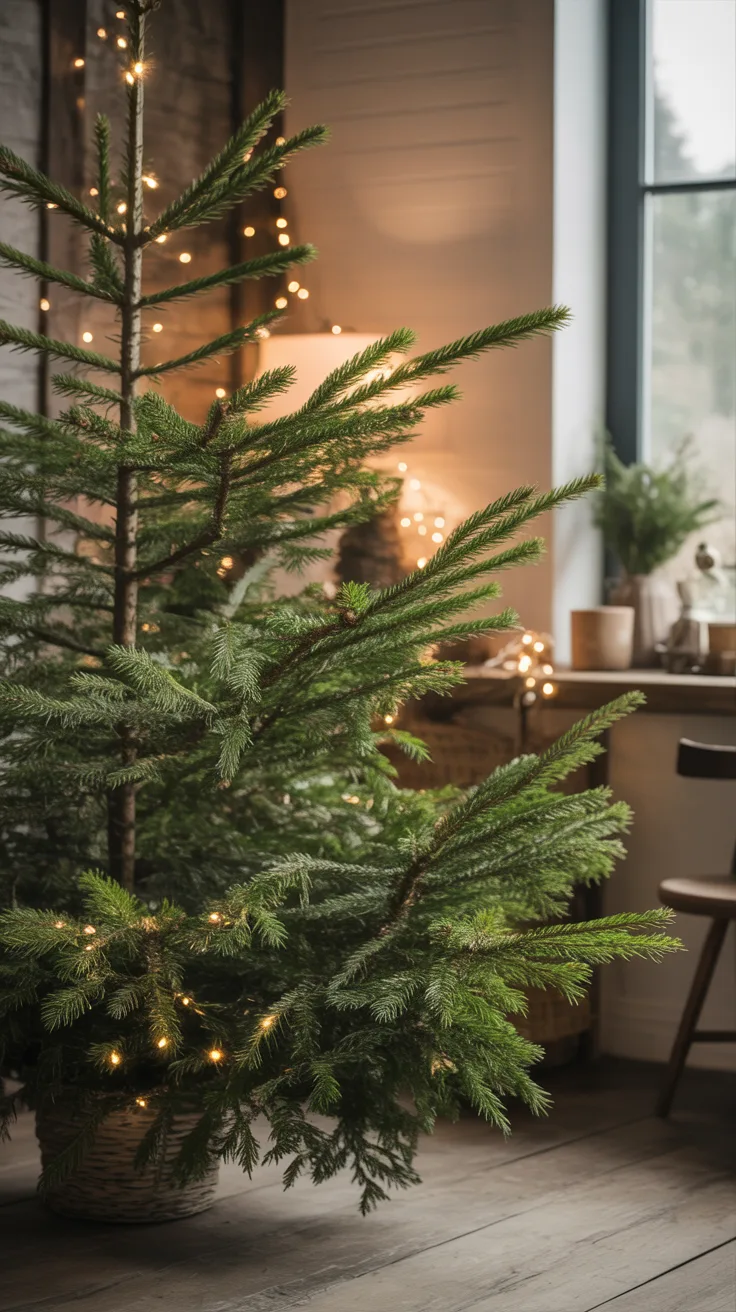
The foundation of your rustic holiday display starts with selecting the perfect tree. I’ve found that trees with fuller, more irregular shapes work best for this aesthetic. When I first embraced the rustic style, I made the mistake of choosing a perfectly symmetrical tree—it looked too polished for the natural vibe I was trying to achieve.
If you’re going with a real tree, Fraser firs and Blue Spruces offer that authentic woodland look with their varied branch patterns and natural gaps that create perfect nooks for ornaments. The scent of real pine is also an irreplaceable element of rustic charm.
For those preferring artificial trees, look for ones with “realistic” branch tips and variations in color. I invested in a good quality artificial tree with multiple tones of green and brown in the needles, and it’s been worth every penny. Avoid trees that are too perfect or have an unnatural shine.
Pro Tip: Consider leaving some space between branches when fluffing your artificial tree to mimic the natural growth pattern of forest pines. This creates more depth and a more authentic woodland appearance.
Natural Elements for Rustic Charm

The heart of rustic Christmas tree decor lies in incorporating elements straight from nature. I’ve spent many autumn afternoons collecting materials for my holiday decorating, and these natural touches always receive the most compliments.
- Pinecones – Collect different sizes and either leave them natural or add a light dusting of white paint for a snowy effect. I once tried spray painting them gold, which looked too glamorous for the rustic vibe I wanted.
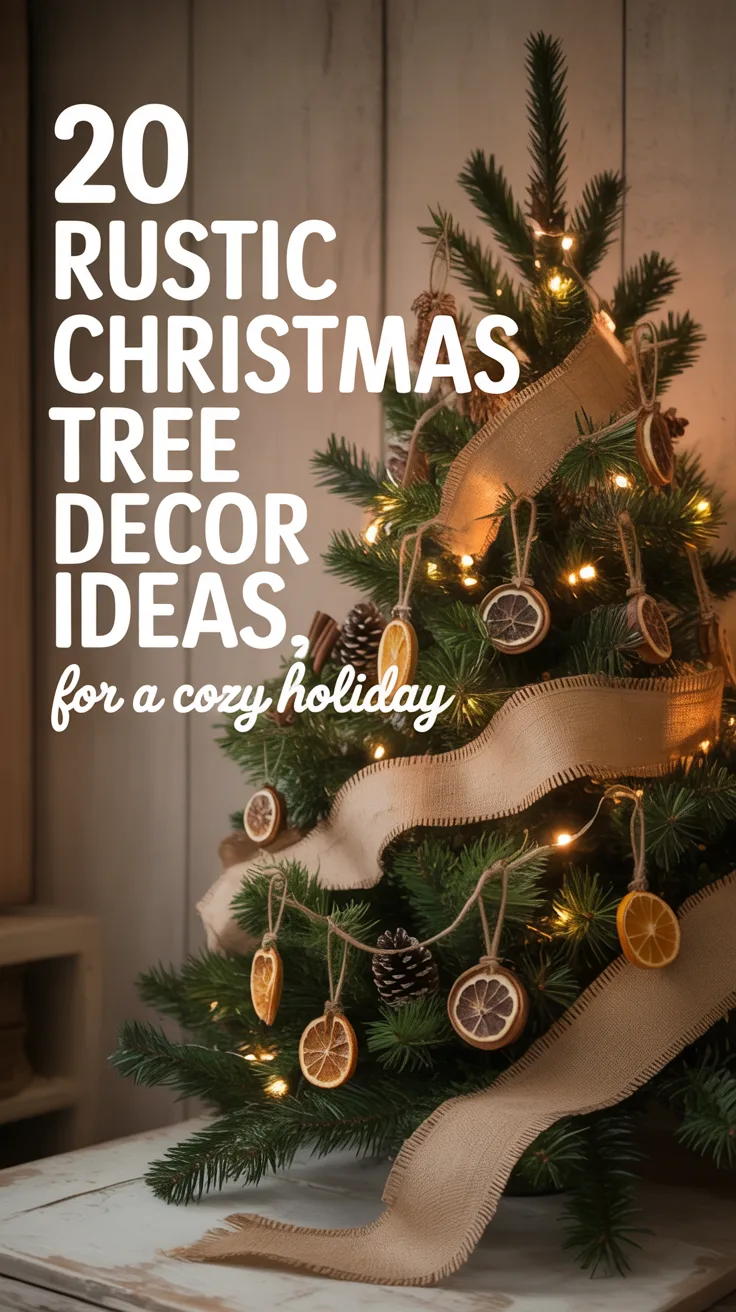
- Dried orange slices – These are incredibly easy to make (just slice oranges thinly and bake at a low temperature until dry). They add wonderful color and subtle fragrance.
- Cinnamon sticks – Bundle them with twine or red baker’s string for a fragrant ornament.
- Wooden slices – Small cross-sections of branches make perfect ornament bases. I write the year on one each Christmas as a keepsake.
- Acorns and nuts – Gather these in fall and attach small eye hooks for hanging.
- Dried berries – Red berries add pops of color among the natural elements.
Last year, I forgot to properly dry my orange slices and found them moldy after storage—definitely make sure they’re completely dry before storing!
Pro Tip: When collecting natural elements, gather more than you think you’ll need. They tend to break or get damaged during decorating and storage, and it’s helpful to have extras on hand.
DIY Rustic Ornaments
Creating your own ornaments adds personal meaning to your tree and ensures a cohesive rustic look. Some of my favorite DIY projects have become annual traditions with my family.
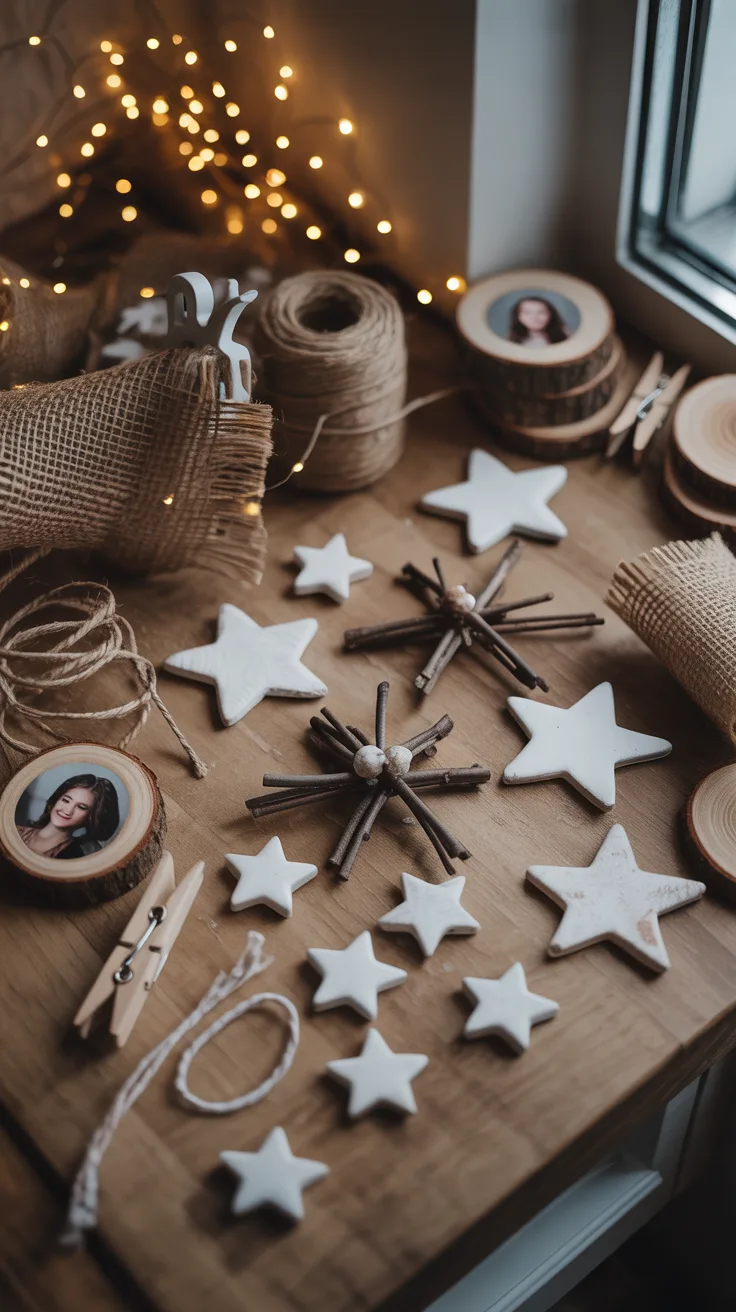
- Salt dough ornaments – Mix 1 cup salt, 2 cups flour, and 1 cup water. Roll out, cut shapes, poke a hole for hanging, and bake at 250°F until hard. Leave natural or paint with muted colors.
- Twig stars – Collect five similar-sized twigs and form a star shape, binding the intersections with twine or hot glue.
- Burlap bundles – Cut burlap into small squares, fill with cinnamon sticks or dried lavender, and tie with twine.
- Wood slice photo ornaments – Transfer family photos onto small wood slices using mod podge for a personal touch.
- Clothespin reindeer – Transform wooden clothespins into reindeer with brown paint, googly eyes, and small red pom-poms.
- Miniature wreaths – Form small grapevine or twig wreaths and decorate with tiny pinecones or berries.
I once tried to make cinnamon applesauce ornaments without following a recipe, and they never dried properly. Learn from my mistake and follow tested recipes for any dough-based ornaments!
Pro Tip: Set aside a crafting weekend in early November to make ornaments. This gives you plenty of time to let items dry or make adjustments before decorating day.
Lighting Options for a Warm Glow
Lighting can make or break the rustic ambiance. I learned this the hard way when I once used cool white LED lights that gave my cozy tree a sterile, hospital-like appearance!
Warm white lights are essential for creating that inviting glow that complements natural materials. I prefer string lights with a golden tone rather than bright white. For an even more rustic feel, look for lights designed to mimic vintage Edison bulbs with their warm amber glow.
Consider the pattern of your lights as well. Rather than wrapping them in perfect spirals, I weave mine deeper into the branches in some areas and let them come forward in others. This creates depth and mimics the random pattern of starlight filtering through forest branches.
Battery-operated micro lights in mason jars or small lanterns can add magical accent lighting among your branches. I place these deeper within the tree to create glowing focal points.
Pro Tip: Always test your lights before decorating and buy an extra set or two. Nothing is more frustrating than finishing your tree only to have a strand go out!
Using Burlap and Twine
Burlap and twine are the workhorses of rustic Christmas decor. Their natural texture and neutral colors provide perfect complements to woodland elements.
For the tree topper, I’ve abandoned traditional stars in favor of a simple burlap bow. The first one I made was comically large and nearly toppled my tree! Now I create a more proportional bow with multiple loops and long tails that cascade down the side of the tree.
Burlap ribbon makes an excellent tree garland, either draped loosely or wound through the branches. I like to alternate plain burlap with a red-striped version for a subtle pop of color. You can also cut burlap into strips and fray the edges for a more rustic appearance.
Twine serves as the perfect hanger for natural ornaments. I replaced all my shiny metal hooks with simple twine loops, which immediately elevated the rustic feel. Twine can also be wrapped around plain ball ornaments to add texture.
One year, I discovered burlap ribbon with wire edges that holds its shape beautifully. This has become a staple in my decorating arsenal as it allows me to create dimensional loops and curves throughout the tree.
Pro Tip: Burlap sheds quite a bit. I now lay a sheet under the tree when decorating with burlap to catch the fibers, making cleanup much easier.
Pro Tips for Perfect Rustic Decor
After years of refining my approach to rustic Christmas tree decorating, I’ve gathered some wisdom I wish I’d known from the start:
Embrace imperfection. The charm of rustic style lies in its handcrafted, slightly irregular appearance. My first attempts at rustic decor failed because I tried to make everything too perfect and symmetrical.
Create a cohesive color palette. I stick to neutrals (beige, brown, white) with accents of forest green and deep red. Avoid bright, saturated colors that can look jarring against natural materials.
Layer your decorations. Place larger items deeper in the branches and smaller ones toward the tips. This creates depth and interest that draws the eye in.
Don’t overdo it. I’ve learned that rustic style benefits from a bit of restraint. You want to see some of the tree between ornaments. My first rustic tree was so overloaded with decorations you could barely see the branches!
Mix textures liberally. The most visually interesting rustic trees combine rough (pinecones, bark), smooth (wood slices), and textured (burlap, knitted) elements.
Consider scent as part of your decor. Cinnamon sticks, dried orange slices, and small sachets of pine needles add a multisensory dimension to your tree.
Pro Tip: Take photos of your tree from different angles once you’re happy with it. These can serve as reference points for next year’s decorating and help you remember placement of key elements.
Frequently Asked Questions
What materials are best for rustic Christmas tree decor?
The best materials are those found in nature or that mimic natural elements: wood, burlap, twine, pinecones, dried fruits, and berries. I’ve found that materials with texture and neutral colors work particularly well. Metal accents in copper, bronze, or galvanized finishes can also complement the rustic look without appearing too modern.
How can I make my own rustic Christmas ornaments?
Start with simple projects like salt dough ornaments, twig stars, or dried orange slices. Most rustic ornaments require basic supplies and minimal crafting skills. My favorite beginner-friendly project is wood slice ornaments—just cut thin slices from a branch, drill a small hole, add twine, and decorate with a simple design using a wood-burning tool or paint pen.
What are some affordable rustic decor ideas?
Rustic decor is wonderfully budget-friendly! Collect pinecones, twigs, and acorns for free from your yard or local parks. Repurpose materials like old sheet music, vintage buttons, or fabric scraps into ornaments. Burlap is inexpensive and versatile. My most complimented tree decorations have often been the ones that cost me nothing but time to collect and create.
How do I incorporate natural elements into my tree decor?
Distribute natural elements throughout your tree rather than clustering them. Secure heavier items like pinecones deeper in the branches where they have more support. For fragile items like dried orange slices, place them toward the outer branches where they’re less likely to be bumped. I like to create small “vignettes” throughout the tree—a pinecone next to a cinnamon stick bundle and a wooden ornament, for instance.
Can I combine rustic and modern decor styles?
Absolutely! Some of my most successful trees have incorporated rustic elements with carefully selected modern touches. The key is finding a unifying element—perhaps a color scheme or repeated shape. For example, I’ve used clean-lined wooden geometric ornaments alongside traditional rustic elements, connected by a shared color palette of white, natural wood, and touches of black. This created a “modern rustic” look that felt fresh but still cozy.