Introduction
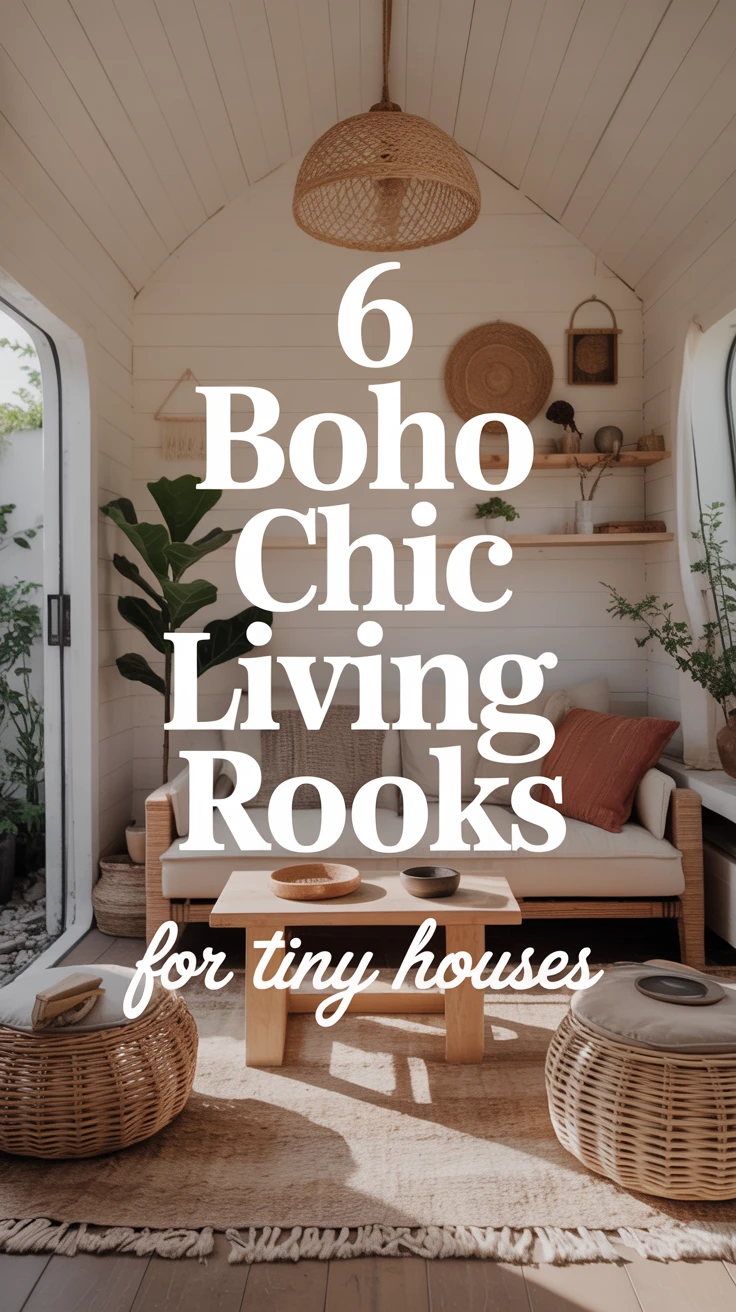
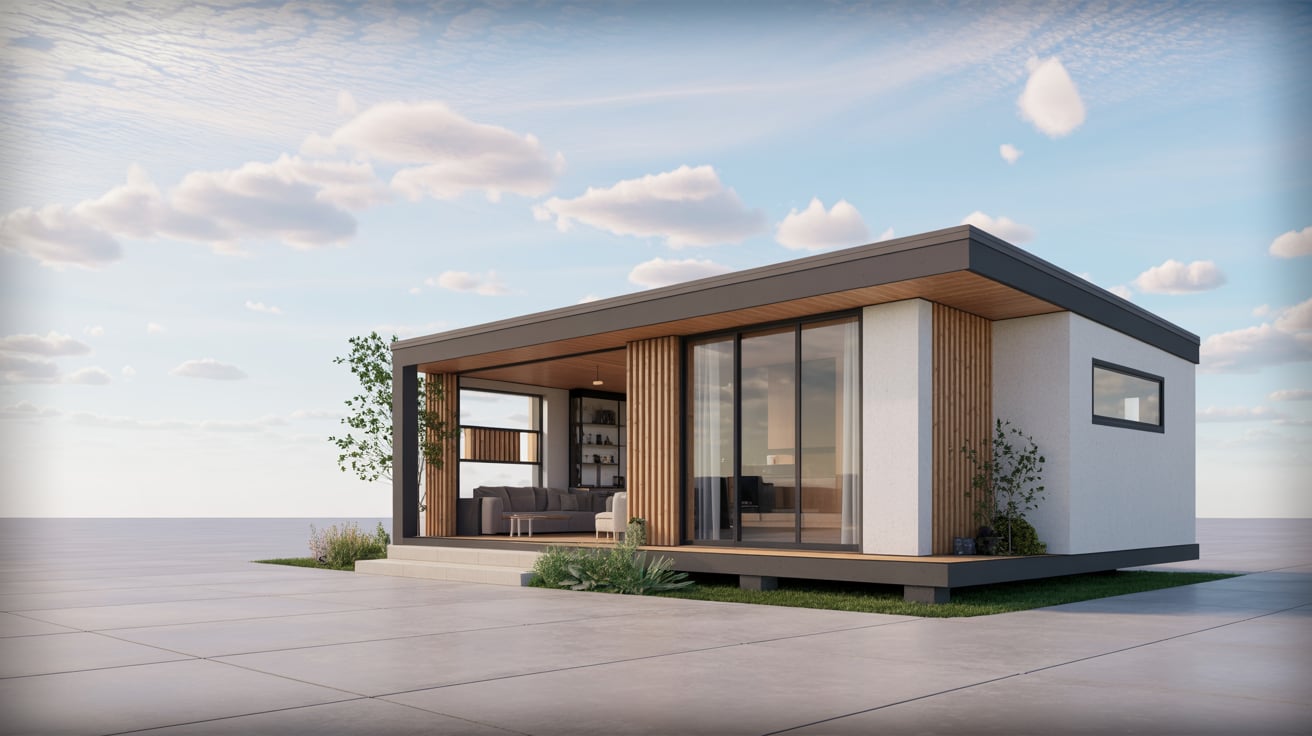
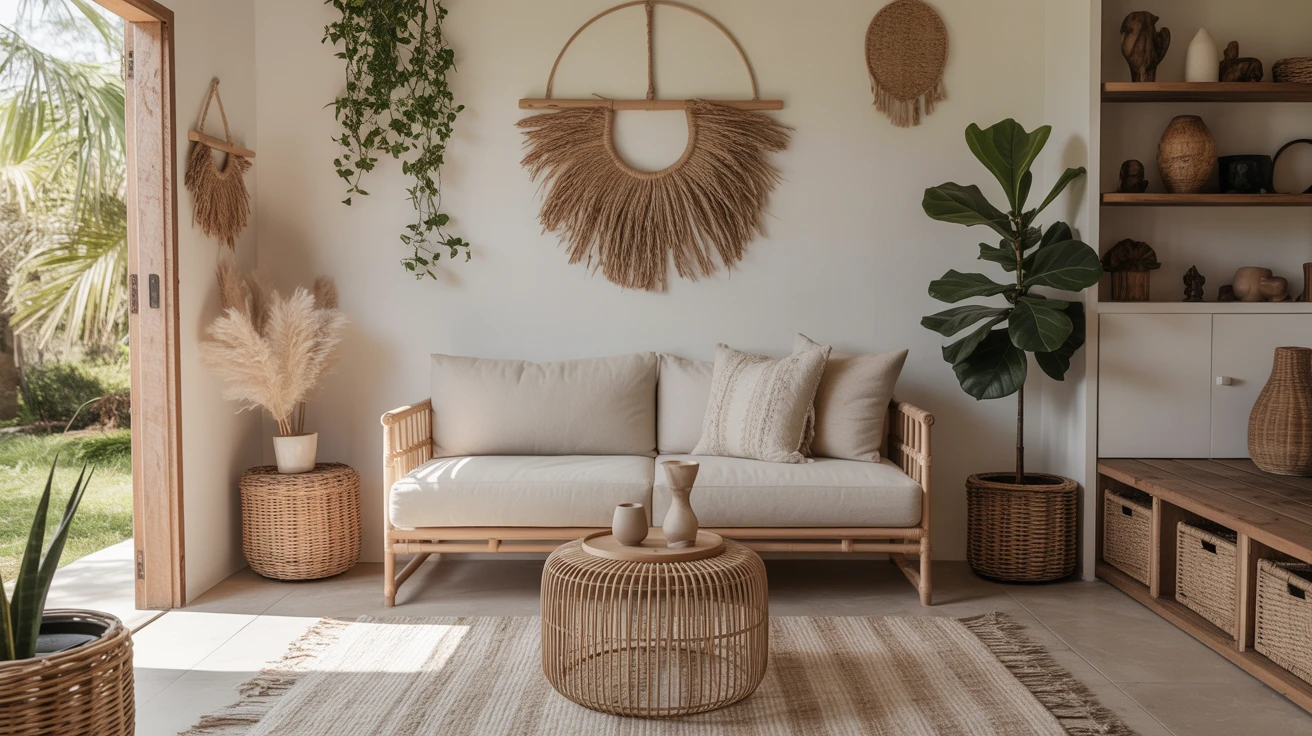
When it comes to tiny house living, every square inch counts. But limited space doesn’t mean you have to sacrifice style or personality. The boho chic living room aesthetic is perfect for tiny houses because it embraces creativity, comfort, and character while remaining adaptable to spatial constraints. I’ve spent years helping clients transform their compact spaces into bohemian paradises, and I’ve found that this free-spirited design approach actually thrives in smaller settings. In this article, I’ll share six distinct boho chic living room looks specifically designed for tiny houses, along with practical tips I’ve gathered from my own design journey.
1. Minimalist Boho
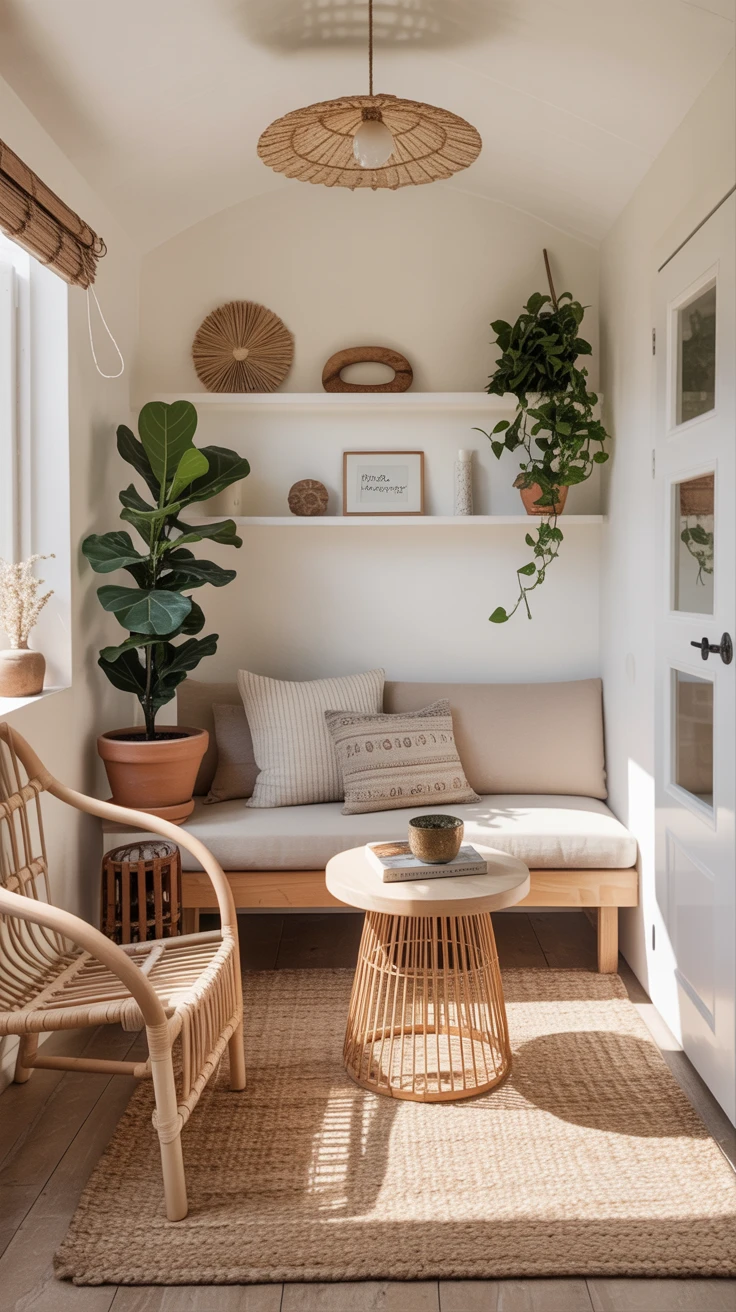
The minimalist boho approach has saved many of my tiny house clients from feeling cramped. This style combines the clean, uncluttered principles of minimalism with select bohemian elements for a space that feels both open and personal.
The key is restraint—I learned this the hard way after overstuffing my first tiny house project with too many bohemian elements. Start with a neutral backdrop of whites, creams, and beiges to create an airy foundation. Then add carefully chosen statement pieces rather than filling every corner.
Elements to Include:
- Natural materials like rattan, jute, and untreated wood
- A simple low-profile sofa in a neutral tone
- One or two handcrafted items as focal points
- A single statement plant like a fiddle leaf fig or monstera
- Textural elements through a carefully chosen rug or throw pillow
Pro Tip: When working with a minimalist boho approach, I’ve found that wall-mounted shelving can display your favorite bohemian treasures without consuming precious floor space. This keeps your tiny living area feeling open while still showcasing personality.
2. Eclectic Treasures
My most adventurous clients love this approach—mixing and matching furniture and decor from different eras to create a space that tells a story. In tiny houses, this eclectic treasure style works surprisingly well when done thoughtfully.
I once helped a client who had collected items from her travels around the world but was moving into a 400-square-foot tiny house. Rather than abandoning her treasures, we carefully curated them, selecting pieces that could serve multiple functions while adding character.
How to Create This Look:
- Choose a vintage trunk that works as both storage and coffee table
- Display a collection of small souvenirs on a single floating shelf
- Mix textiles from different cultures on a compact sofa
- Use an antique ladder as a space-saving bookshelf
- Incorporate one statement piece of furniture with history
Pro Tip: I always advise my tiny house clients to rotate their eclectic treasures seasonally. This keeps your space feeling fresh without requiring more square footage—store off-season items in clever under-furniture storage solutions.
3. Nature-Inspired Boho Chic Living Room

Bringing nature indoors creates a calming boho chic living room that feels larger than its actual dimensions. I’ve found this approach particularly effective for tiny houses nestled in natural settings, as it blurs the boundary between indoor and outdoor space.
One of my favorite tiny house transformations involved a client whose 300-square-foot space felt claustrophobic until we embraced this nature-inspired approach. By the end, visitors would comment that the space felt twice its actual size.
Natural Elements to Incorporate:
- Hanging plants to draw the eye upward (pothos and string of pearls work beautifully)
- Earth-toned textiles in organic materials like hemp and cotton
- Wooden accents with visible grain and texture
- Woven baskets for stylish storage solutions
- A small water feature for ambient sound
Pro Tip: I’ve learned that mirrors strategically placed opposite windows not only make tiny spaces feel larger but also reflect greenery from outside, doubling the natural elements in your space without adding clutter.
4. Cozy and Layered
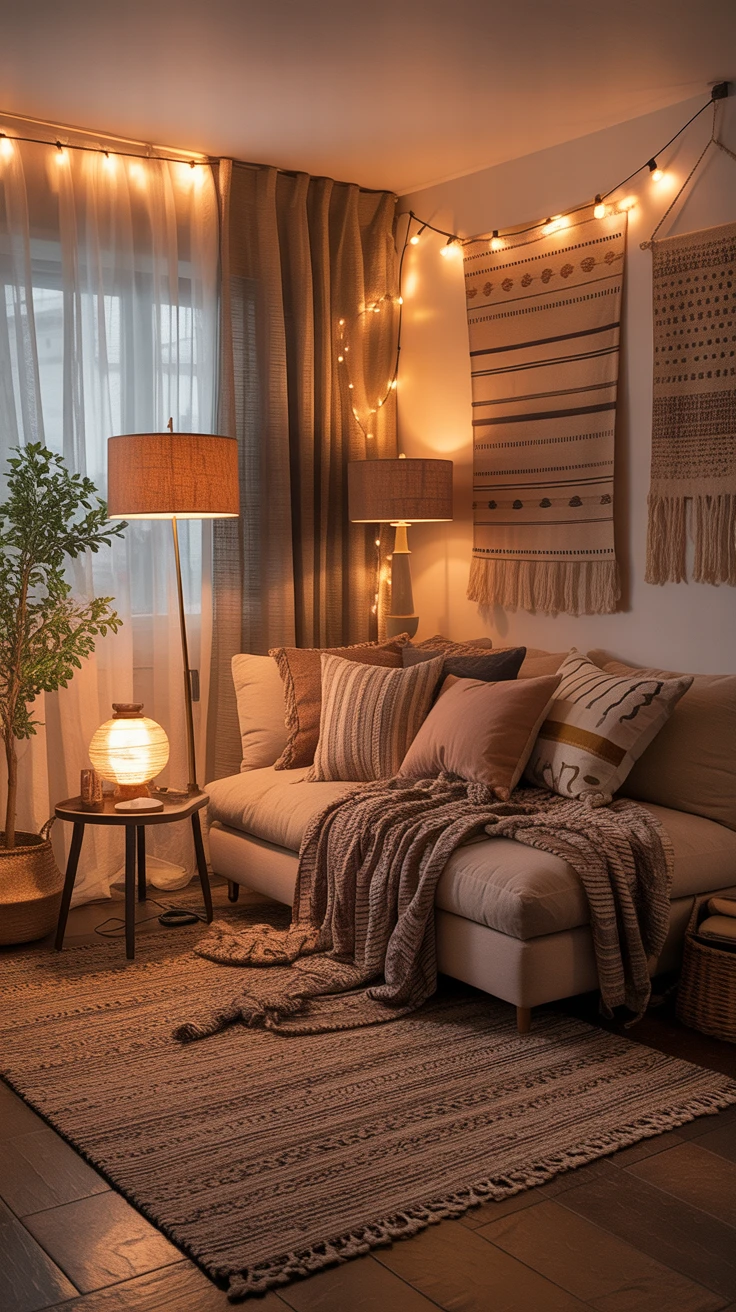
Contrary to what many believe, layering can work beautifully in small spaces when done correctly. This approach creates a snug, inviting atmosphere that transforms your tiny living room into a warm sanctuary.
I remember working with a client who was downsizing from a 2,000-square-foot home to a tiny house. She was worried about losing the cozy factor of her previous space. By focusing on thoughtful layering rather than sheer volume of items, we created a tiny living room that actually felt more intimate and welcoming than her previous oversized one.
Layering Techniques for Tiny Spaces:
- Use a small-scale area rug to define the living space
- Add 2-3 different textile textures through throws and pillows
- Incorporate soft lighting at different heights (floor lamp, table lamp, string lights)
- Layer window treatments with sheer curtains and a heavier drape
- Create depth with wall hangings of varying sizes
Pro Tip: I always suggest investing in a quality sofa bed for tiny house living rooms. During the day, layer it with textured throws and pillows for the full boho effect; at night, it transforms for guests without requiring additional square footage.
5. Global Influence
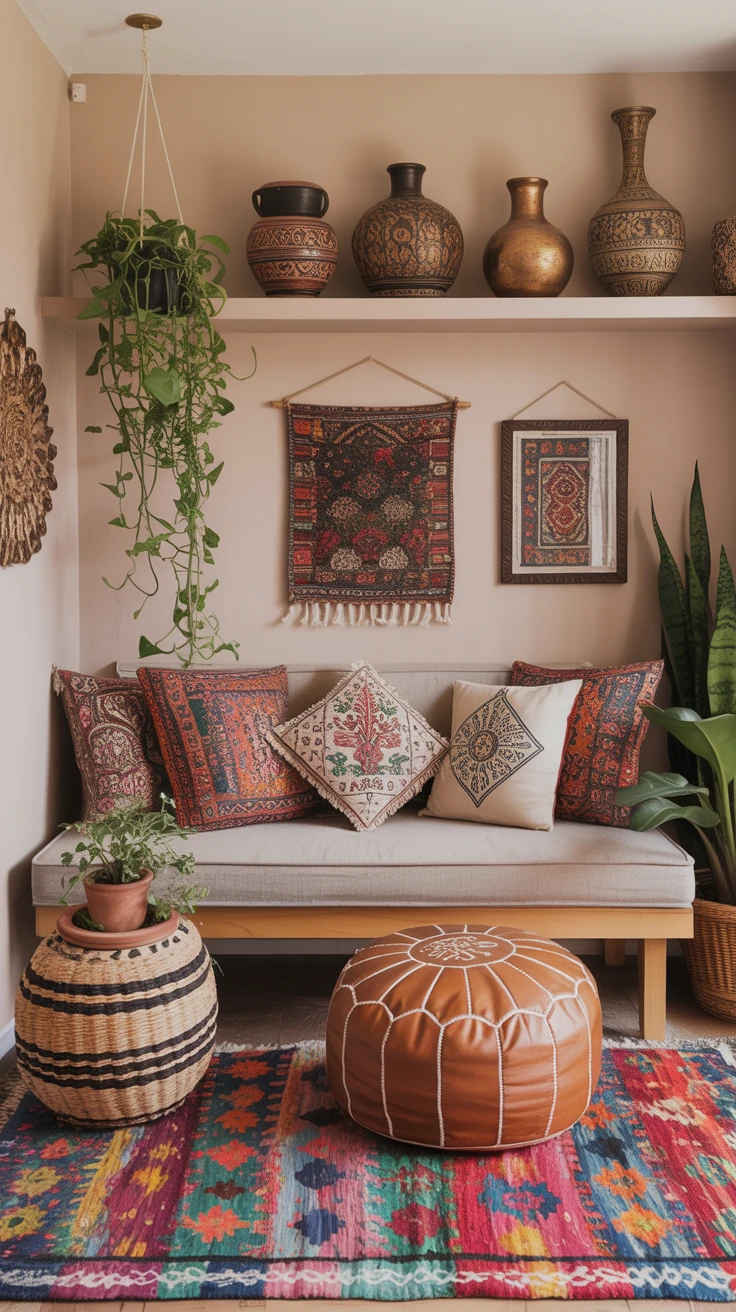
A globally-inspired boho chic living room celebrates cultures from around the world while creating a unique, personal space. In tiny houses, this approach works best when focusing on textiles and smaller items rather than large furniture pieces.
I once made the mistake of trying to fit too many large globally-inspired furniture pieces into a client’s tiny house. We quickly learned that in small spaces, it’s better to let textiles and accessories do the talking while keeping furniture simple and functional.
Global Elements That Work in Small Spaces:
- A small Moroccan pouf that can serve as both seating and a side table
- Indian block-printed throw pillows
- A Turkish kilim rug in a size appropriate for your space
- Wall-hung textiles like a small tapestry or framed fabric
- Handcrafted vessels from different cultures grouped as a collection
Pro Tip: When incorporating global influences in tiny spaces, I’ve found that focusing on one or two cultures rather than trying to represent many creates a more cohesive look that doesn’t overwhelm the space.
6. Vintage Touches
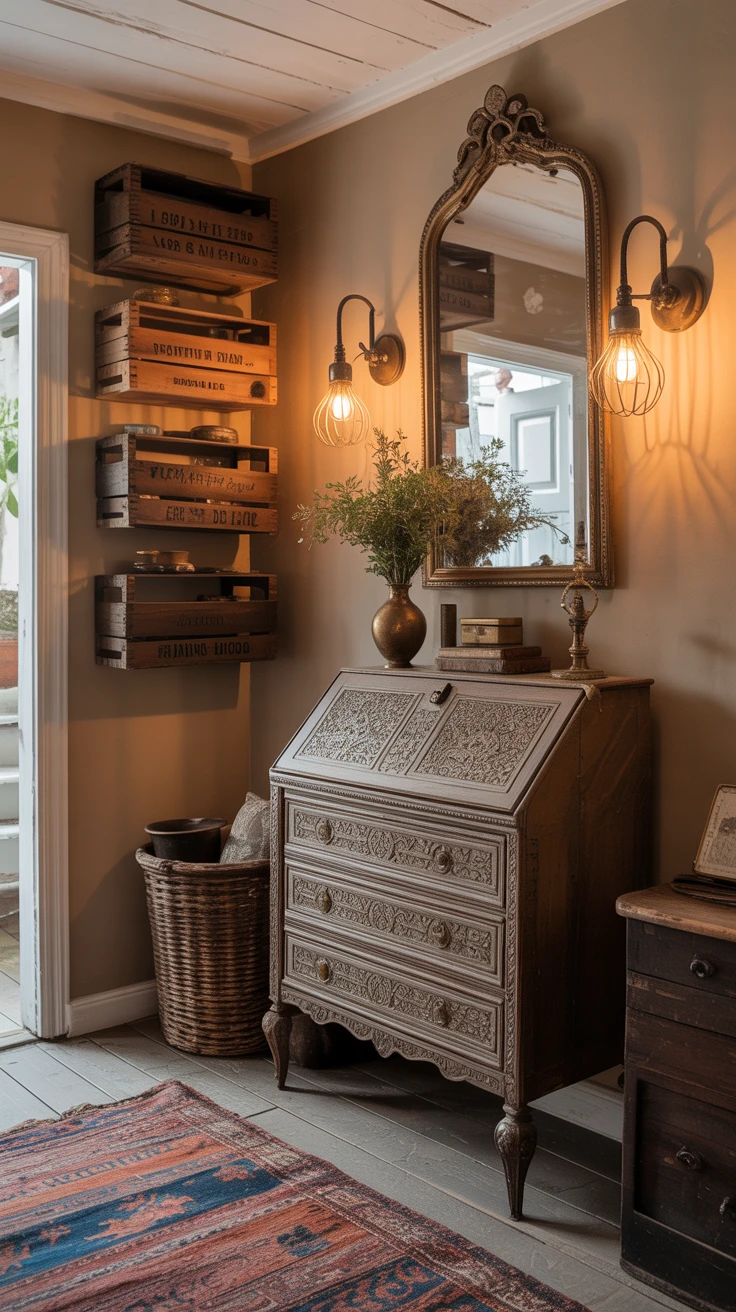
Vintage elements add soul and character to a tiny house living room, creating a space that feels established rather than temporary. The key is selecting pieces that bring both function and charm to your limited square footage.
One of my favorite tiny house projects involved a client who inherited several antique pieces but thought she’d have to part with them all. Instead, we carefully selected items that could serve multiple purposes while adding vintage charm to her new compact lifestyle.
Vintage Elements for Tiny Spaces:
- A small antique mirror to create the illusion of more space
- Vintage wall sconces that don’t require floor or table space
- A compact secretary desk that closes up when not in use
- Antique crates repurposed as wall shelving
- A vintage rug with a worn patina that adds character
Pro Tip: I always tell my clients that vintage items with patina are perfect for tiny house living—they hide wear and tear better than new pieces, making them practical for spaces that see heavy daily use.
Conclusion
Creating a boho chic living room in a tiny house isn’t about squeezing a traditional living room into a smaller footprint—it’s about reimagining what a living space can be. Whether you lean toward minimalist boho, embrace global influences, or prefer vintage touches, the bohemian philosophy of self-expression works beautifully in compact spaces.
Through my years of designing tiny spaces, I’ve learned that the most successful tiny house living rooms reflect their owners’ personalities while respecting spatial limitations. Remember that in boho design, there are no strict rules—only creative opportunities to express yourself, even in the smallest of spaces.
Frequently Asked Questions
How do I balance boho decor with limited space?
Focus on quality over quantity by selecting a few statement pieces that truly speak to you rather than many small items. Use vertical space with hanging plants and wall-mounted elements. I recommend choosing multi-functional furniture pieces and rotating decorative items seasonally to keep your space fresh without overcrowding it.
What are the key elements of a boho chic style?
The essential elements include natural materials (wood, rattan, jute), plants, textiles with texture and pattern, global influences, vintage or handcrafted items, and a relaxed, collected-over-time feeling. In tiny spaces, I find that focusing on textiles and wall decor rather than large furniture pieces helps maintain the boho aesthetic without overwhelming the room.
Can I mix boho chic with other styles in a tiny house?
Absolutely! Some of my most successful tiny house designs combine boho with minimalism, industrial elements, or Scandinavian simplicity. The key is finding common ground—like natural materials in both Scandinavian and boho styles—and being intentional about which elements you incorporate from each style. This prevents the space from feeling chaotic or overcrowded.
How can I incorporate boho chic on a budget?
Thrift stores, flea markets, and online marketplaces are treasure troves for affordable boho decor. DIY projects like macramé wall hangings or painted terracotta pots can add boho charm without breaking the bank. I often advise clients to invest in one quality statement piece (like a beautiful handwoven rug) and supplement with budget-friendly accessories.
What color palettes work best for a boho chic look in small spaces?
For tiny houses, I recommend either a neutral base (whites, creams, beiges) with pops of color through accessories, or warm earth tones (terracotta, rust, olive) that create a cozy atmosphere. Avoid dark colors on all walls as they can make small spaces feel smaller, though a single dark accent wall can add wonderful depth to a tiny living room.