Introduction
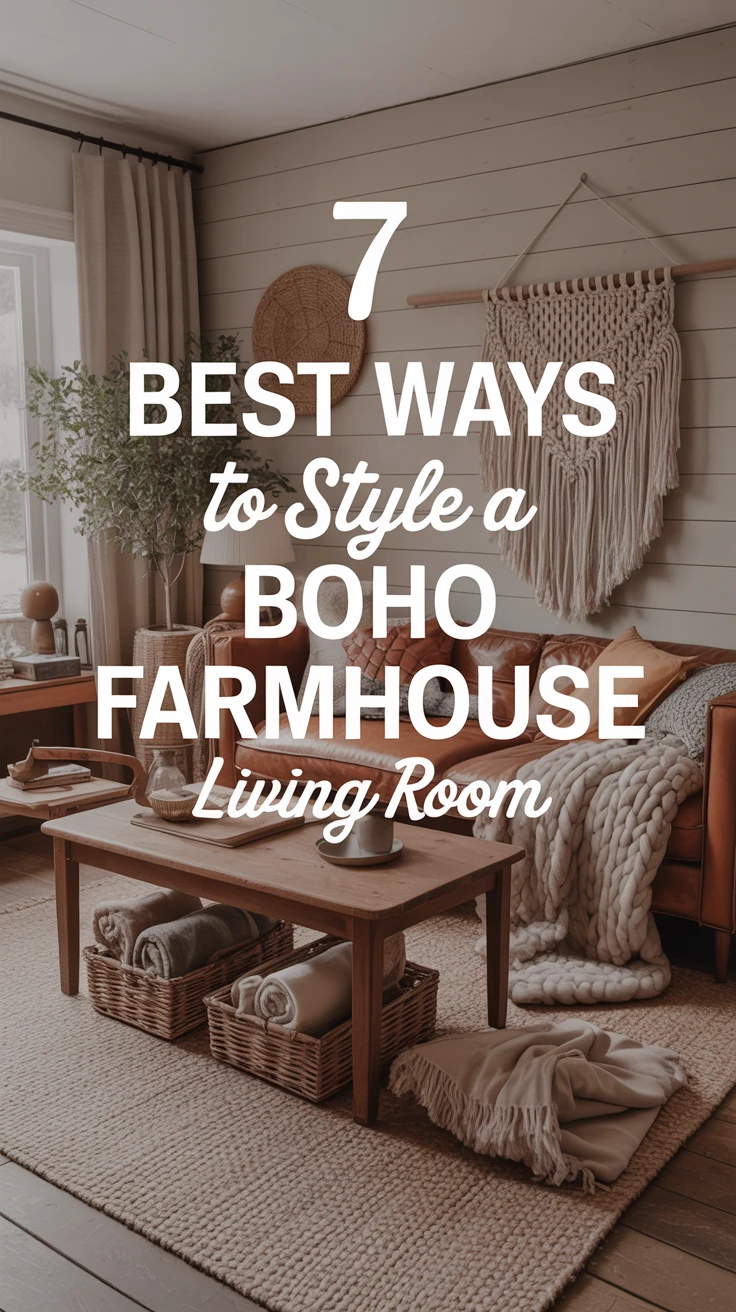
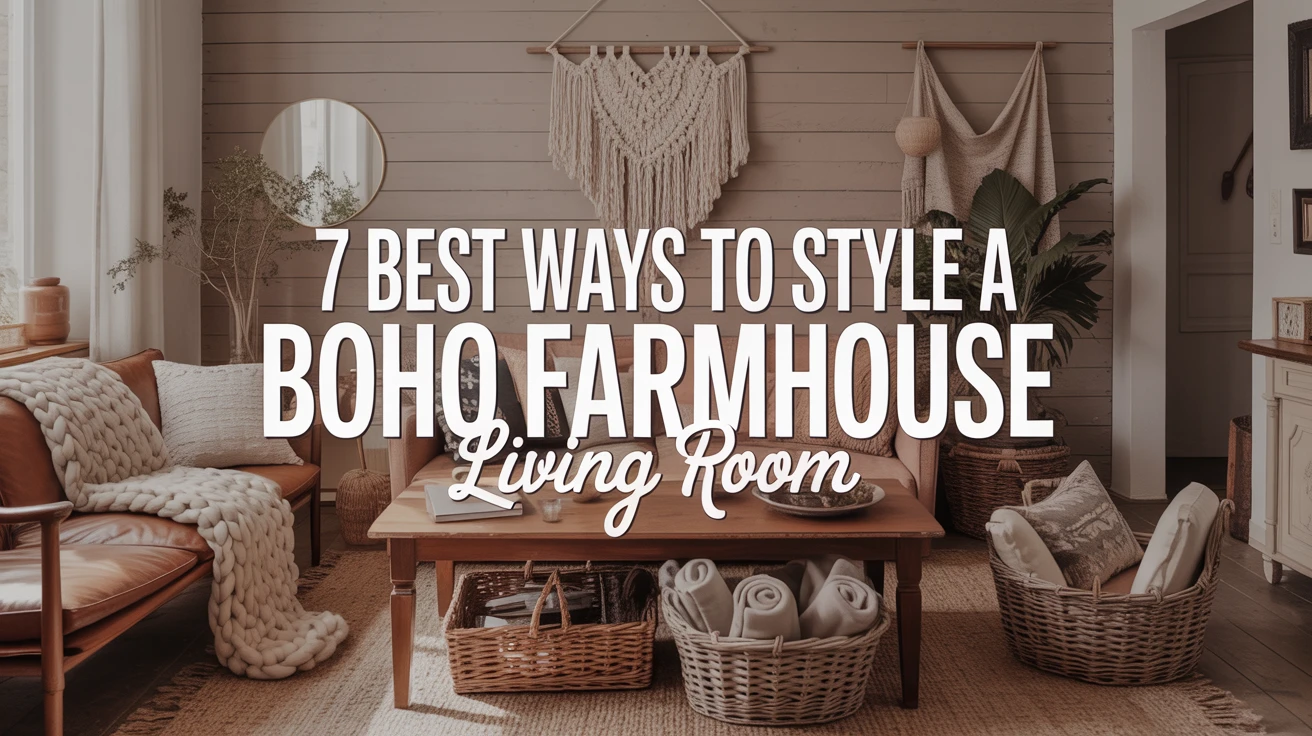
The blend of bohemian freedom and farmhouse warmth creates a uniquely inviting living space that many homeowners are falling in love with. A boho farmhouse living room combines the relaxed, eclectic nature of bohemian style with the cozy, rustic elements of farmhouse decor. This fusion creates spaces that feel both lived-in and curated, personal yet timeless. As an interior designer who’s worked with dozens of clients to achieve this look, I’ve discovered that the magic lies in balancing these two distinct styles. In this article, I’ll share my seven favorite ways to style a boho farmhouse living room that will transform your space into a haven of comfort and character.
1. Incorporate Earthy Tones
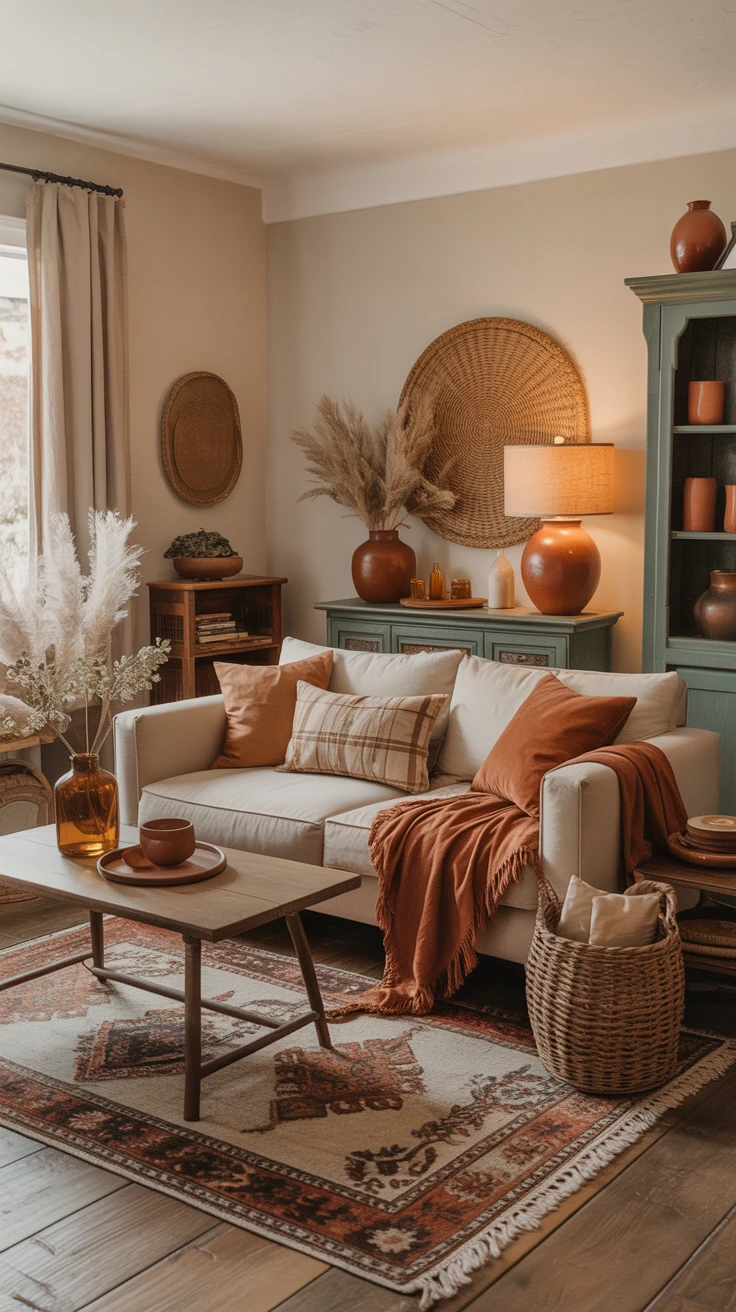
The foundation of any successful boho farmhouse living room begins with a thoughtful color palette. Earthy tones create the perfect backdrop for this style fusion, providing warmth while maintaining a natural aesthetic.
When I redesigned my own living room, I started with a neutral base of warm whites and creams on the walls, then layered in deeper earth tones through furniture and accessories. This approach gives you flexibility to adjust your color story seasonally without major renovations.
- Terracotta and clay – These warm, reddish-brown hues add depth and ground the space
- Olive and sage green – Connect your interior to nature while providing visual interest
- Warm neutrals – Creams, oatmeals, and taupes create a versatile foundation
- Muted blues – Add a touch of farmhouse charm without overwhelming the earthy palette
- Rust and amber – Introduce warmth and the bohemian spirit through accent pieces
Pro Tip: Rather than painting an entire room in a bold earthy tone, I’ve found it more effective to use these colors through textiles, artwork, and accessories. This approach allows you to adjust the intensity of these colors as your style preferences evolve.
2. Mix Textures and Patterns
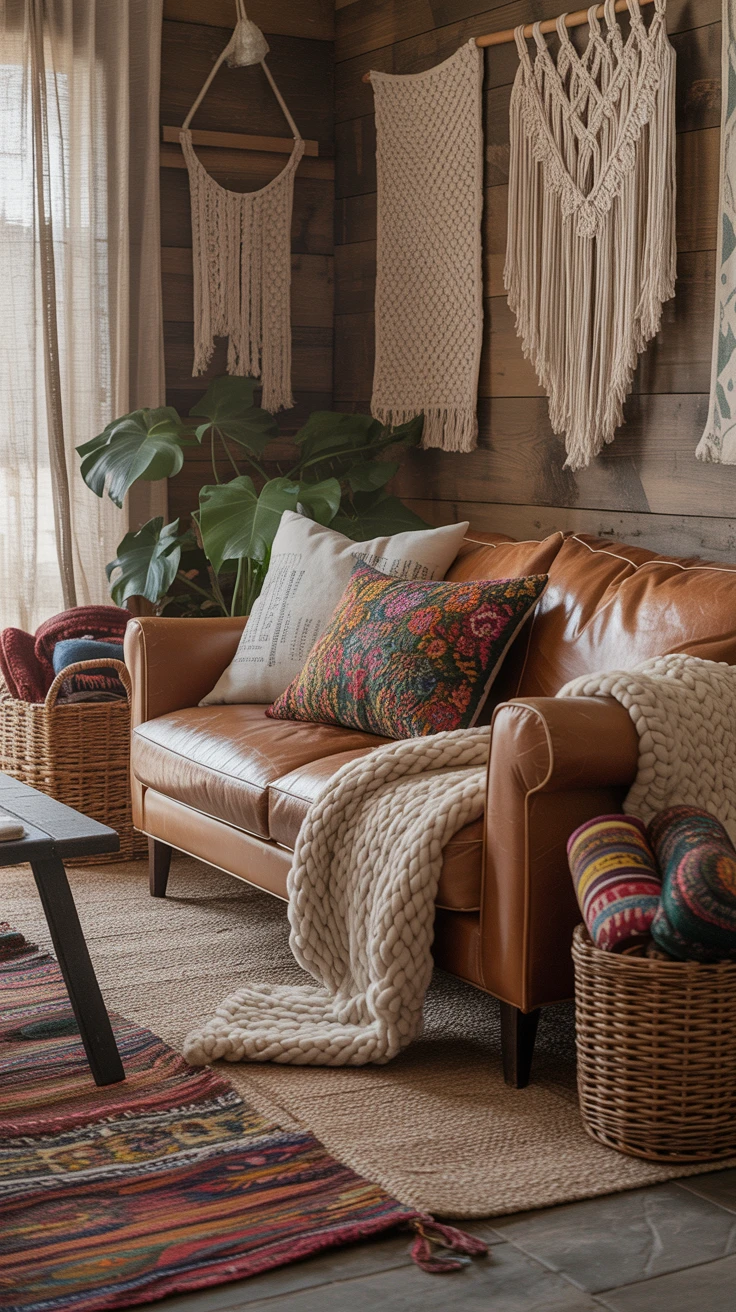
The soul of bohemian style lies in its embrace of varied textures and patterns, while farmhouse style contributes its own textural elements through weathered woods and natural fibers. Combining these creates rich visual interest that invites both the eye and hand to explore.
I learned this lesson the hard way when I first attempted this style. My initial living room felt flat despite having all the “right” pieces. The missing ingredient was textural contrast. Once I introduced varied textures, the space immediately felt more dynamic and lived-in.
Focus on incorporating these textural elements:
- Chunky knit throws draped over a leather sofa
- Macramé wall hangings against shiplap or textured walls
- Embroidered pillows nestled against linen upholstery
- Woven baskets holding rolled blankets
- Handwoven or vintage rugs layered over sisal or jute
When mixing patterns, maintain cohesion by choosing designs that share at least one color from your palette. I typically recommend mixing scales—pairing large-scale patterns with medium and small designs to create balance.
Pro Tip: When in doubt about mixing patterns, follow the rule of three: choose one large-scale pattern, one medium-scale, and one small-scale pattern in complementary colors for foolproof combinations.
3. Embrace Natural Materials
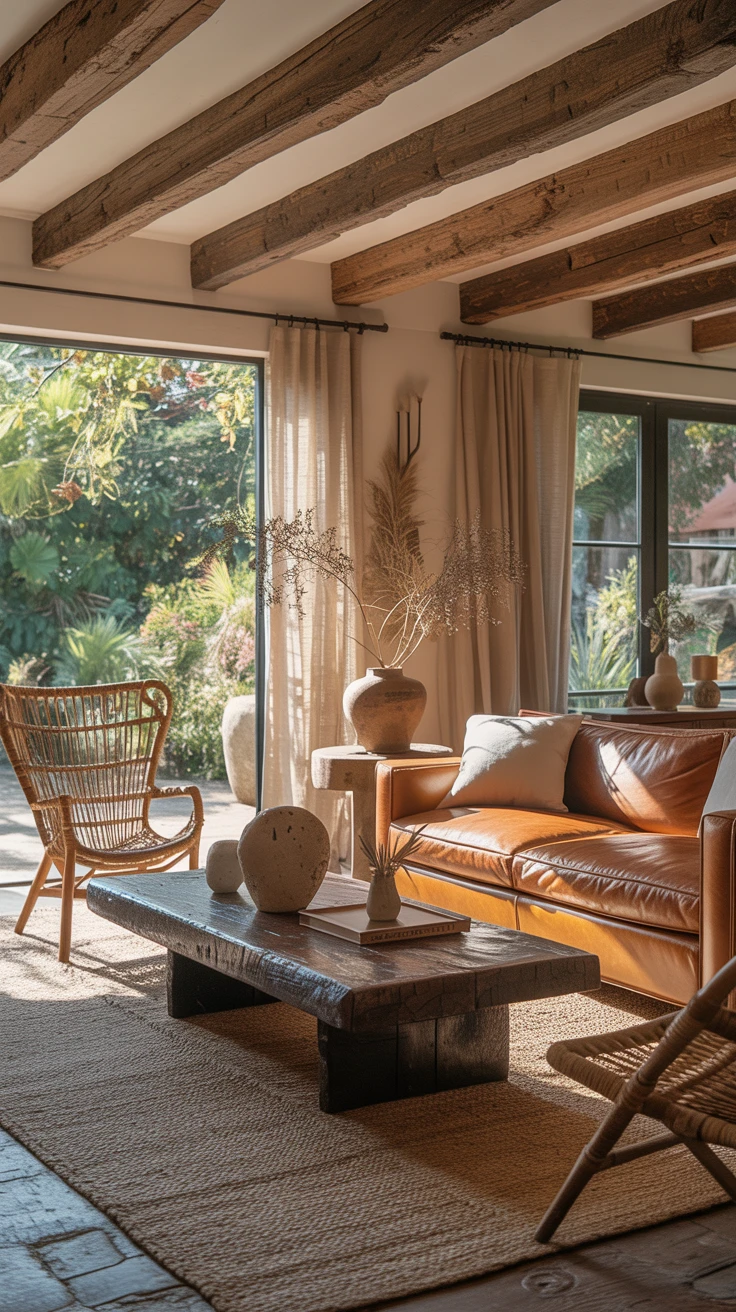
Natural materials form the backbone of both bohemian and farmhouse styles, making them essential in a boho farmhouse fusion. These elements bring authenticity and organic warmth that manufactured materials simply can’t replicate.
In my experience renovating older homes, I’ve found that highlighting existing natural elements—like exposing wooden beams or refinishing original hardwood floors—can provide an instant foundation for this style. If your space lacks these architectural features, you can introduce natural materials through furniture and decor.
Key natural elements to incorporate:
- Wood – Opt for reclaimed or distressed wooden coffee tables, side tables, or exposed beams
- Rattan and wicker – Introduce through chairs, light fixtures, or decorative baskets
- Jute and sisal – Perfect for rugs that can withstand high-traffic areas
- Leather – Adds warmth through sofas, ottomans, or accent chairs
- Cotton and linen – Incorporate through curtains, pillow covers, and throws
- Stone and clay – Feature in decorative objects, planters, or accent tables
Pro Tip: Allow natural materials to age gracefully. I once had a client who was distressed when her leather sofa began developing a patina, but I explained that this natural aging process adds character and authenticity to boho farmhouse spaces.
4. Add Vintage and Rustic Elements
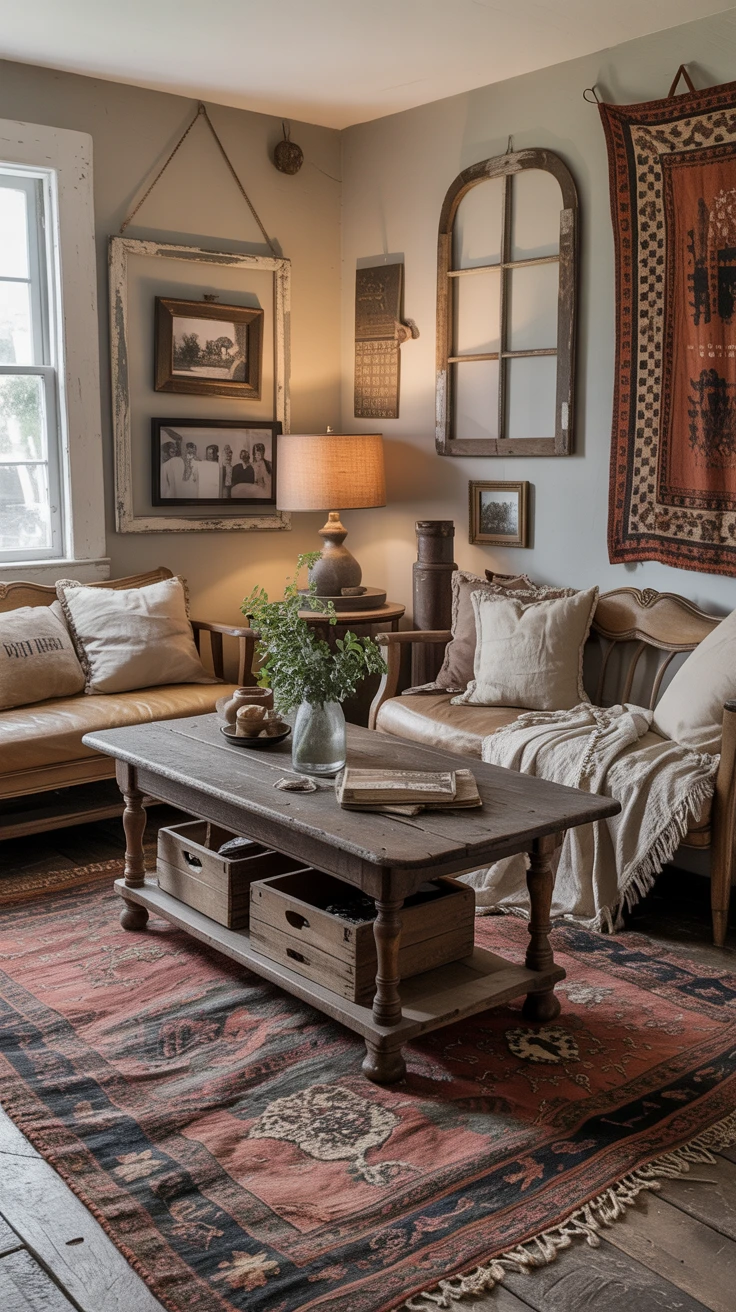
Vintage pieces tell stories and add soul to your space—something I believe every living room needs. The boho farmhouse style embraces imperfection, making it the perfect canvas for incorporating pre-loved items with character and history.
Some of my favorite rooms have centered around a single vintage find. For one client, we built an entire living room design around a magnificent antique farm table repurposed as a unique coffee table. The piece sparked conversations and became the heart of their gathering space.
Look for these vintage and rustic elements:
- Antique wooden furniture with signs of loving use
- Vintage textiles like quilts or tapestries
- Weathered picture frames housing family photos
- Architectural salvage pieces as wall art
- Vintage rugs with subtle wear patterns
- Rustic wooden crates for storage or display
Pro Tip: Don’t limit your vintage hunting to antique stores. Some of my best finds have come from estate sales, online marketplaces, and even family attics. The pieces with personal connection often become the most meaningful elements in your space.
5. Create a Cozy Atmosphere
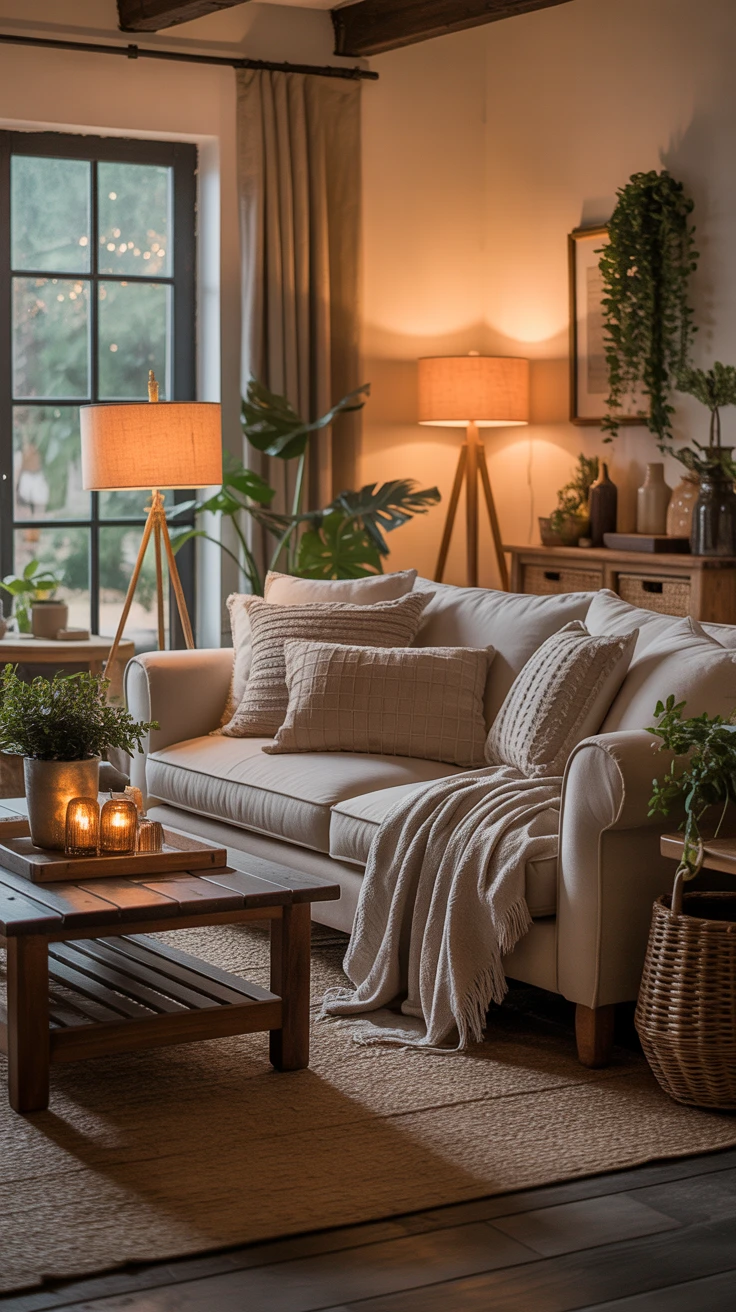
Coziness is non-negotiable in a boho farmhouse living room. This style should envelop you in comfort the moment you enter the space, inviting relaxation and lingering conversations.
I learned about the importance of layered lighting when I made the mistake of relying solely on overhead fixtures in my first apartment. The harsh lighting created an unwelcoming atmosphere that no amount of cozy textiles could overcome. Now I always create lighting plans with multiple sources at different heights.
Elements that contribute to a cozy atmosphere:
- Layered lighting – Combine floor lamps, table lamps, and candles for a warm glow
- Plush seating – Deep sofas with plenty of cushions invite lengthy lounging
- Soft textiles – Layer blankets and pillows in varying textures
- Intimate arrangement – Position furniture to facilitate conversation
- Natural elements – Incorporate wood, stone, and plants to ground the space
Pro Tip: Install dimmer switches on your main lighting fixtures. This simple addition allows you to adjust the ambiance based on time of day or activity, from bright morning light for reading to soft evening glow for relaxing.
6. Use Plants as Decorative Pieces
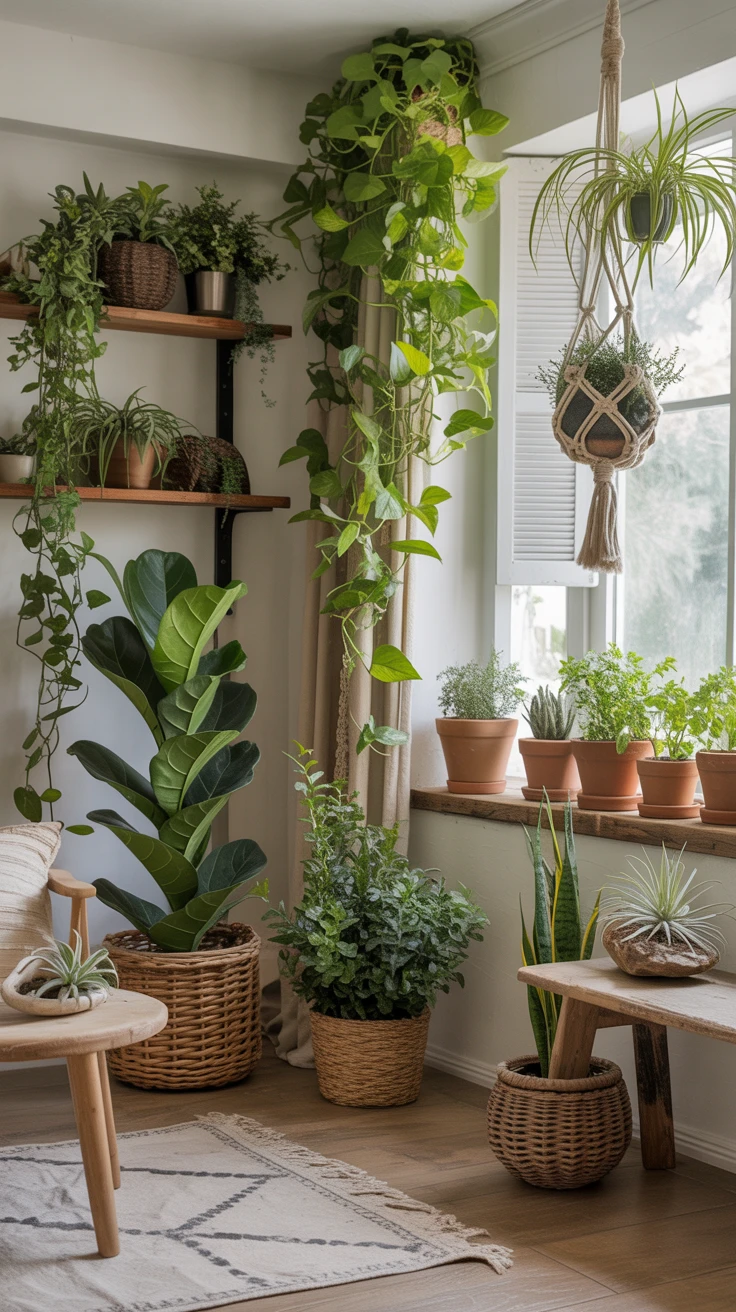
Plants breathe life into a boho farmhouse space, adding color, texture, and a connection to nature. They’re also one of the most affordable ways to make a significant impact on your living room’s atmosphere.
I once worked with a client who was hesitant about incorporating plants due to past “plant parenting” failures. We started with just three low-maintenance varieties, and within months, her confidence grew along with her collection. Now her living room features a stunning array of greenery that makes the space feel vibrant and alive.
Consider these plant options and display ideas:
- Trailing plants like pothos or ivy cascading from macramé hangers
- Statement plants such as fiddle leaf figs or olive trees in woven baskets
- Groupings of smaller plants on wooden shelves or plant stands
- Herbs in terracotta pots on windowsills
- Air plants displayed in unique containers like driftwood or geodes
Pro Tip: If you’re concerned about your ability to keep plants alive, start with varieties known for their resilience like snake plants, ZZ plants, or pothos. These can withstand occasional neglect while still providing the benefits of living greenery.
7. Personalize with Art and Accessories
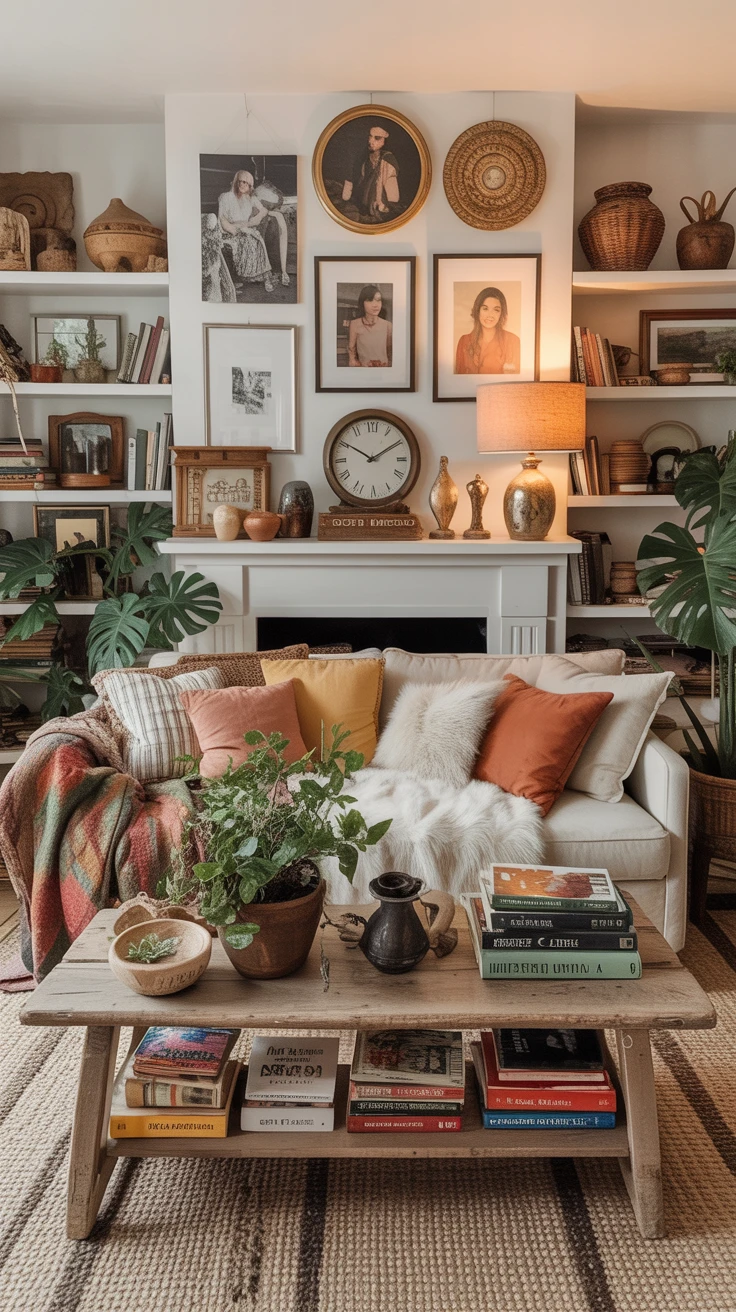
The final and perhaps most important element of a boho farmhouse living room is personalization. This style celebrates individuality and storytelling through carefully curated art and accessories.
The most successful spaces I’ve designed have incorporated elements that reflect the homeowner’s travels, heritage, or interests. These personal touches transform a stylish room into a meaningful sanctuary that truly feels like home.
Ways to personalize your space:
- Create a gallery wall mixing professional art with personal photographs
- Display handcrafted items from local artisans or family members
- Incorporate meaningful souvenirs from travels
- Arrange books that reflect your interests and passions
- Include elements that tell your family’s story
Pro Tip: Rotate your accessories seasonally to keep your space feeling fresh. I maintain a small collection of decor items that I swap out a few times a year, which gives my living room a refreshed feel without requiring major changes or expenses.
Pro Tips for a Boho Farmhouse Living Room
After years of designing these spaces, I’ve gathered some additional insights that can help you create a truly successful boho farmhouse living room:
- Balance is key – Aim for roughly 60% farmhouse elements and 40% bohemian touches for a harmonious blend
- Edit thoughtfully – This style can easily tip into cluttered territory; periodically assess your space and remove items that don’t contribute meaningfully
- Invest strategically – Spend on quality foundational pieces (sofa, rugs) and save on easily changeable accessories
- Embrace imperfection – The charm of this style lies in its lived-in, collected-over-time appearance
- Consider scale – Mix large statement pieces with smaller accents for visual interest
Frequently Asked Questions
What are the key characteristics of boho farmhouse style?
Boho farmhouse style combines the relaxed, eclectic nature of bohemian design with the warm, rustic elements of farmhouse decor. Key characteristics include earthy color palettes, mixed textures and patterns, natural materials, vintage or antique pieces, abundant textiles, indoor plants, and personalized accessories. The style balances farmhouse simplicity with bohemian freedom for a look that’s both cozy and expressive.
How do I choose the right furniture for this style?
Look for pieces that blend rustic farmhouse elements with bohemian flair. Opt for natural materials like wood, rattan, and leather. Choose comfortable, lived-in seating with clean lines (farmhouse influence) but dress it with textured pillows and throws (bohemian influence). Mix new pieces with vintage finds for authenticity. Prioritize comfort and function while allowing for some statement pieces that showcase either bohemian patterns or farmhouse craftsmanship.
Can I incorporate modern elements into a boho farmhouse design?
Absolutely! Modern elements can create interesting contrast in a boho farmhouse space. Consider incorporating modern lighting fixtures, sleek side tables, or contemporary art alongside your more rustic and bohemian pieces. The key is balance—use modern elements sparingly as accents rather than letting them dominate. This thoughtful mixing of eras and styles actually enhances the collected-over-time aesthetic that makes boho farmhouse spaces feel authentic.
How do I maintain a balanced look without clutter?
While bohemian style embraces abundance, too many elements can create visual chaos. Establish “breathing room” around key pieces. Group smaller items into intentional vignettes rather than scattering them throughout the space. Incorporate storage solutions like baskets and cabinets to hide necessary but visually distracting items. Regularly edit your accessories, removing pieces that don’t contribute meaningfully to the space. Finally, maintain some empty space on walls and surfaces to give the eye places to rest.
What are budget-friendly ways to achieve this style?
Thrift stores, flea markets, and online marketplaces are treasure troves for affordable boho farmhouse finds. Look for secondhand furniture that you can refresh with paint or new hardware. DIY projects like macramé wall hangings or painted terracotta pots add bohemian charm inexpensively. Natural elements like branches, stones, or dried grasses make free or low-cost decor. Textiles like pillows and throws can be found affordably at discount stores and instantly add boho farmhouse character. Start with a neutral base and add statement pieces gradually as your budget allows.