


Introduction to Minimalist Christmas Tree Decor
When December rolls around, I find myself craving simplicity amid the holiday chaos. That’s why I’ve embraced minimalist Christmas tree decor in recent years. This approach isn’t about being a Scrooge—it’s about creating intentional holiday spaces that feel peaceful rather than overwhelming.
Minimalist holiday decor focuses on the “less is more” philosophy, emphasizing quality over quantity. By carefully selecting fewer, more meaningful decorations, you can create a Christmas tree that feels both festive and serene. I’ve discovered that this approach not only creates a visually stunning tree but also reduces the stress of holiday decorating.
The beauty of minimalism lies in its versatility. Whether you prefer Scandinavian-inspired simplicity, Japanese-influenced design, or just want to tone down the traditional Christmas explosion, these ideas will help you create a tree that brings calm to your holiday season.
Choosing the Right Tree
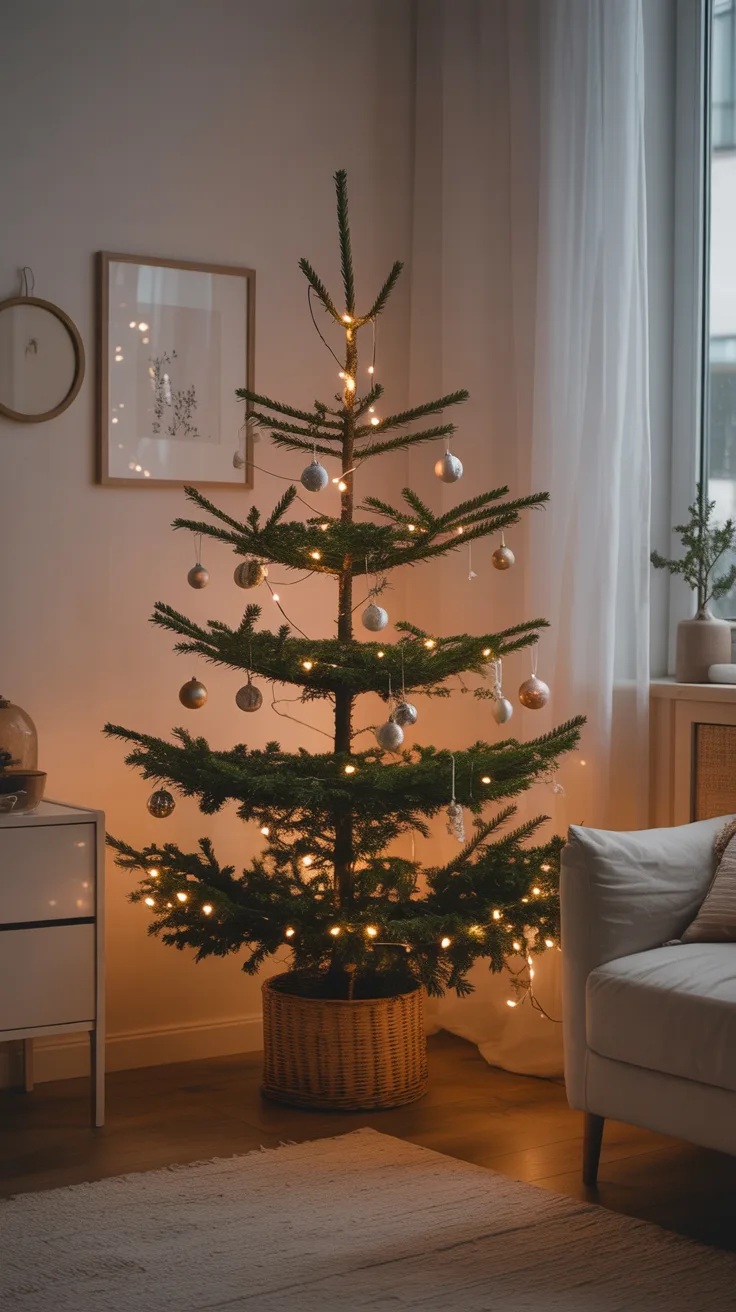
The foundation of any minimalist Christmas tree is, well, the tree itself. I learned this lesson the hard way after buying a massive, full-bodied fir that overwhelmed my small apartment. Now I know that selecting the right tree is crucial for achieving that clean, uncluttered look.
- Consider scale: Choose a tree proportionate to your space. A slim or pencil tree works wonderfully in smaller rooms.
- Embrace negative space: Trees with visible gaps between branches actually enhance the minimalist aesthetic by allowing ornaments to shine.
- Explore alternatives: Consider a small potted evergreen, a wall-mounted branch arrangement, or even a wooden A-frame tree for ultra-minimalism.
- Color options: While green is traditional, white or flocked trees can create a serene winter wonderland effect.
Pro Tip: If you’re using an artificial tree, look for one with adjustable branches so you can create the exact silhouette you want, even spacing out branches to achieve that modern, sparse look.
Opt for a Simple Tree
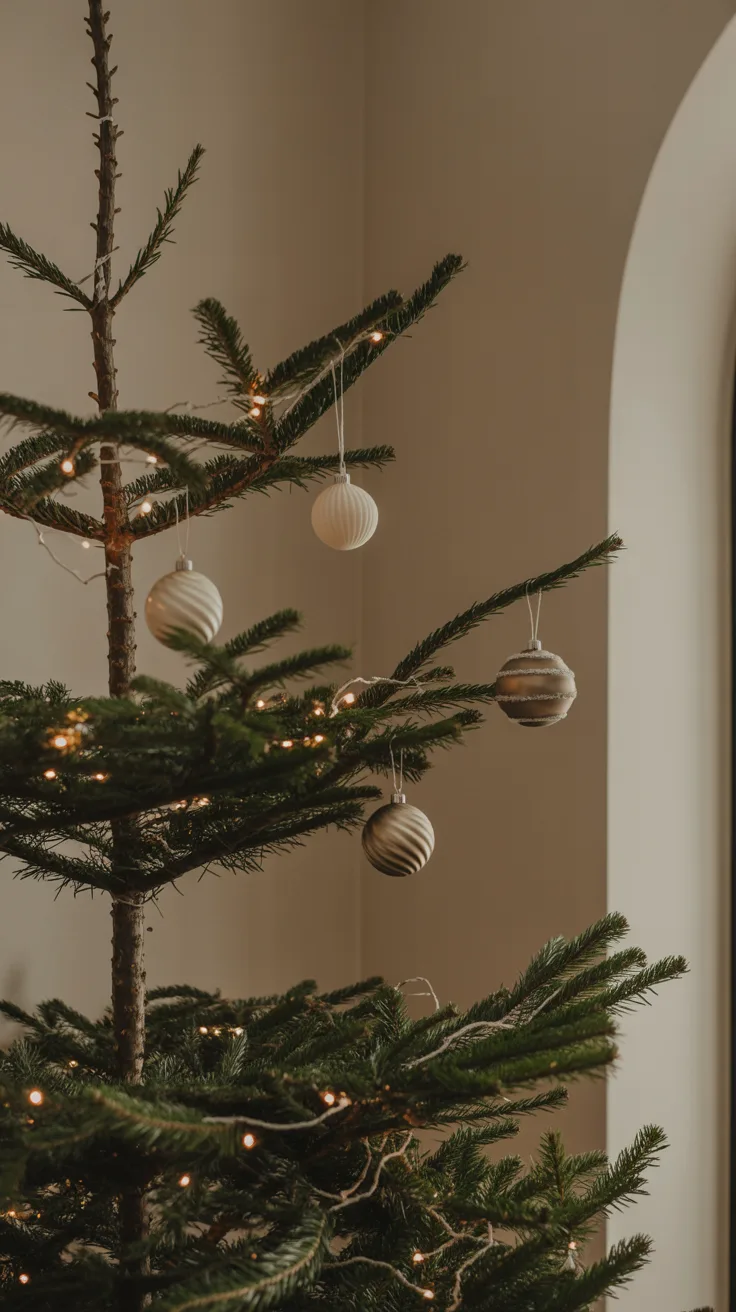
Last year, I switched from my usual full Fraser fir to a Charlie Brown-esque tree with visible trunk and asymmetrical branches. While my mother was horrified, I found its imperfection perfectly charming. The simplicity allowed each carefully chosen ornament to become a focal point rather than getting lost in dense foliage.
Simple trees with clean lines complement contemporary interiors beautifully. If you prefer artificial trees, consider models specifically designed with minimalism in mind—many modern options feature sleek silhouettes without the overly fluffy look of traditional artificial trees.
For the truly brave, I’ve even experimented with a completely bare branch “tree” mounted to the wall with invisible hardware. The result was striking and took up zero floor space—a win-win in my small living room.
Minimalist Ornament Ideas
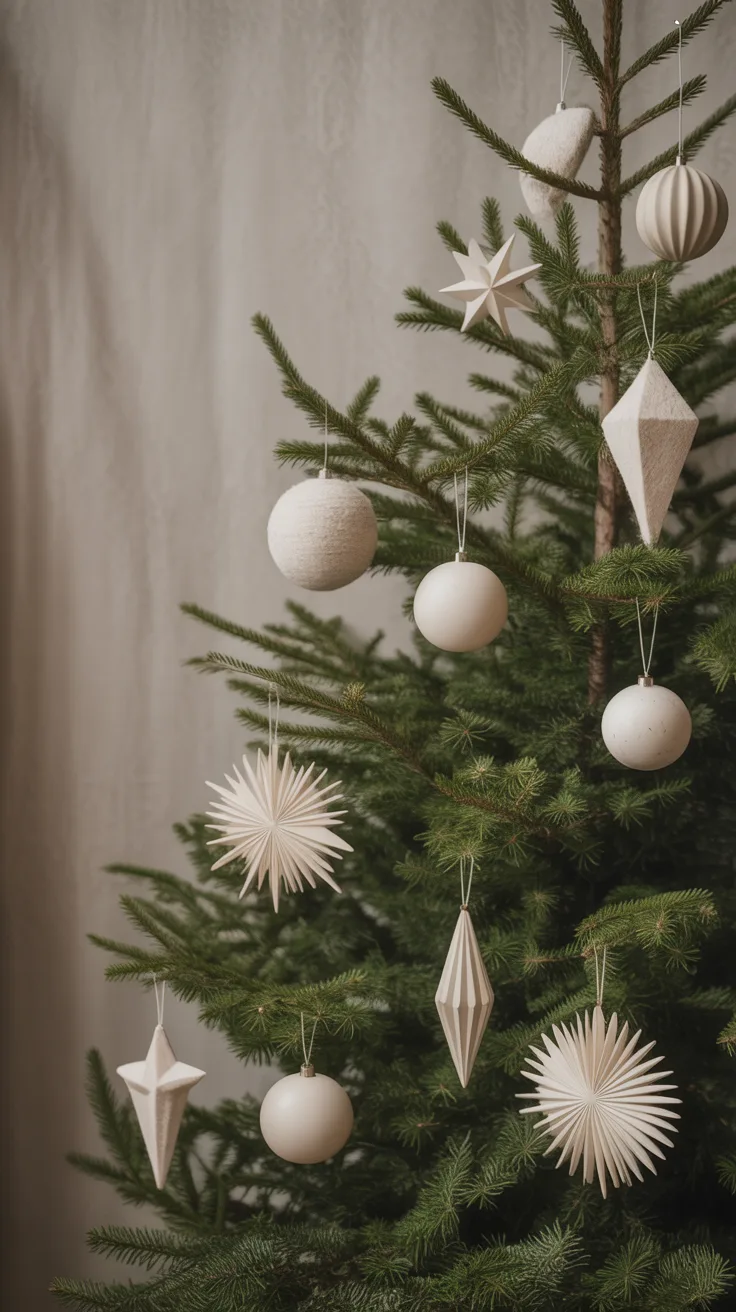
When it comes to decorating a minimalist Christmas tree, curation is everything. I’ve learned to be ruthlessly selective about ornaments, focusing on pieces that truly speak to me rather than filling every inch of the tree.
- Geometric shapes: Simple spheres, stars, or polygons in matte finishes create visual interest without visual clutter.
- Handmade elements: Consider clay ornaments in neutral tones or simple paper decorations.
- Heirloom focus: Display just a few meaningful family heirlooms rather than every ornament you own.
- Textural pieces: Incorporate elements with interesting textures like wool, linen, or brushed metal.
- Negative space: Remember that empty space between ornaments is a design element itself—don’t feel compelled to fill every gap.
Monochrome Ornaments
One of my favorite approaches to minimalist tree decorating is using a monochromatic color scheme. Last Christmas, I committed to an all-white tree with silver accents, and the result was breathtaking in its simplicity.
Working within a limited color palette creates instant cohesion. Consider whites and creams for a winter wonderland feel, or go for all metallics—gold, silver, or copper—for subtle glamour. Black ornaments on a traditional green tree create dramatic contrast that feels both modern and sophisticated.
Pro Tip: If you’re struggling to commit to a single color, try a tonal approach instead. Choose varying shades of the same color (like light blue to navy) for depth without chaos.
Natural Elements
Nature provides some of the best minimalist decorations. After an autumn hike last year, I collected pinecones that I later sprayed with a hint of gold for my tree. They cost nothing but looked far more expensive than store-bought ornaments.
Beyond pinecones, consider incorporating dried orange slices, cinnamon sticks, wooden stars, or even elegant bare branches as ornaments. These natural elements bring warmth and texture while maintaining the minimalist aesthetic.
For a truly Nordic-inspired look, I’ve used small bundles of dried wheat or grasses tied with simple twine. The effect is rustic yet refined—and completely biodegradable after the holidays.
Lighting for a Minimalist Tree
Lighting makes or breaks a minimalist tree. My first attempt at minimalist decorating was nearly ruined by multicolored flashing lights that fought against the serene vibe I was trying to create.
Warm white lights are the gold standard for minimalist trees. They provide a gentle glow that enhances rather than competes with your carefully chosen ornaments. I prefer lights with thin, nearly invisible wires that disappear into the branches.
Consider the pattern of your lights as well. Rather than the chaotic wrapping method I used to employ, I now carefully weave lights in consistent, evenly spaced rows from top to bottom. This methodical approach creates a more intentional look that complements the minimalist aesthetic.
Pro Tip: Battery-operated or remote-controlled lights eliminate cord clutter at the base of your tree, maintaining that clean look from top to bottom.
Tree Skirt and Base Options
The base of your tree deserves as much thought as the decorations. I used to overlook this area until I realized how much a beautiful base enhances the overall look of a minimalist Christmas tree.
- Simple fabric: A square of linen, wool, or even a cozy knit blanket in a neutral tone creates a soft foundation.
- Woven baskets: Place your tree in a simple basket for texture and warmth.
- Concrete or ceramic planters: For smaller trees, modern planters create a sleek, architectural look.
- Wooden collars: A simple wooden box or collar around the base adds natural warmth.
- No skirt at all: For the ultimate in minimalism, consider a beautiful stand with no covering—especially effective with potted trees.
I personally love using a simple sheepskin rug as a tree skirt. It adds texture and warmth while maintaining the clean aesthetic. Plus, it catches any falling needles beautifully.
Pro Tips for Maintaining Minimalism
Maintaining a minimalist approach can be challenging, especially when faced with sentimental ornaments or well-meaning gifts. Here are some strategies I’ve developed over years of minimalist holiday decorating:
- Rotate collections: If you have many beloved ornaments, display different ones each year rather than cramming them all onto one tree.
- Create distance: Step back frequently while decorating to assess the overall effect—it’s easy to overdo it when you’re up close.
- Edit ruthlessly: If an ornament doesn’t contribute to your vision, save it for another year or another display area.
- Embrace asymmetry: Perfectly balanced decoration can sometimes feel stiff—don’t be afraid of intentional imbalance.
- Consider negative space: The empty areas between decorations are part of the design—don’t feel compelled to fill every gap.
Pro Tip: Take photos of your tree from different angles before adding more decorations. This helps you see it objectively and often reveals that less truly is more.
Remember that minimalism isn’t about deprivation—it’s about intention. My most beautiful Christmas trees have been the ones with fewer, more thoughtfully chosen decorations rather than a hodgepodge of everything I own.
Frequently Asked Questions
What are minimalist Christmas tree colors?
The most common minimalist Christmas tree color schemes include whites, creams, metallics (silver, gold, copper), blacks, and natural tones. Monochromatic approaches work particularly well, though you can also incorporate subtle accent colors. The key is limitation—choose 1-3 colors maximum for true minimalist appeal.
How can I make my Christmas tree look minimalist?
Start with a simpler tree (consider one with visible gaps between branches), limit your color palette, use fewer ornaments with more space between them, opt for warm white lights in an organized pattern, and choose a simple tree base. Remember that negative space is an essential element of minimalist design.
What materials are best for minimalist Christmas decor?
Natural materials like wood, ceramic, glass, metal, wool, and linen work beautifully in minimalist decor. Look for matte finishes rather than glossy ones, and consider handmade elements with visible texture. Avoid plastic when possible, as natural materials tend to have more depth and character.
How do I choose the right lights for a minimalist tree?
Warm white lights on thin, nearly invisible wires are ideal for minimalist trees. Avoid multicolored or flashing lights, which can disrupt the serene aesthetic. Consider the pattern of your lighting as well—evenly spaced rows create a more intentional look than random wrapping.
Can I use traditional ornaments in a minimalist theme?
Absolutely! The key is selectivity. Choose your most beloved traditional ornaments and give them room to shine by using fewer of them. Consider grouping similar traditional ornaments together for visual impact, and balance them with simpler decorations. Even the most elaborate ornament can work in a minimalist scheme if it’s given proper space.