Introduction
Living in a tiny home presents unique challenges, especially when it comes to storage. As someone who downsized from a 1,200 square foot apartment to a 400 square foot tiny home, I’ve learned that minimalist storage solutions aren’t just helpful—they’re essential. The key is finding storage options that maximize your limited space while maintaining a clean, uncluttered aesthetic. In this article, I’ll share 12 practical storage solutions that have transformed my tiny living experience. These ideas will help you reclaim your space without sacrificing style or functionality, whether you’re in a micro-apartment, tiny house, or just looking to embrace minimalist living.

- Adjustable louvered roof lets you control sun, shade, and airflow.
- Built-in gutter system keeps the area dry during rain.
- Durable powder-coated aluminum frame resists rust and weather.
- Includes waterproof curtains and mosquito netting for privacy and protection.

- Smooth contours and seamless design
- Up to 325 square feet of shaded paradise
- Features 4.53×4.53 inch reinforced columns
- Say goodbye to water buildup woes! Our innovative drainage system of this hardtop pergola discreetly whisks away excess water
1. Elevate Your Living with Space-Saving Furniture
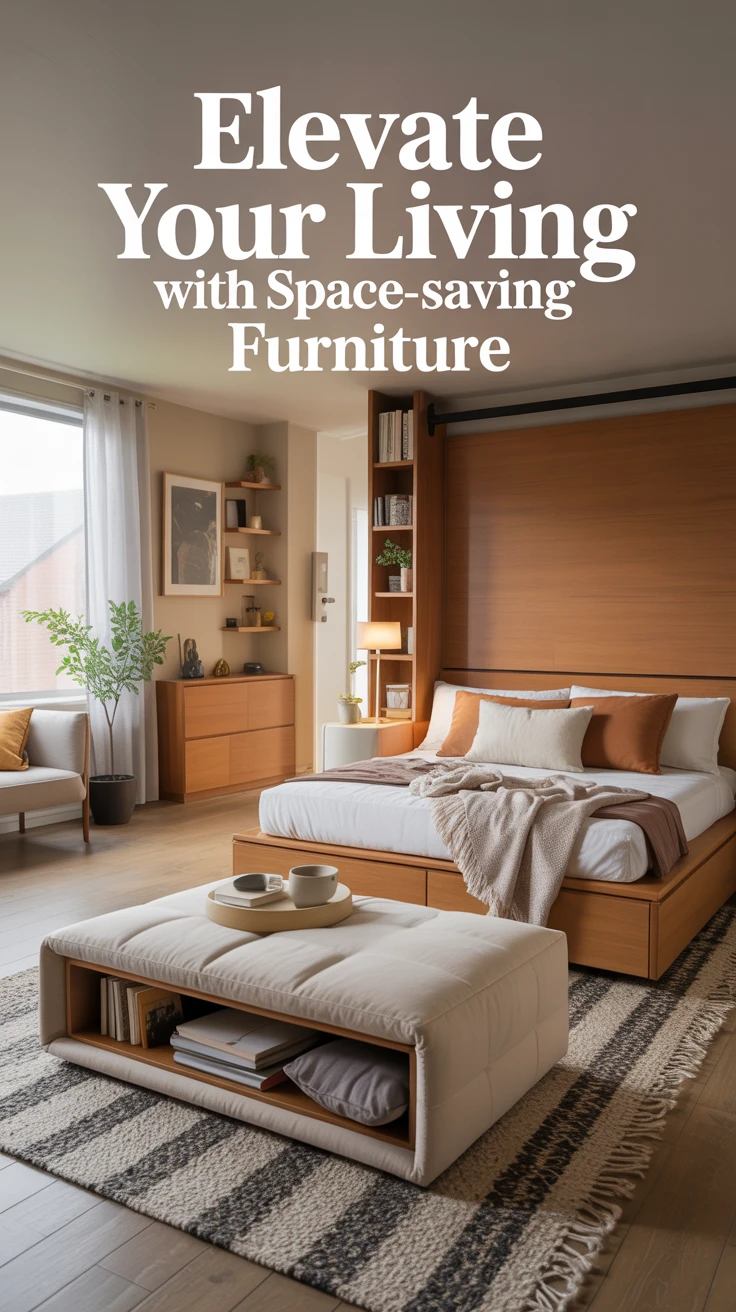
When I first moved into my tiny home, I quickly realized that traditional furniture wasn’t going to cut it. Space-saving furniture with built-in storage has been a game-changer in my minimalist journey.
- Storage ottomans that double as seating and hide blankets or books
- Platform beds with drawers underneath
- Murphy beds that fold into the wall when not in use
- Nesting tables that can be stacked or spread out as needed
I invested in a storage ottoman that serves triple duty as a coffee table, extra seating, and storage for my winter blankets. This single piece eliminated the need for three separate items in my living room.
Pro Tip: When shopping for furniture, always ask yourself, “Does this serve more than one purpose?” If the answer is no, keep looking. Multi-functional pieces are worth the investment for tiny spaces.
2. Double Duty: Multi-Functional Pieces
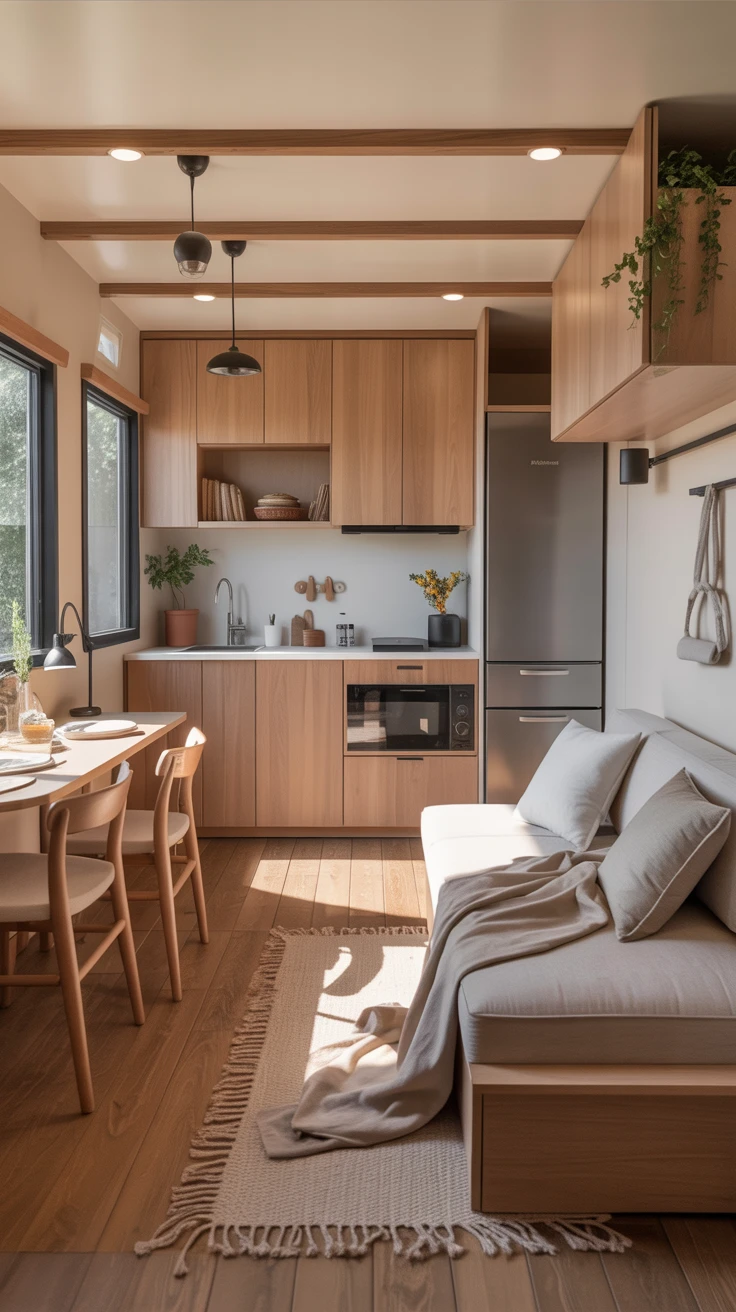
Beyond furniture with storage, I’ve found that items serving multiple functions are essential in minimalist storage solutions. These pieces work harder so you don’t need as many things.
- Sofa beds for guests without dedicating space to a guest room
- Dining tables with drop leaves or extensions
- Kitchen islands with built-in workspace and storage
- Desks that transform into dining tables
My favorite multi-functional piece is my kitchen island. It provides prep space, dining space, additional storage, and even houses my microwave. I originally planned to have separate furniture for each function, but this one piece saved me at least 15 square feet of precious floor space.
Pro Tip: Look for furniture designed specifically for small spaces. Companies like IKEA, Resource Furniture, and Expand Furniture specialize in multi-functional pieces that transform to meet different needs.
3. Reach New Heights with Wall-Mounted Storage
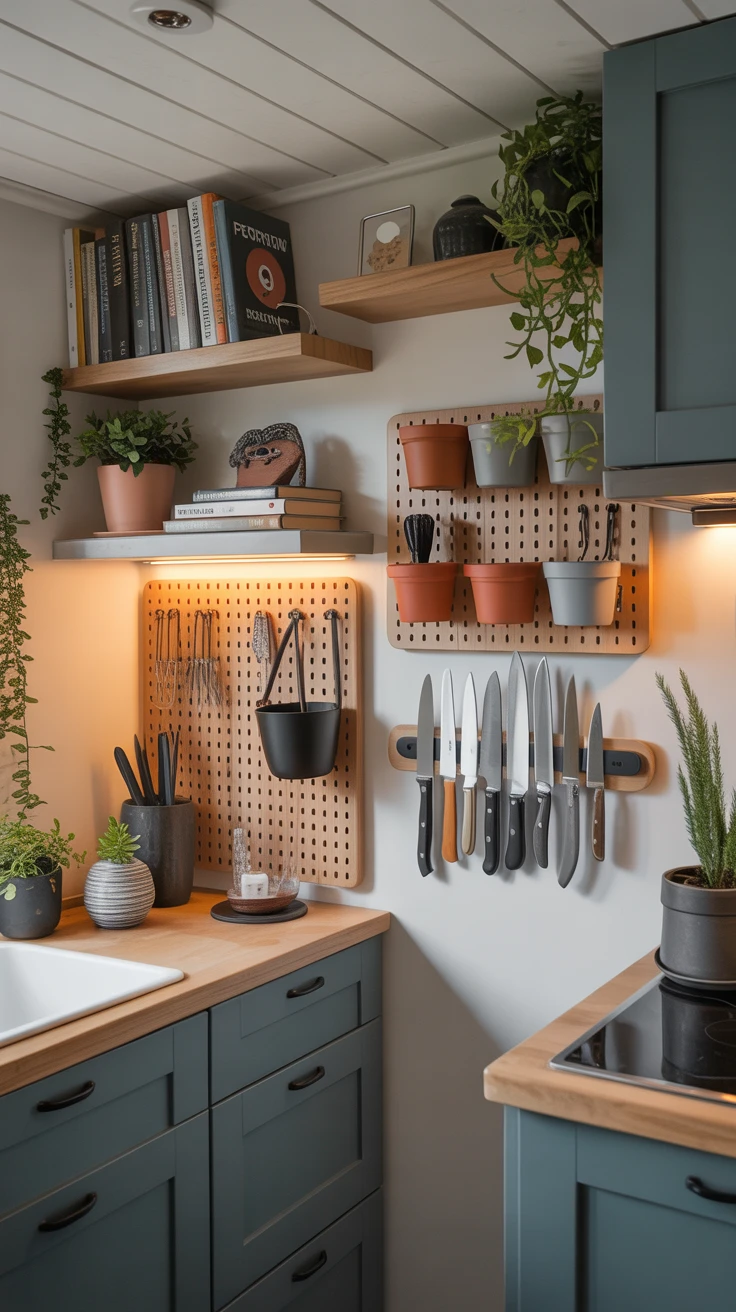
One mistake I made early on was focusing too much on floor-based storage. I’ve since learned that walls are untapped real estate in tiny homes.
- Floating shelves for books, plants, and decorative items
- Wall-mounted cabinets for items you want concealed
- Pegboards for kitchen utensils or office supplies
- Magnetic strips for knives or metal tools
I installed a pegboard in my kitchen that holds everything from pots and pans to utensils. Not only did this free up drawer and cabinet space, but it also created a visually interesting focal point that showcases my most-used kitchen tools.

View on AmazonAs an Amazon Associate, I earn from qualifying purchases.

View on AmazonAs an Amazon Associate, I earn from qualifying purchases.
Pro Tip: Install wall-mounted storage at varying heights to create visual interest while maximizing functionality. Just be sure to use proper anchors—I learned this lesson the hard way when my first set of floating shelves came crashing down!
4. Under-Bed Storage: The Unseen Advantage
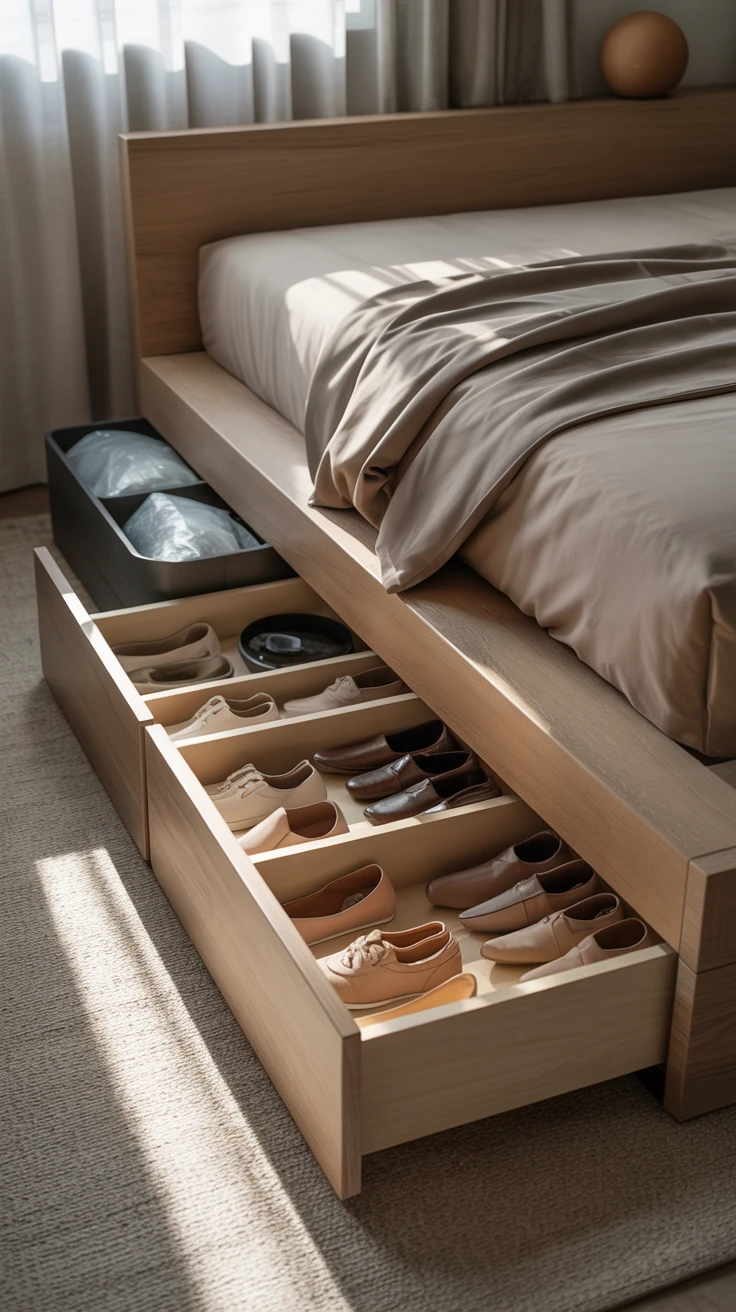
The space under your bed represents some of the largest untapped storage potential in a tiny home. I’ve utilized this area extensively in my space.
- Low-profile rolling bins for seasonal clothing
- Vacuum-sealed bags for bulky bedding
- Custom-built drawers that integrate with your bed frame
- Specialized under-bed shoe organizers
When I upgraded to a platform bed with six large drawers, I was able to eliminate my dresser entirely. This single change opened up about 10 square feet of floor space—a significant amount in a tiny home.
Pro Tip: If your bed doesn’t have built-in storage, consider bed risers to create more space underneath. Just make sure they’re sturdy and rated for the weight of your bed plus occupants.
5. Stack It Up: Vertical Shelving
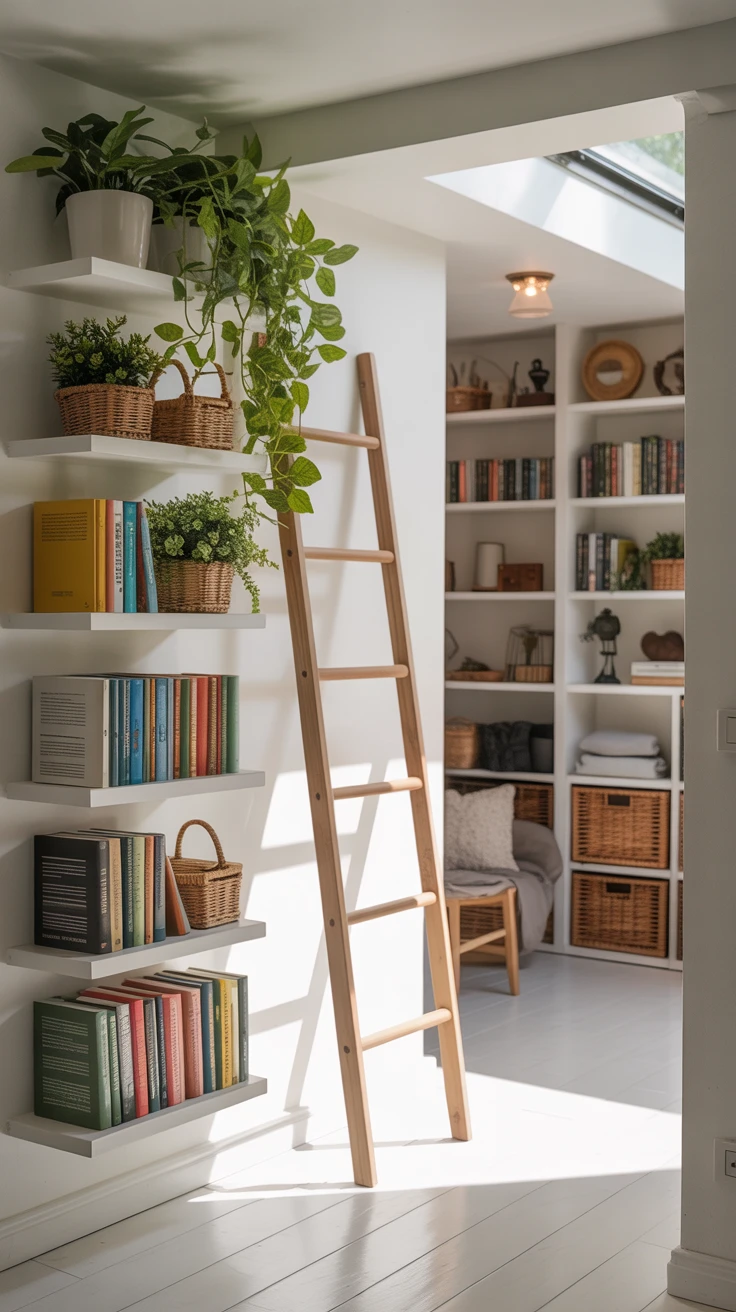
In tiny homes, thinking vertically is essential. I’ve found that tall, narrow shelving units maximize storage while minimizing the footprint.
- Ladder shelves that lean against the wall
- Floor-to-ceiling bookcases
- Corner shelving units that utilize often-wasted space
- Tension rod systems that can be adjusted for ceiling height
I installed a floor-to-ceiling bookcase in a narrow corner that was previously unused. This single unit now houses my book collection, decorative items, and even some folded clothing in attractive baskets.

View on AmazonAs an Amazon Associate, I earn from qualifying purchases.

View on AmazonAs an Amazon Associate, I earn from qualifying purchases.
Pro Tip: Place items you use less frequently on higher shelves and everyday items at eye level or below. This practical organization system saves time and frustration.
6. Secrets of Hidden Compartments
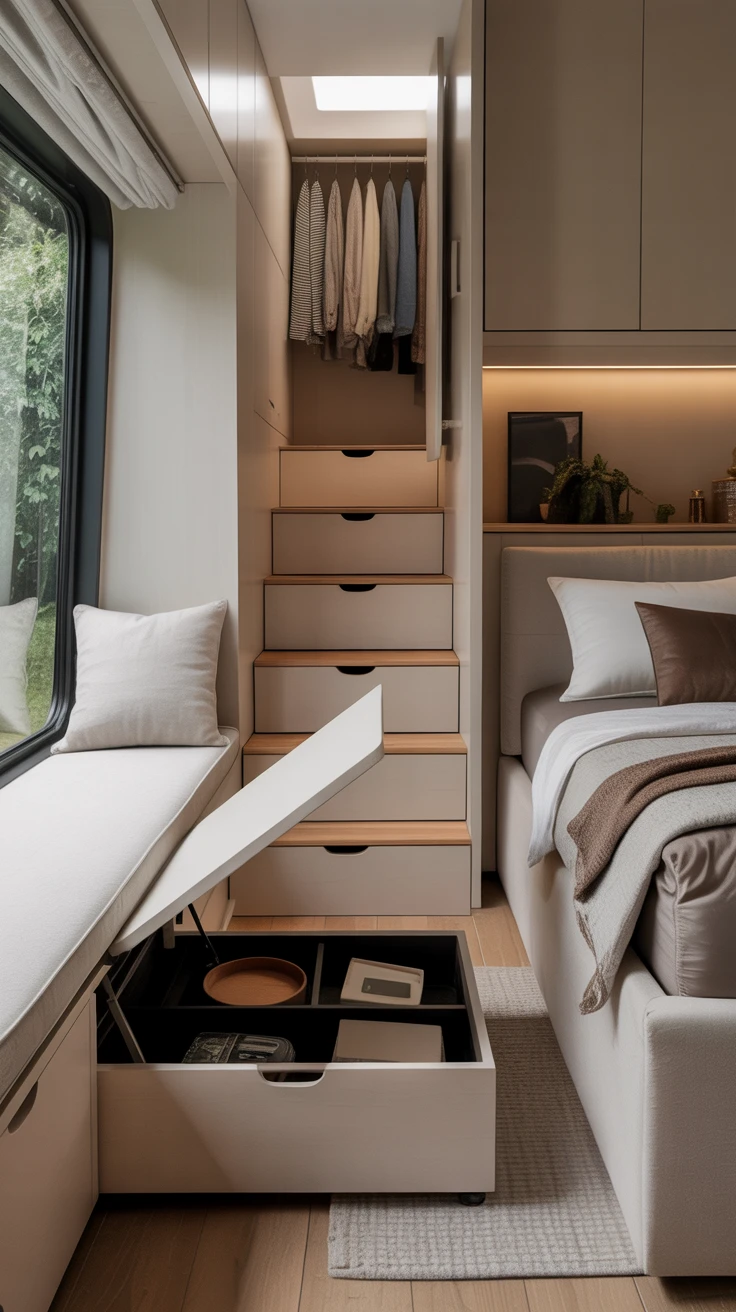
Some of my favorite minimalist storage solutions are those that remain completely invisible to guests. Hidden storage maintains the clean aesthetic that’s central to minimalist design.
- Stair drawers for homes with multiple levels
- Hollow ottomans and benches
- Beds with hydraulic lifts to access storage underneath
- False bottoms in deep drawers
I created a window seat with a hinged top that stores all my off-season clothing. Visitors have no idea there’s storage there, which helps maintain the clean, uncluttered look I strive for.
Pro Tip: When designing built-in storage, consider ventilation for items that need to breathe, like fabric and some electronics. I learned this lesson when I discovered some musty-smelling winter clothes in a completely sealed storage bench.
7. Hang It High: Using Hanging Organizers
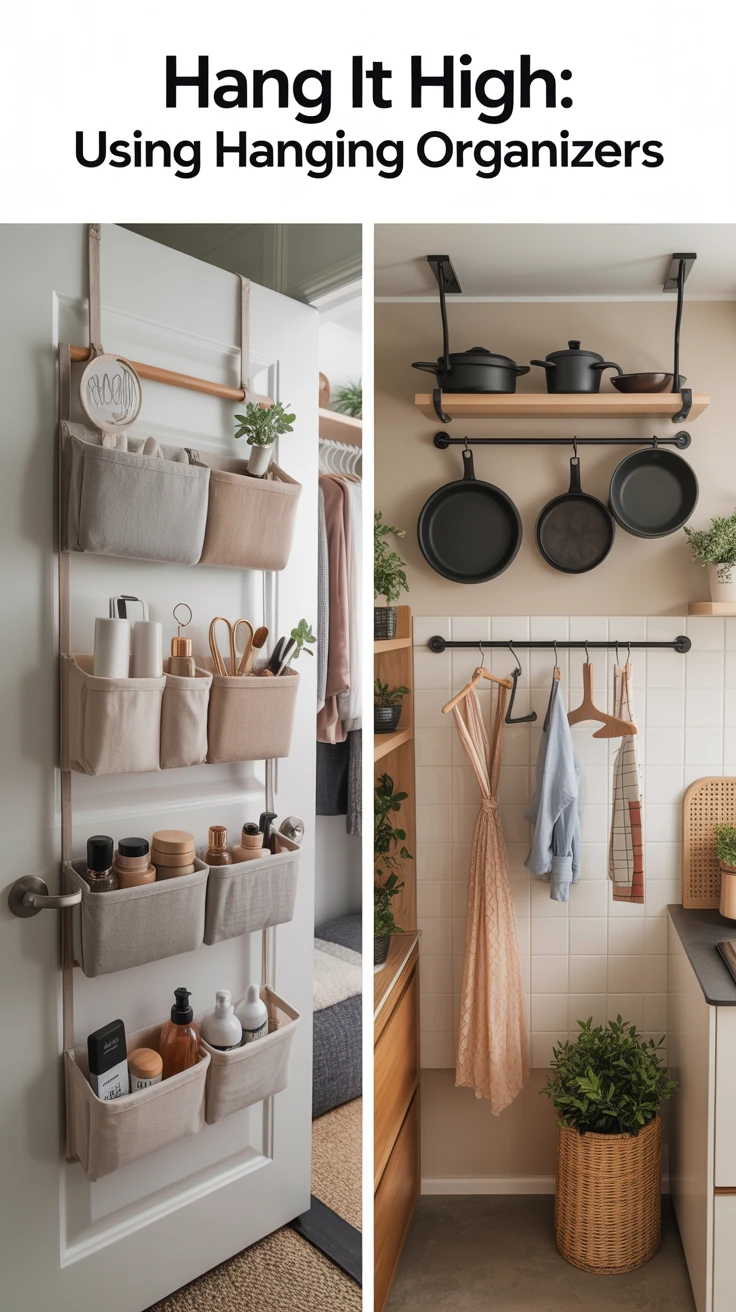
Vertical space isn’t limited to walls—doors and ceilings offer additional storage opportunities I’ve found invaluable.
- Over-the-door organizers for shoes, accessories, or pantry items
- Hanging closet organizers for clothing and accessories
- Ceiling-mounted racks for pots, pans, or bicycles
- Tension rods for creating additional hanging space
I installed an over-the-door organizer on my bathroom door for toiletries and styling tools. This simple solution freed up valuable counter and cabinet space in my tiny bathroom.
Pro Tip: Choose hanging organizers with neutral colors that blend with your décor. This helps maintain the minimalist aesthetic even with functional storage items.
8. Streamlined Style: Minimalist Closet Systems
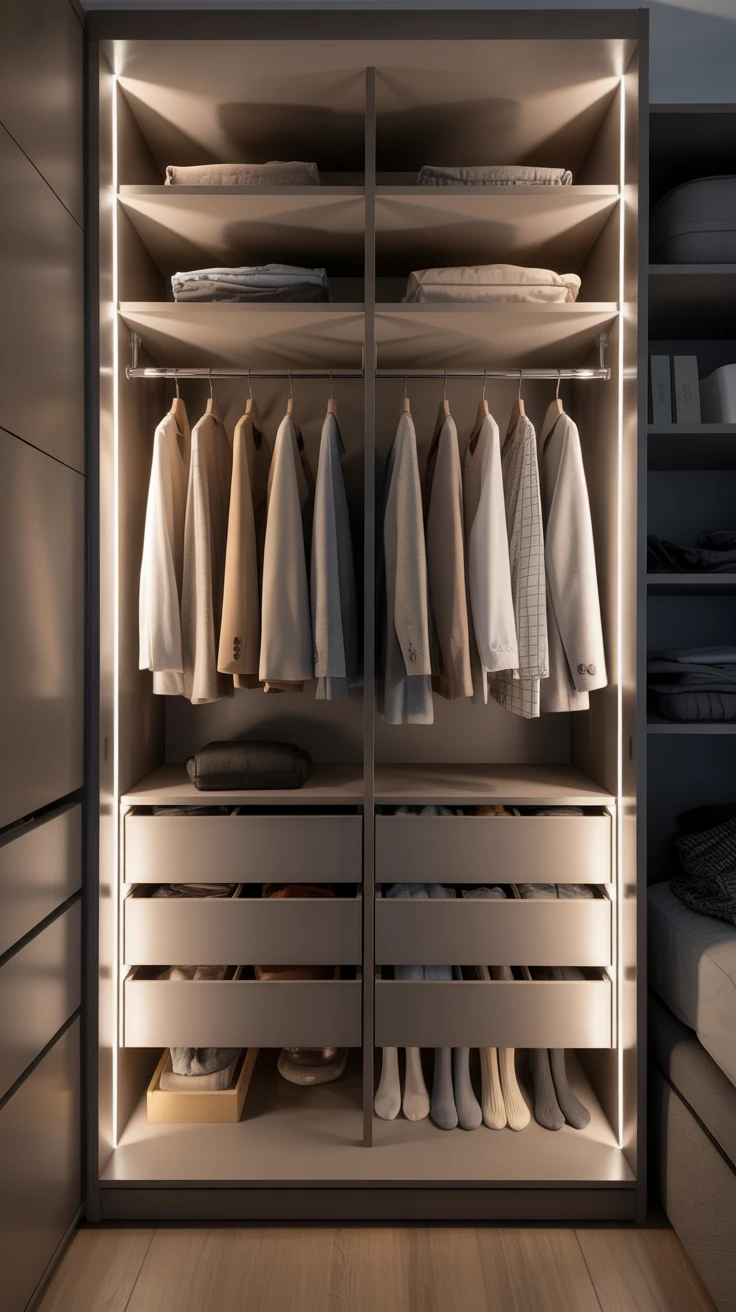
My tiny home came with a small closet that wasn’t efficiently designed. Implementing a minimalist closet system transformed how I store clothing.
- Modular closet systems that can be customized
- Double hanging rods to maximize vertical space
- Slim, uniform hangers that save space and look cohesive
- Drawer dividers for small items like socks and underwear
I installed a simple closet system with adjustable shelving and hanging space. Combined with a capsule wardrobe approach, I now have more than enough storage for all seasons of clothing in a closet that’s half the size of my previous one.
Pro Tip: Embrace the capsule wardrobe concept alongside your closet organization. Having fewer, more versatile clothing items not only saves space but also simplifies daily decisions.
9. Compact Convenience: Foldable and Collapsible Items
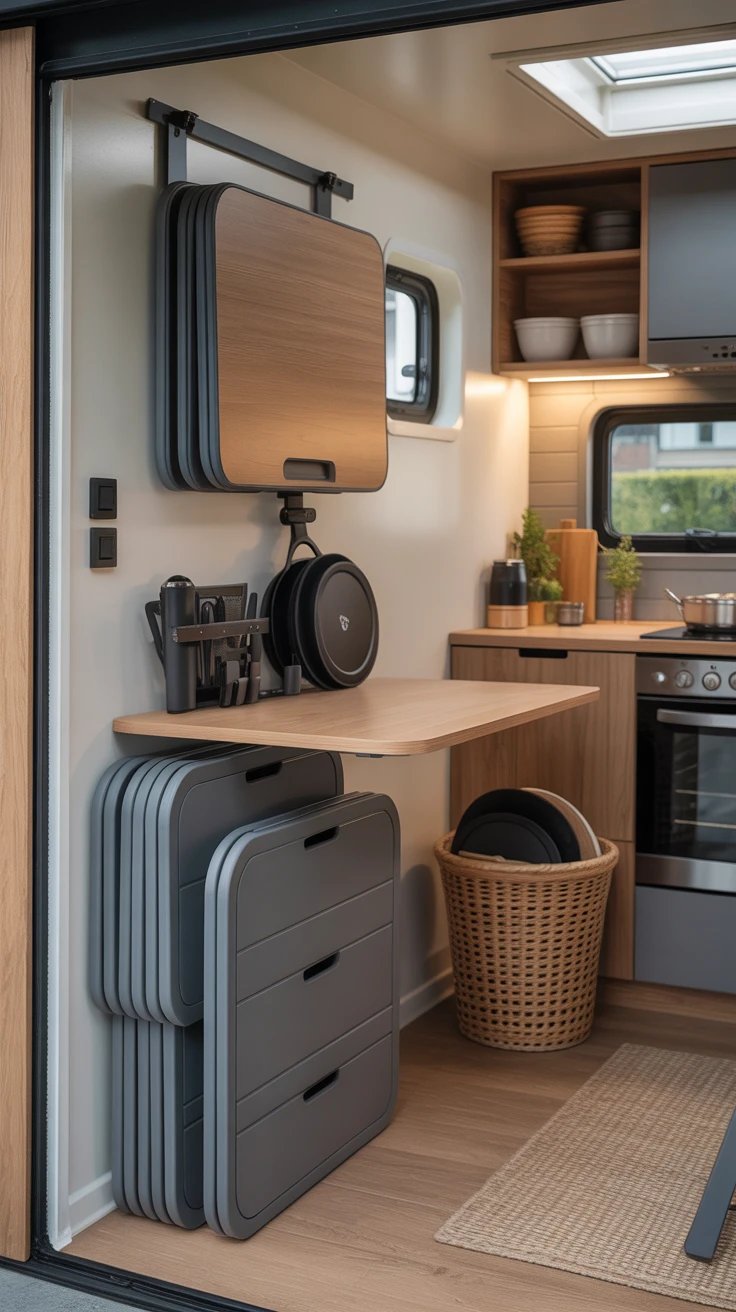
Items that can be folded away when not in use have been essential in maximizing my limited space.
- Folding chairs and tables for occasional use
- Collapsible laundry baskets and storage bins
- Foldable step stools
- Nesting cookware and collapsible kitchen tools
I replaced my rigid laundry hamper with a collapsible one that I can tuck away when not in use. I also invested in a set of nesting bowls and measuring cups for my kitchen, which take up a fraction of the space of traditional sets.
Pro Tip: When purchasing collapsible items, check the quality carefully. Some cheaper options don’t hold up well with repeated use. I’ve found silicone collapsibles tend to be more durable than fabric ones for kitchen items.
10. Order in the Kitchen: Drawer Organizers
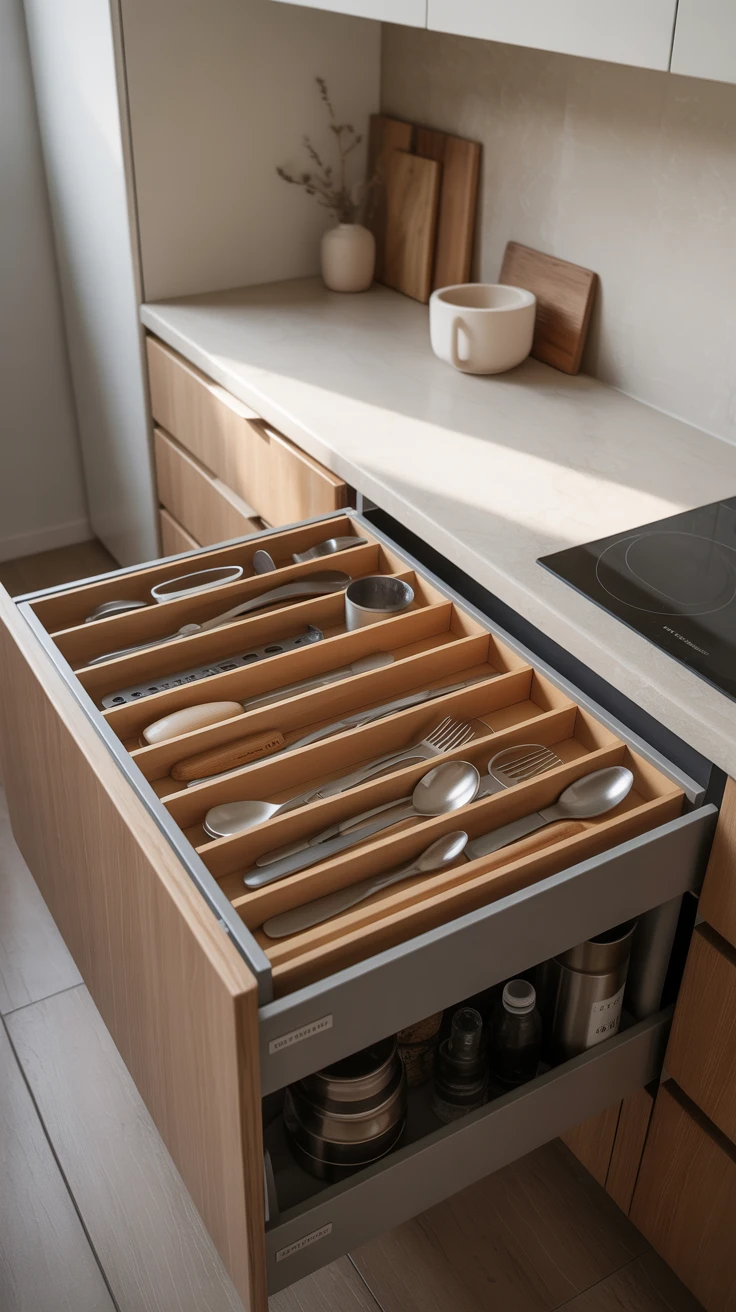
Kitchen drawers can quickly become chaotic in tiny homes. Proper organization systems have helped me maximize every inch.
- Adjustable drawer dividers for utensils and tools
- Stackable organizers for spices and small containers
- Vertical plate and cutting board organizers
- Pull-out systems for deep cabinets
I installed a simple drawer organizer system that keeps my utensils, measuring spoons, and gadgets neatly separated. What used to require three drawers now fits efficiently in one.
Pro Tip: Before buying organizers, empty your drawers completely and assess what you actually use. I discovered I had multiple duplicates of kitchen tools that I didn’t need, which were taking up valuable space.
11. Bathing in Efficiency: Bathroom Storage Solutions
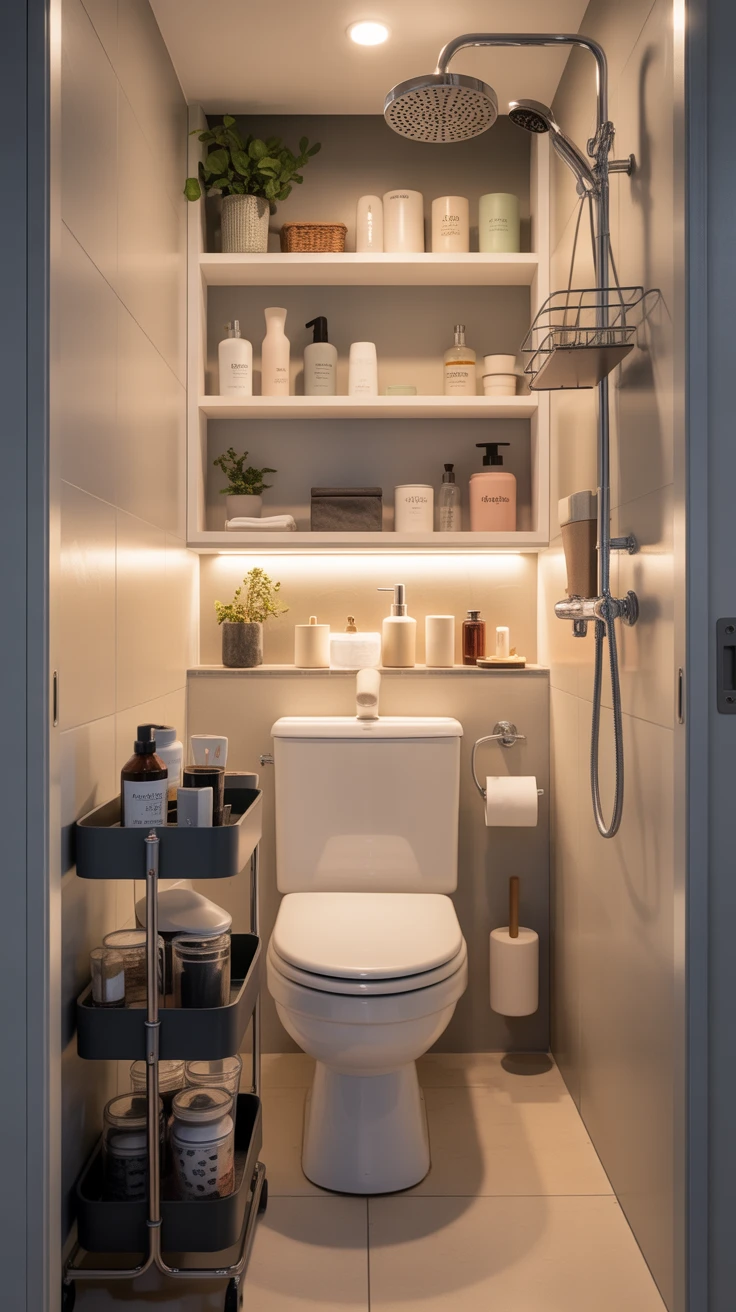
Tiny home bathrooms present unique storage challenges. I’ve found several minimalist storage solutions that keep toiletries organized without cluttering the space.
- Over-the-toilet shelving units
- Shower caddies that hang from the showerhead
- Magnetic strips for metal grooming tools
- Narrow rolling carts that fit between fixtures
I installed a simple over-the-toilet shelving unit with three shelves. The bottom shelf holds everyday items, while the higher shelves store backups and less frequently used products. This vertical storage solution takes up zero floor space.
Pro Tip: Use clear containers for small bathroom items so you can easily see what you have. This prevents overbuying and helps maintain your minimalist approach.
12. Digital Storage: The Ultimate Space-Saver
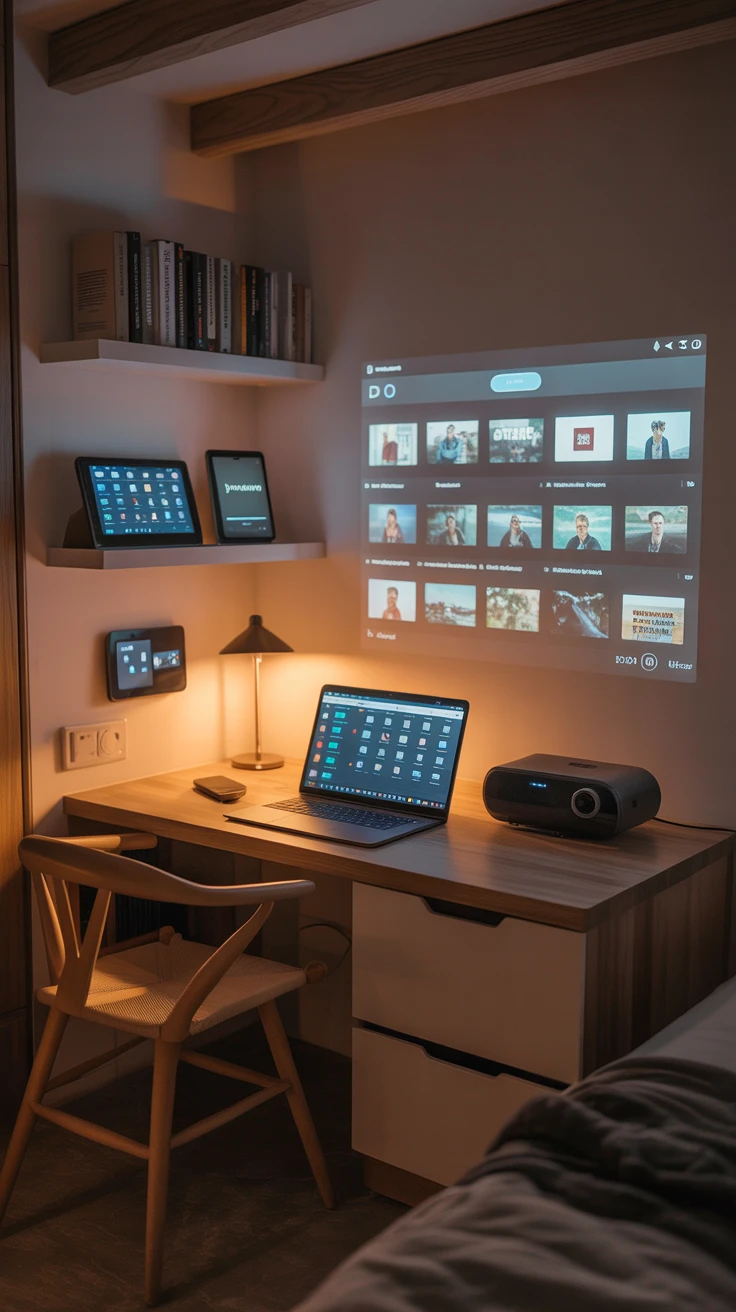
While physical storage is important, I’ve found that digital solutions have been equally valuable in my minimalist journey.
- Scanning important documents instead of keeping paper copies
- Digital photo albums instead of physical ones
- E-books instead of physical books (for those not in your “must keep” collection)
- Streaming services instead of DVD/Blu-ray collections
I spent a weekend scanning all my important documents and photographs. This eliminated two file boxes and three photo albums, freeing up an entire shelf in my closet for more essential items.
Pro Tip: Ensure you have secure backup systems for digital storage. I use both cloud storage and an external hard drive to protect my important digital files.
Conclusion
Living in a tiny home doesn’t mean sacrificing organization or style. With these 12 minimalist storage solutions, you can maximize every square inch while maintaining a clean, uncluttered aesthetic. I’ve implemented all these strategies in my own tiny home, and the difference has been transformative. Not only do I have space for everything I need, but I also enjoy the peace that comes with a well-organized environment.
Remember that minimalist living isn’t just about clever storage—it’s also about being intentional with what you choose to keep. The most effective storage solution is often removing the need for storage altogether by simplifying your possessions. Start with one area of your home, implement these solutions gradually, and watch as your tiny space transforms into an efficient, beautiful haven.
Frequently Asked Questions
What are the benefits of minimalist storage beyond saving space?
Beyond the obvious space-saving advantages, minimalist storage solutions offer several benefits. They reduce cleaning time, decrease stress by eliminating visual clutter, save money by preventing duplicate purchases, and often lead to more intentional purchasing decisions. I’ve found that when everything has a designated place, my daily routines become more efficient, and I spend less time searching for misplaced items.
How do I decide what furniture to keep when downsizing to a tiny home?
When I downsized, I used a three-question system: 1) Does this piece serve multiple functions? 2) Is it appropriately scaled for my new space? 3) Do I truly love it? If an item doesn’t meet at least two of these criteria, it probably doesn’t deserve space in your tiny home. Prioritize multi-functional pieces with built-in storage and items that have significant sentimental or practical value.
What are some affordable minimalist storage solutions for those on a budget?
You don’t need to spend a fortune on storage. Some affordable options include repurposing items you already own (like using mugs as pen holders), utilizing tension rods and over-the-door organizers, exploring thrift stores for baskets and containers, and using command hooks instead of installing permanent fixtures. One of my most effective storage solutions was a $15 pegboard system that organized my entire kitchen wall.
How can I maintain a minimalist lifestyle in a tiny home?
Maintenance is key to successful minimalist living. I follow the “one in, one out” rule—whenever I bring something new home, something else must go. I also do regular “sweeps” of my space (about once per season) to identify items that are no longer serving me. Additionally, I’ve found that being very intentional about what I bring into my home in the first place makes maintenance much easier. Ask yourself if an item truly adds value before purchasing.
What should I prioritize when organizing a tiny home?
Focus first on the items you use daily—these should be the most accessible. Next, consider seasonal rotation systems for clothing and decor. Items used only occasionally can be stored in less accessible spaces. In my experience, the kitchen and bathroom typically benefit most from organizational systems since they contain many small items. Start with these areas, then move on to clothing and general storage. Remember that vertical space is your friend in tiny homes!