
The Need for Privacy in Tiny Luxury Homes
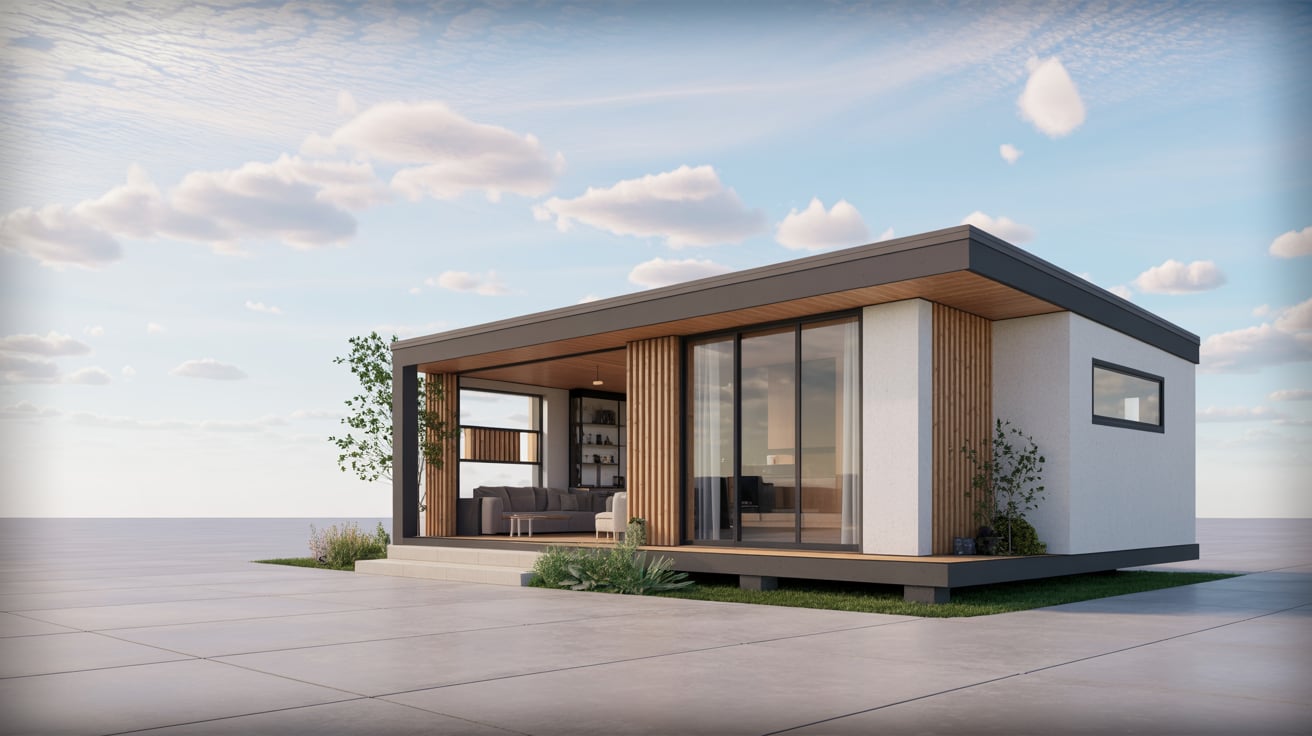
When I first moved into my tiny home, I quickly realized that privacy wasn’t just a luxury—it was essential. Despite the compact footprint of these homes, creating a sense of seclusion in your outdoor space can transform your tiny living experience from cramped to luxurious.
Living in a tiny home community taught me that proximity to neighbors doesn’t have to mean sacrificing privacy. In fact, I’ve discovered that implementing thoughtful tiny home outdoor privacy solutions can actually expand your living space by making your outdoor areas feel like natural extensions of your home.
Whether you’re hosting guests on your deck or simply wanting to enjoy your morning coffee without an audience, these eight privacy solutions will help you create a luxurious, secluded retreat around your tiny home—without compromising on style or space.
1. Living Walls: Green Up Your Space
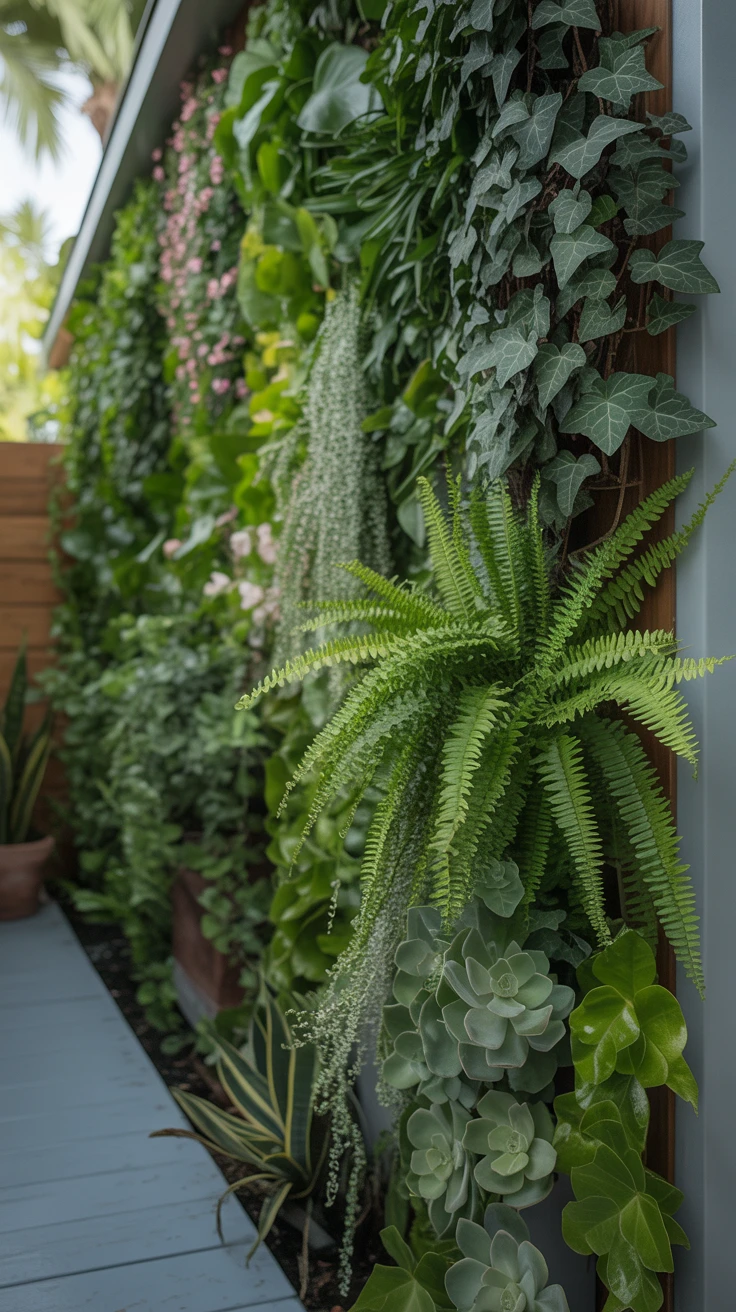
Living walls have become my favorite way to create privacy while adding a touch of natural elegance. These vertical gardens serve as beautiful, breathing barriers between you and the outside world.
When I installed my first living wall, I was amazed at how it transformed not just my privacy but the entire ambiance of my outdoor space. The lush greenery creates a micro-climate that feels cooler and more serene than traditional fencing options.
Best plants for living walls:
- English Ivy – Dense and evergreen for year-round coverage
- Boston Ferns – Adds texture and thrives in partial shade
- Creeping Fig – Self-clinging vine that creates a solid green wall
- Flowering Jasmine – Provides fragrance along with privacy
- Succulents – Perfect for drier climates and minimal maintenance
Pro Tip: Install a simple irrigation system with your living wall to reduce maintenance. I use a timer-based drip system that keeps my plants healthy with minimal effort on my part.
2. Retractable Screens: Flexibility Meets Style
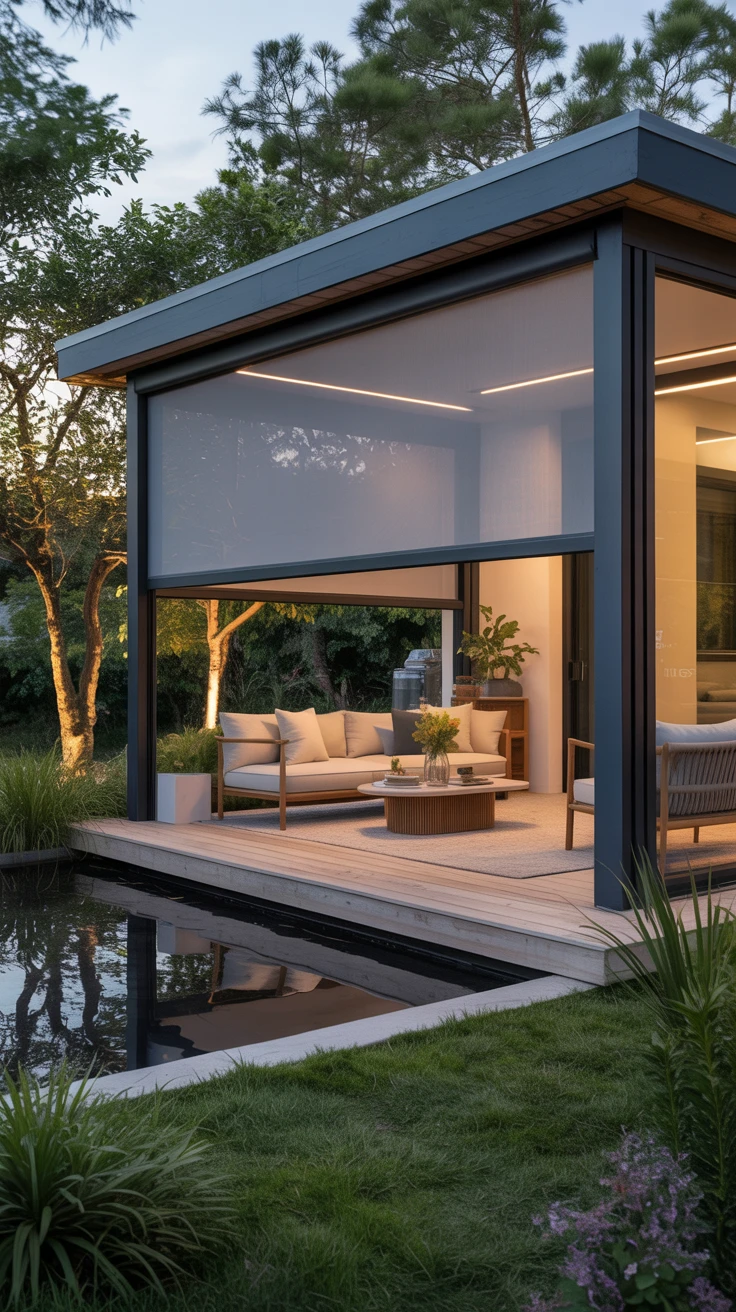
After experimenting with permanent solutions, I discovered the versatility of retractable screens. These adaptable privacy screens can be deployed when needed and tucked away when you want an open view.
My retractable screen has been particularly valuable during social gatherings. I can create distinct spaces for different activities or quickly open up the entire area when I want to enjoy the surrounding landscape.
Modern retractable screens come in various materials and designs that complement luxury tiny home outdoor privacy solutions. From sleek, motorized systems to simple manual options, there’s something for every budget and aesthetic preference.
Pro Tip: Invest in weather-resistant fabrics specifically designed for outdoor use. I initially made the mistake of using indoor fabrics that quickly faded and deteriorated—spending a bit more on quality materials will save you money in the long run.
3. Portable Dividers: Moveable Privacy Solutions
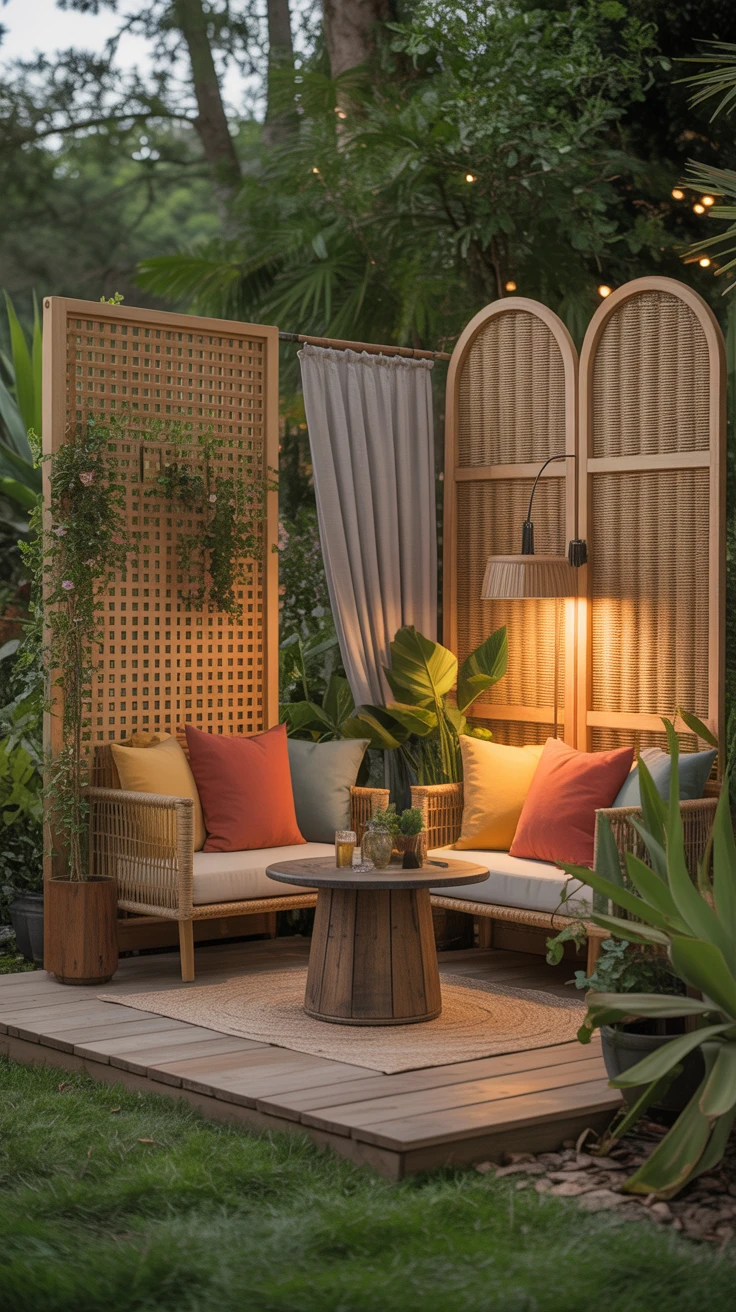
When I need to quickly reconfigure my outdoor space, portable dividers have been my go-to solution. These freestanding screens can be repositioned as needed, making them perfect for tiny homes where flexibility is key.
I’ve found that the best portable dividers serve multiple functions. My wooden lattice screens not only provide privacy but also serve as supports for climbing plants and decorative elements.
Consider these materials for portable dividers:
- Wood lattice – Classic look that allows partial visibility and airflow
- Metal panels – Modern aesthetic with customizable cutout patterns
- Fabric screens – Lightweight and easy to store when not in use
- Woven natural materials – Adds texture and organic warmth
The beauty of portable dividers is their versatility—I can create intimate dining nooks one day and open lounging areas the next, all while maintaining privacy where it matters most.
4. Pergolas with Drapes: Elegance and Seclusion
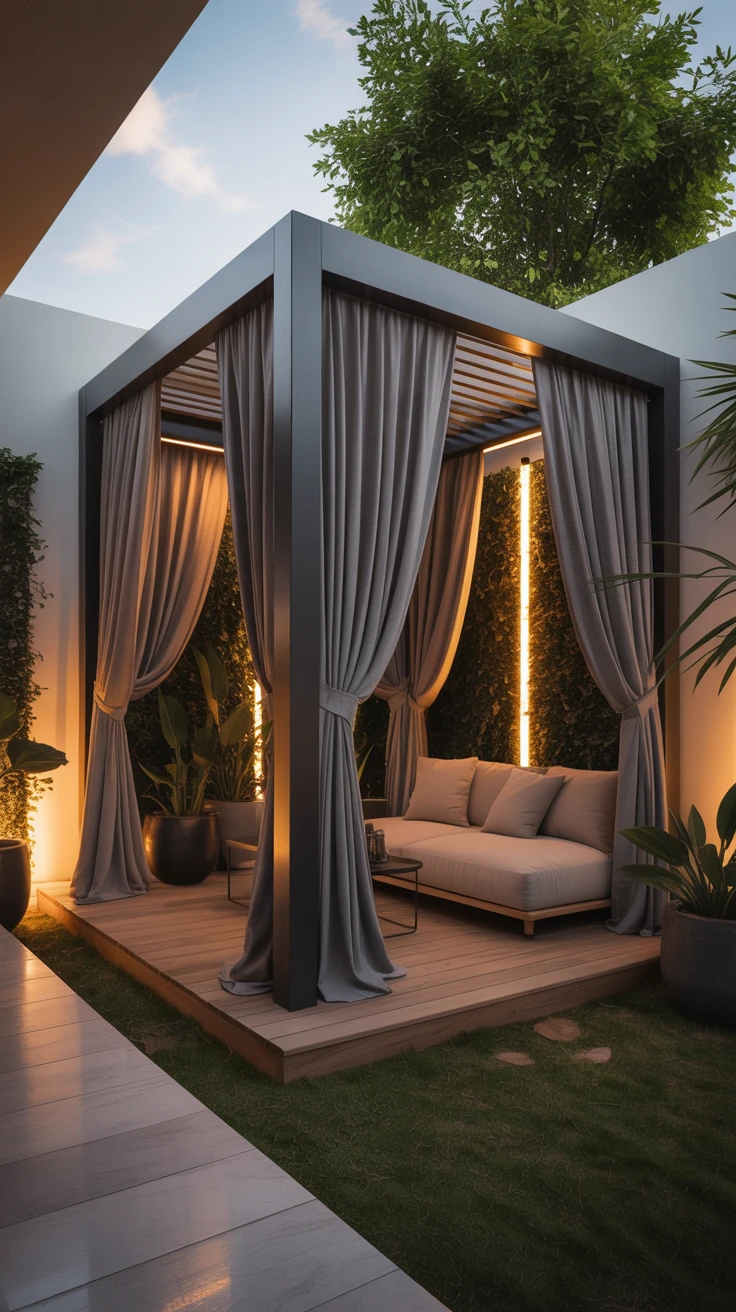
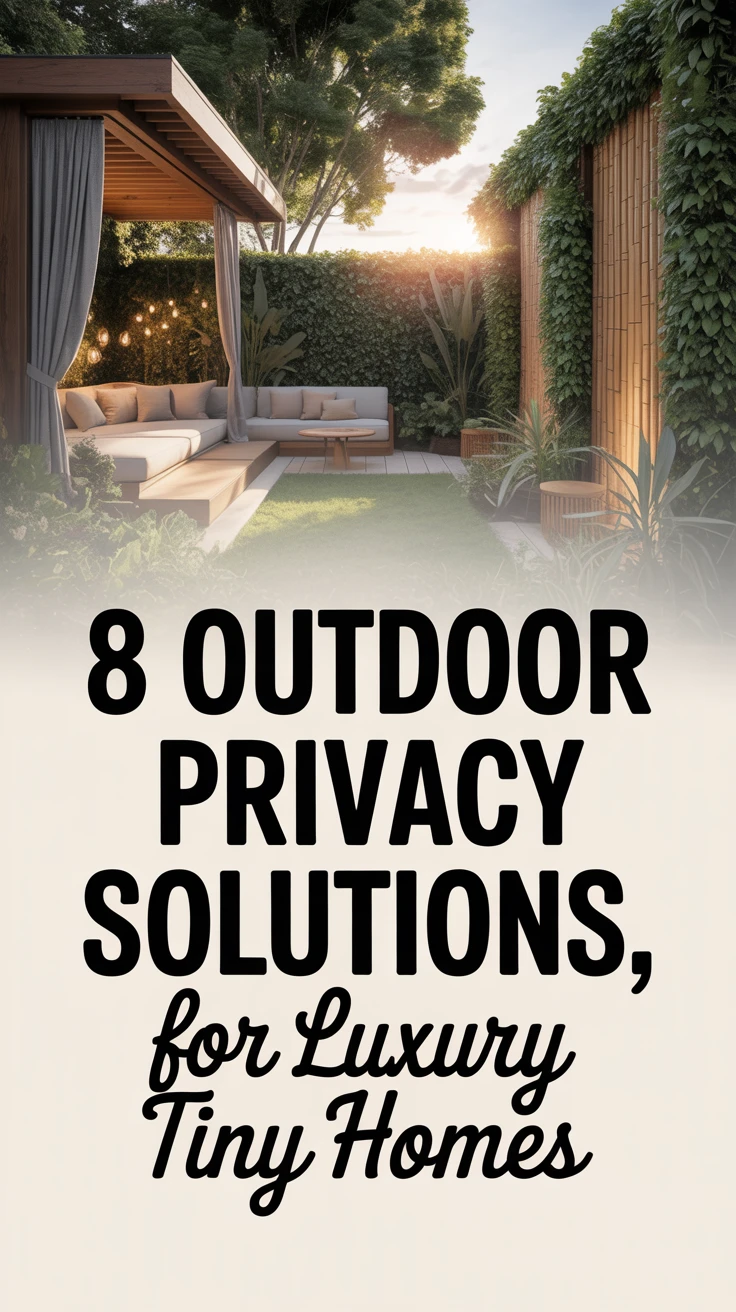
Adding a pergola to my tiny home’s deck completely transformed my outdoor living experience. These structures provide a framework for hanging drapes that can be opened or closed depending on your privacy needs.
What I love about my pergola is how it defines my outdoor space as a proper room. With flowing drapes that I can pull closed, I’ve created an outdoor sanctuary that feels both luxurious and private.
For tiny homes, consider a wall-mounted half pergola that doesn’t take up valuable ground space. This approach has worked wonders in my limited outdoor area, providing the framework for privacy without overwhelming the space.
Pro Tip: Choose outdoor drapes with UV protection to prevent fading and extend their lifespan. After replacing my first set of drapes that quickly deteriorated in the sun, I’ve learned that proper UV-resistant fabrics are worth the investment.
5. Bamboo Fencing: Natural and Sustainable
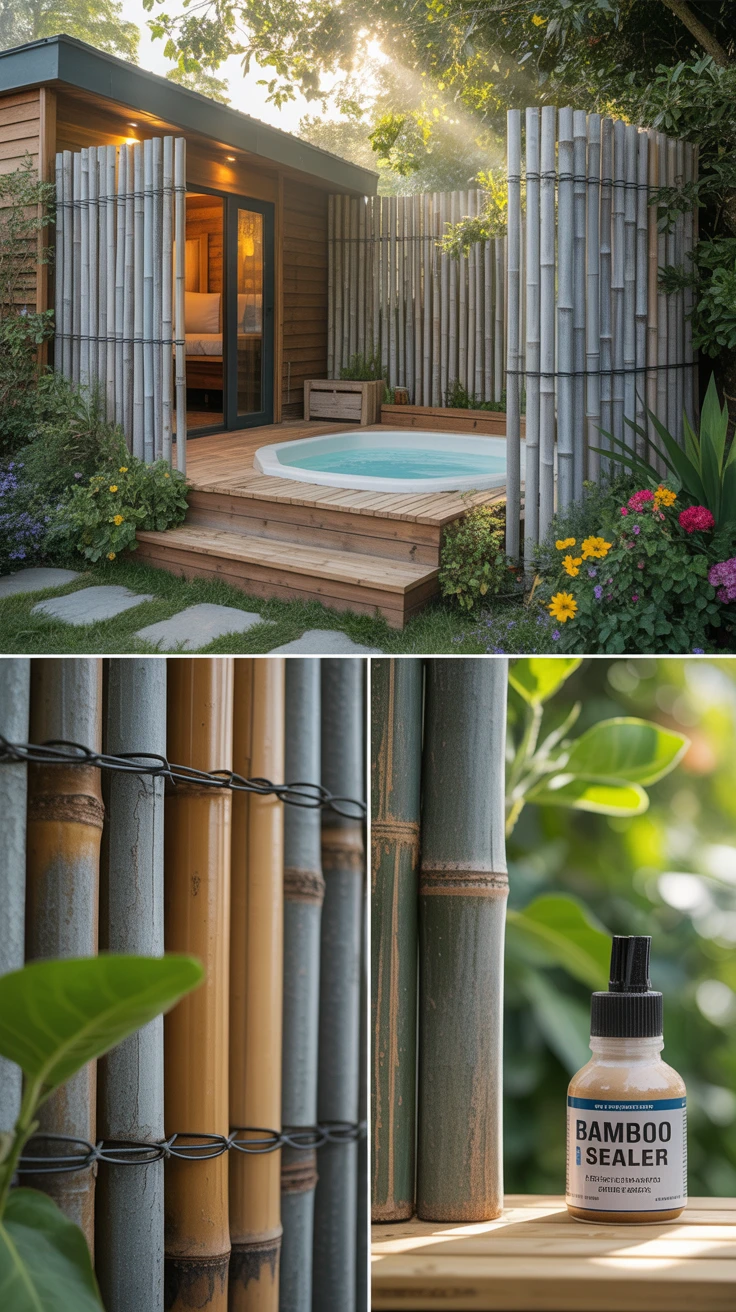
Bamboo fencing offers a perfect blend of sustainability, natural beauty, and effective privacy. I installed bamboo fencing around my hot tub area, and it’s been one of my most complimented tiny home outdoor privacy solutions.
What makes bamboo particularly suitable for tiny homes is its lightweight nature and ease of installation. I was able to set up my entire bamboo privacy screen in a single afternoon—something that would have been impossible with traditional fencing.
Bamboo also ages beautifully, developing a silvery patina over time that adds character to your outdoor space. If you prefer to maintain its original color, a simple annual application of bamboo sealer will preserve its natural tone.
For added security, I reinforced my bamboo fencing with thin wire threaded through the poles, which prevents them from rattling in strong winds—a lesson learned after a particularly stormy night!
6. Vertical Gardens: Grow Your Privacy

Combining the concepts of living walls with practical gardening, vertical gardens allow you to grow food while creating privacy. This dual-purpose solution has been particularly rewarding for me.
My vertical herb garden not only shields my outdoor dining area from view but provides fresh herbs just steps from my tiny kitchen. The aromatic plants create a sensory barrier that enhances the feeling of being in a private oasis.
Best plants for edible privacy screens:
- Herbs: Rosemary, thyme, and sage create fragrant, evergreen barriers
- Strawberries: Perfect for vertical planters with cascading growth
- Climbing peas and beans: Seasonal coverage with the bonus of fresh produce
- Compact tomato varieties: Provide dense summer coverage
- Trailing squash or cucumbers: Create dramatic green curtains in summer
Pro Tip: Install your vertical garden on a rolling frame to make it mobile. This allows you to adjust your privacy screen based on the sun’s position or social situations—something I wish I’d thought of from the beginning!
7. Privacy Sails: Shade and Seclusion
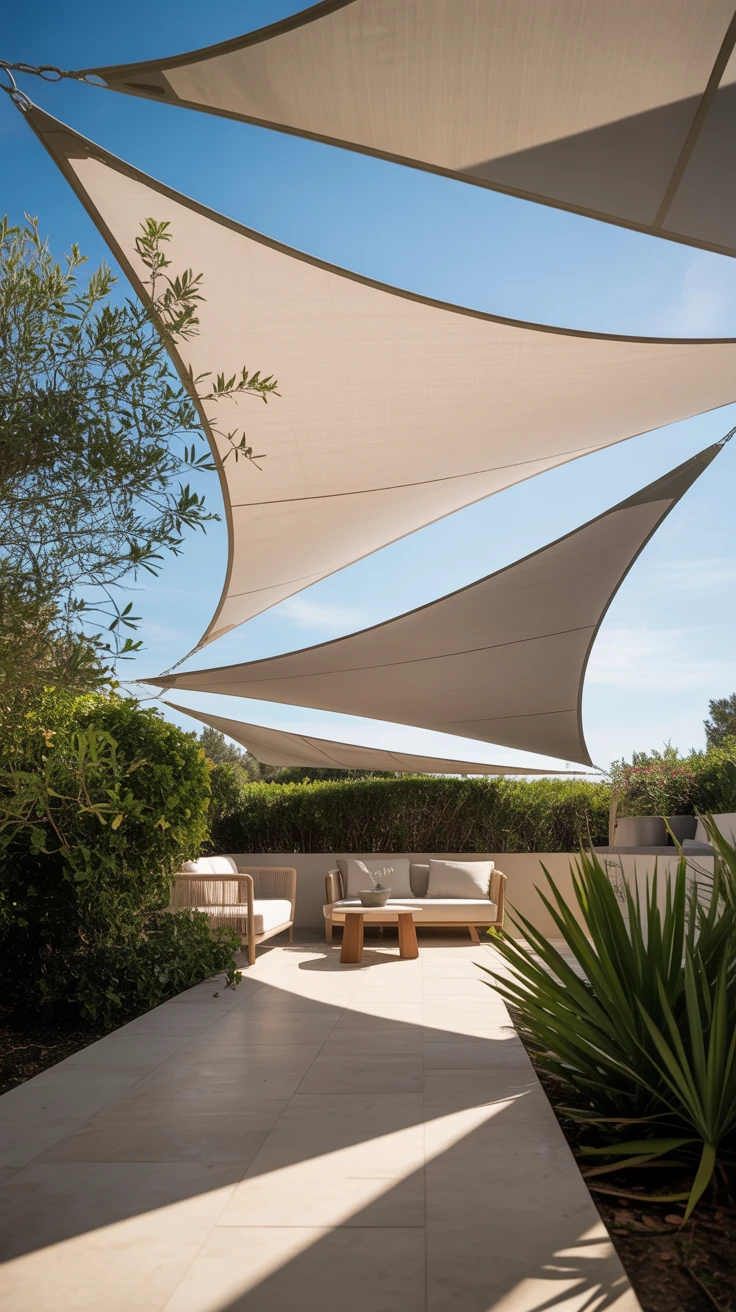
Privacy sails (also called shade sails) offer a modern, architectural solution for creating private outdoor spaces. These tensioned fabric installations provide both shade and screening from neighboring views.
I installed overlapping triangular sails at different heights to create a dynamic privacy solution that also serves as a stunning design feature. The play of light and shadow throughout the day adds visual interest to my outdoor space.
What I appreciate most about privacy sails is their ability to block sightlines without creating a sense of enclosure. They maintain airflow and partial views of the sky while still providing effective privacy where needed.
When selecting privacy sails, look for high-density polyethylene (HDPE) fabrics that block UV rays while remaining permeable to water and air. This prevents water pooling during rainstorms—a lesson I learned the hard way with my first installation!
8. Outdoor Curtains: Soft and Sensational
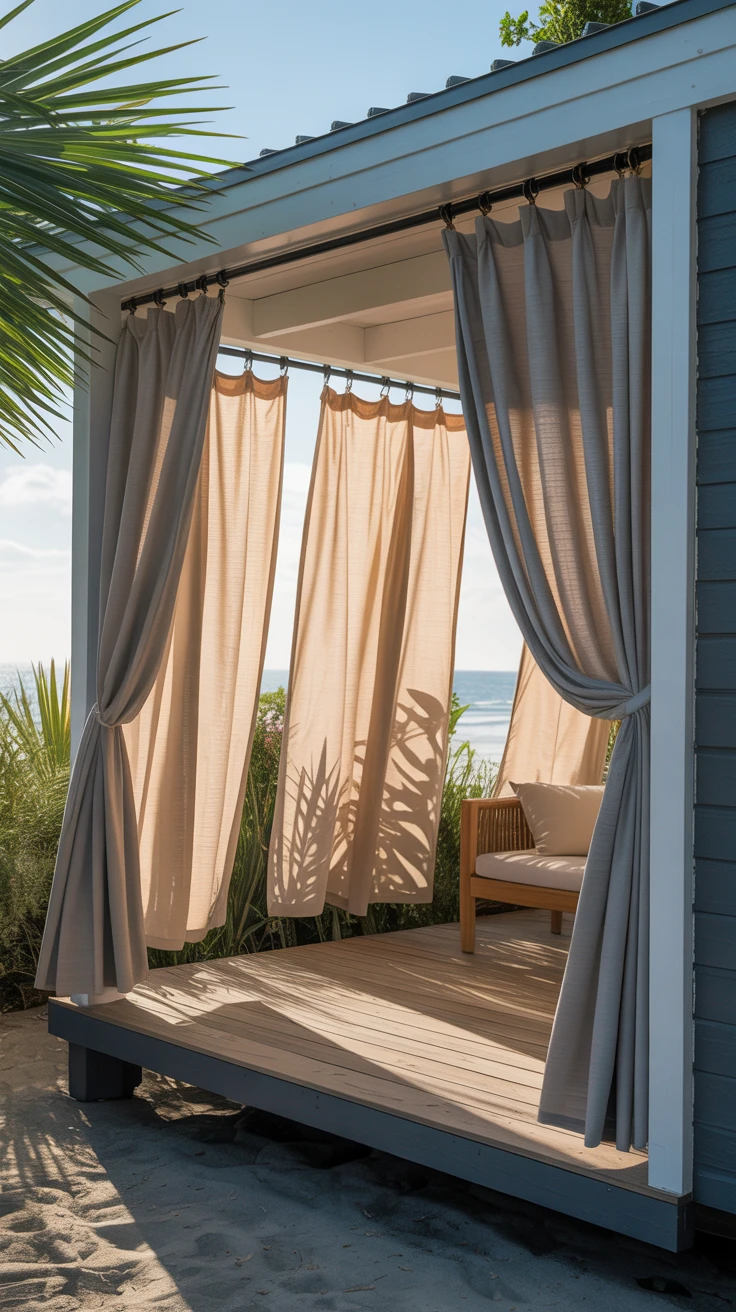
For a touch of luxury that’s easy to implement, outdoor curtains have been my simplest yet most effective privacy solution. Hanging weather-resistant curtains around my tiny home’s deck instantly created a cabana-like feel.
The soft movement of curtains in the breeze adds a dynamic element to your outdoor space that rigid privacy solutions can’t match. I’ve found this gentle motion creates a calming environment that enhances the luxury experience.
Installing a simple wire or pipe between posts provides an inexpensive framework for hanging curtains. For my tiny home, I used marine-grade hardware that resists rust and corrosion—essential for coastal environments.
Pro Tip: Choose water-repellent fabrics specifically designed for outdoor use. After ruining a set of indoor curtains in an unexpected rainstorm, I switched to Sunbrella fabrics that have withstood three years of outdoor exposure without fading or mildewing.
Elevate Your Tiny Home Experience
Implementing thoughtful tiny home outdoor privacy solutions has transformed my living experience, effectively doubling my usable space by making the outdoors an extension of my home. The key is selecting options that complement your tiny home’s aesthetic while addressing your specific privacy needs.
Remember that the best solutions often combine multiple approaches. My own tiny home utilizes a mix of bamboo fencing, vertical herbs, and outdoor curtains to create different zones with varying degrees of privacy.
By thoughtfully addressing privacy concerns, you can create an outdoor sanctuary that enhances the luxury and functionality of your tiny home living experience—proving that living small doesn’t mean sacrificing comfort or privacy.
Frequently Asked Questions
How can I create privacy in a tiny home community where homes are close together?
In close-quarters communities, consider multi-layered approaches like combining vertical gardens with privacy sails. Focus on screening sight lines at eye level while maintaining community connections. I’ve found that creating privacy zones (rather than completely enclosing your space) maintains a friendly atmosphere while providing personal retreats.
What are the most budget-friendly privacy solutions for tiny homes?
Outdoor curtains and DIY bamboo screens offer excellent privacy at minimal cost. Growing annual climbing plants like morning glories or moonflowers on simple trellises provides seasonal privacy for just the cost of seeds. Repurposed materials like old doors or windows can also be transformed into unique privacy screens.
How do I maintain privacy without blocking natural light?
Opt for solutions that filter rather than block light completely. Lattice screens, slatted wood panels, or fabric that allows some light transmission work well. I use reed fencing that provides privacy while allowing dappled light to pass through. Position solid privacy elements on the sides rather than overhead to maximize natural light.
What privacy solutions work best for tiny homes on wheels?
For mobile tiny homes, prioritize portable options like freestanding screens, potted plant arrangements, and tension-mounted curtain systems. I travel with my tiny home and use telescoping poles with outdoor curtains that can be set up in minutes at each location. Avoid permanent installations that would need to be dismantled when moving.
How can I winterize my outdoor privacy solutions?
For year-round privacy, choose weather-resistant materials and consider seasonal adaptations. I store fabric elements during harsh weather and rely more on structural elements like bamboo or reed fencing in winter. Evergreen plants in movable containers can be repositioned for winter privacy while protecting them from extreme conditions.