

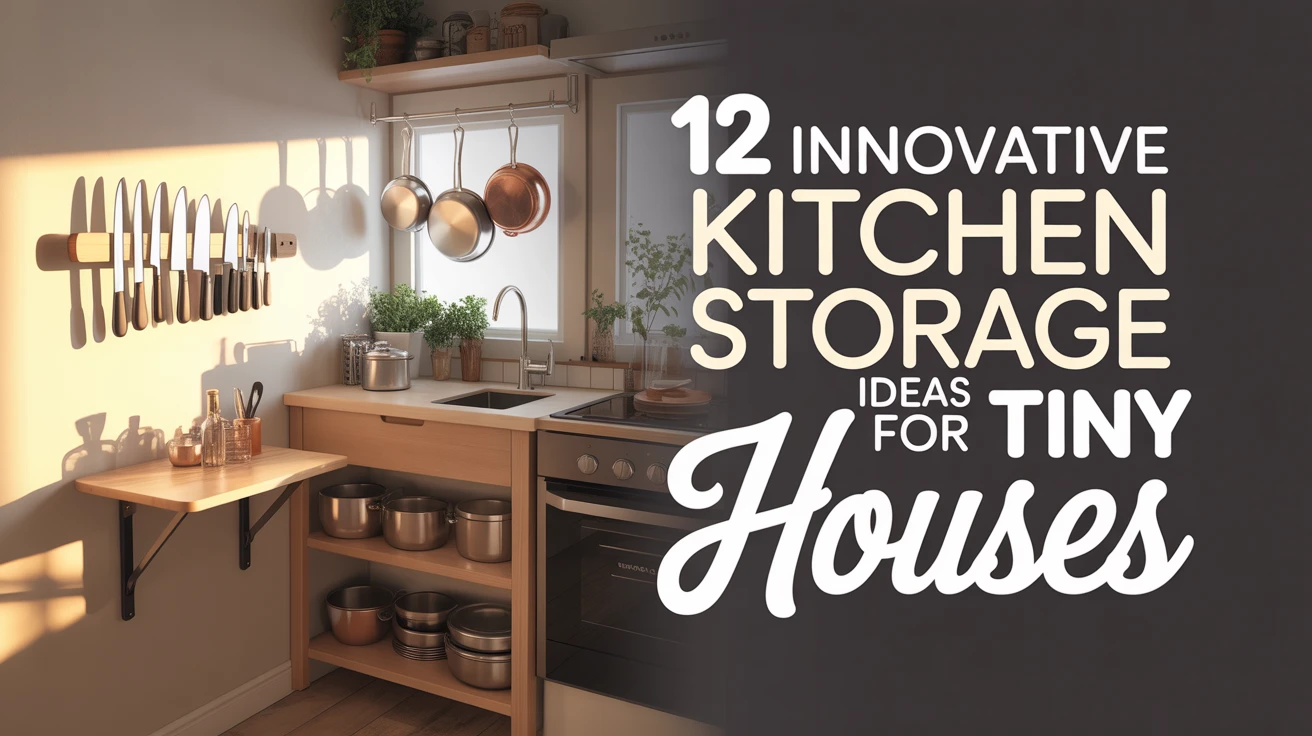
Introduction
When it comes to tiny house living, every inch of space counts – especially in the kitchen. As someone who’s lived in a 250-square-foot tiny home for over three years, I’ve learned that creative tiny house kitchen storage isn’t just helpful; it’s essential for maintaining sanity in small spaces. The challenge of fitting cooking essentials, food supplies, and appliances into a miniature kitchen requires innovative thinking and strategic planning.
In my own tiny house journey, I initially struggled with kitchen clutter until I discovered that the secret lies not in having less (though that helps!), but in utilizing space more intelligently. Whether you’re already living the tiny life or planning your compact dream home, these 12 storage solutions will help transform your kitchen from cramped to comfortable without sacrificing functionality.
1. Hanging Storage Solutions
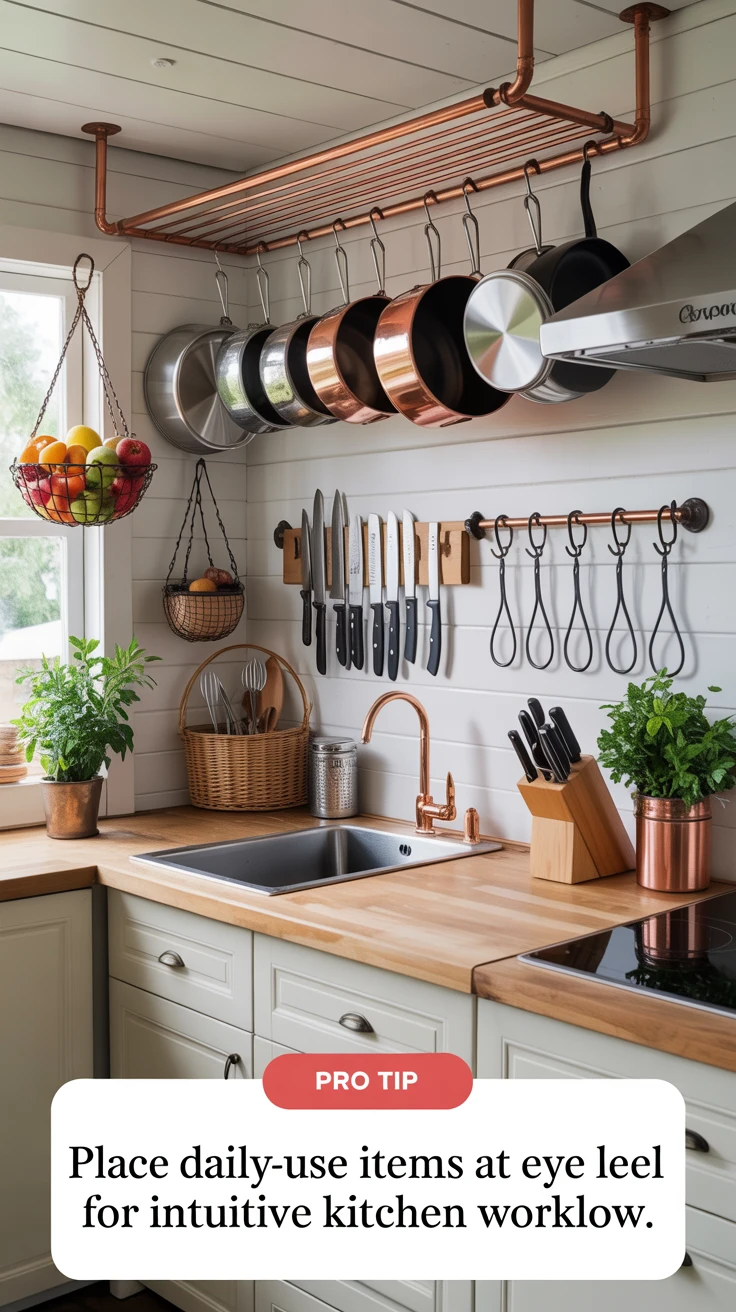
One of the first lessons I learned in my tiny house was to look up! Vertical space is your best friend, and hanging storage maximizes areas that would otherwise go unused.
- Install a ceiling-mounted pot rack to free up valuable cabinet space
- Use wall-mounted magnetic knife strips instead of bulky knife blocks
- Hang frequently used utensils on S-hooks from a mounted rail
- Consider a hanging fruit basket to keep produce accessible yet out of the way
I installed a simple copper pipe above my cooking area with S-hooks, and it’s become one of my favorite features. Not only does it keep utensils within reach, but it also adds a touch of rustic charm to my kitchen.
Pro Tip: When installing hanging storage, place items you use daily at eye level, and less frequently used items higher up. This creates an intuitive workflow in your kitchen.
2. Multi-functional Furniture
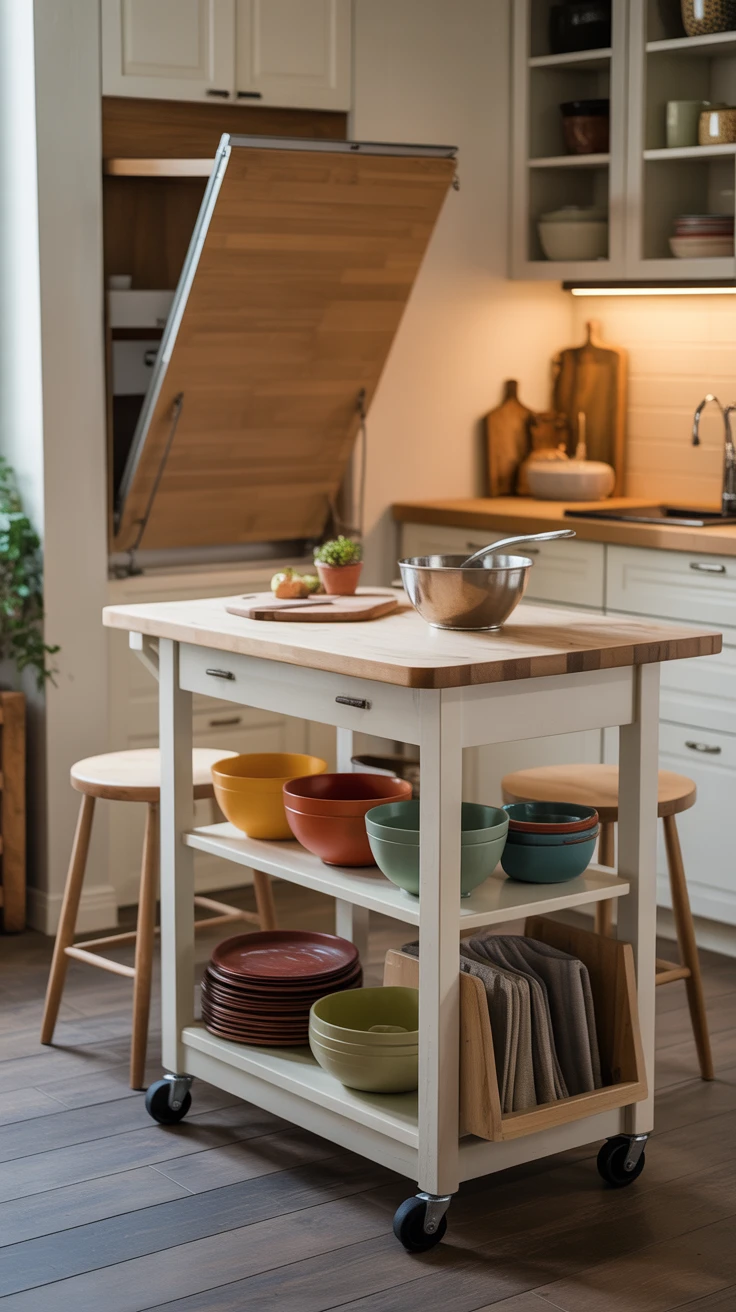
In my tiny kitchen, nothing serves just one purpose. Multi-functional furniture has been a game-changer for maximizing my limited square footage.
My favorite piece is a rolling kitchen island that serves as additional counter space when cooking, dining table when eating, and storage unit all the time. The shelves underneath hold my mixing bowls and bakeware, while the top provides the prep space I desperately needed.
Another worthwhile investment was a fold-down wall-mounted table that disappears when not in use. It’s perfect for additional prep space when hosting dinner parties (yes, you can entertain in a tiny house!).
Pro Tip: Look for furniture with hidden storage compartments. My dining stools have removable tops with space inside for linens and special occasion items.
3. Pull-out Pantry Solutions
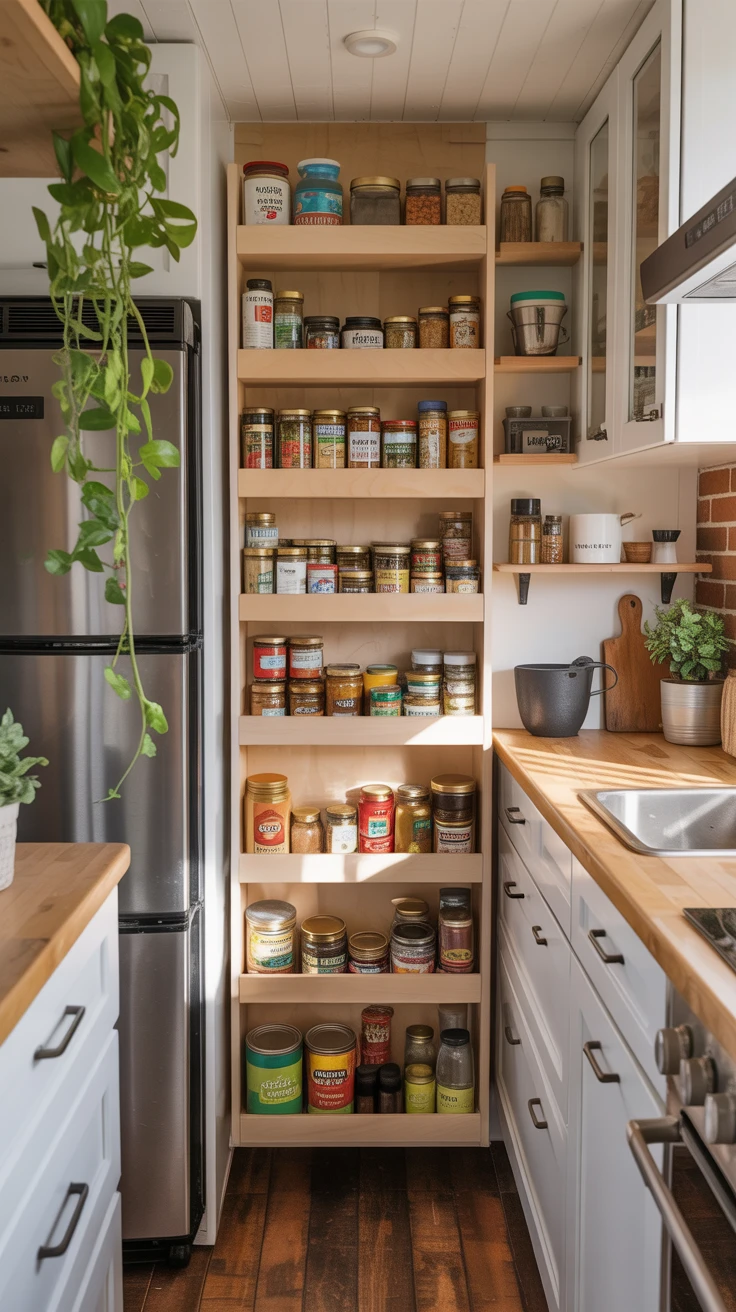
When I first designed my tiny house kitchen storage, I underestimated how much food storage I’d need. The solution came in the form of a slim pull-out pantry that fits in a 6-inch gap between my refrigerator and wall.
This vertical sliding drawer holds an impressive amount of canned goods, spices, and dry ingredients. The key is using the full height of the space from floor to ceiling. I’ve organized mine with heavier items at the bottom and lighter, less frequently used items at the top.
For those without carpentry skills (like myself initially), there are pre-made pull-out pantry units available that can be installed in narrow spaces.
Pro Tip: Label the edges of your pull-out pantry shelves so you can quickly identify contents without having to pull the entire unit out.
4. Magnetic Storage Ideas
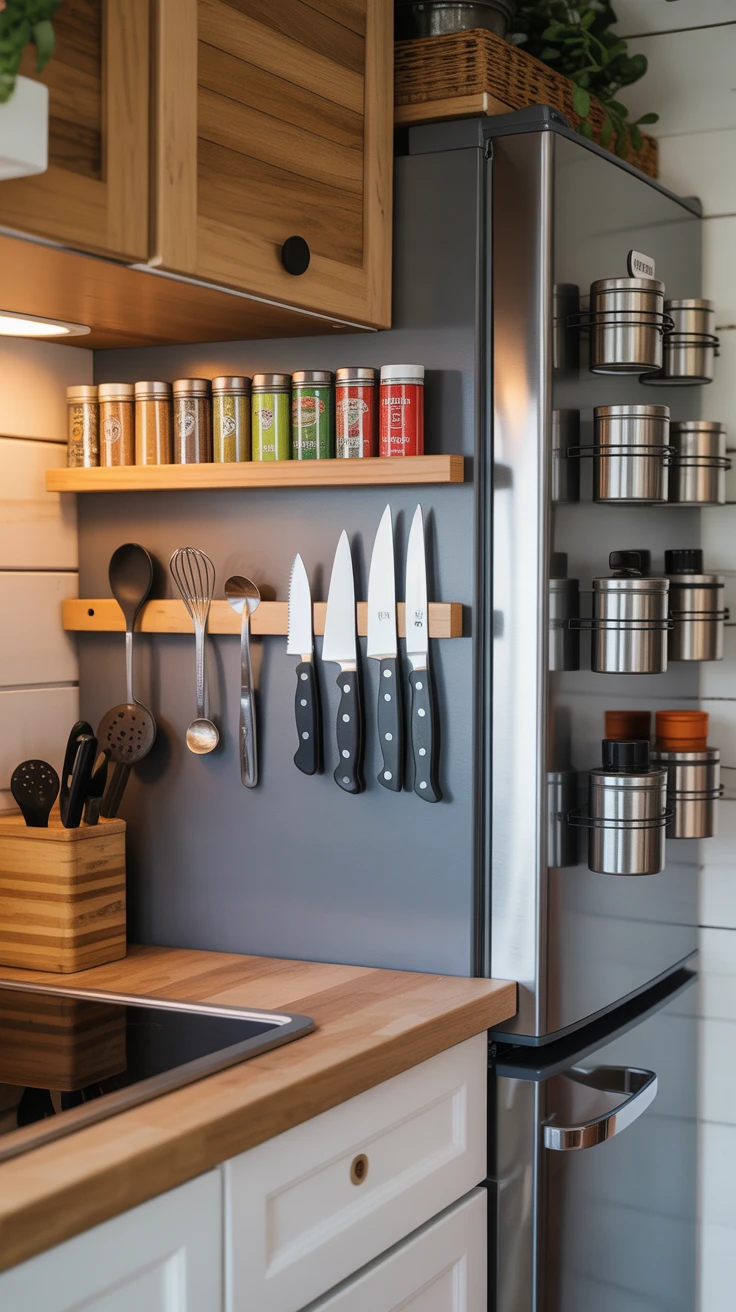
Magnets have become my secret weapon in tiny house organization. Beyond the typical knife strip, magnetic solutions offer versatile storage options for metal items.
I’ve attached magnetic strips to the underside of my upper cabinets to hold spice tins. This keeps my spices visible and accessible without taking up precious drawer or counter space. Metal containers with magnetic backs can also be attached to any steel surface in your kitchen.
One of my more creative solutions was adding a thin sheet of metal to the side of my refrigerator, creating a magnetic board for holding recipes, measuring spoons, and even lightweight metal containers.
5. Vertical Space Utilization
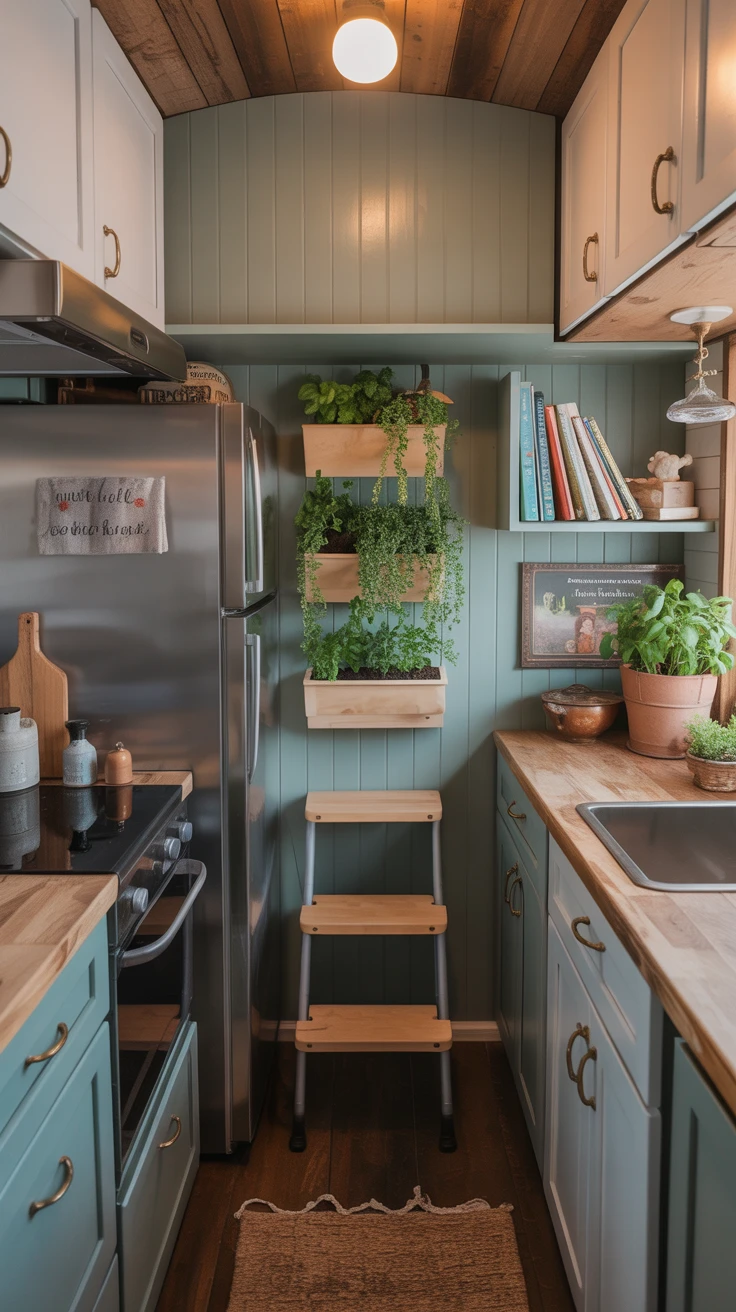
In tiny house kitchens, thinking vertically isn’t optional—it’s essential. I’ve maximized my vertical space by installing cabinets that reach all the way to the ceiling.
The highest shelves store items I use seasonally or infrequently (like my turkey roasting pan that only comes out for Thanksgiving). For daily access to these higher areas, I keep a decorative folding step stool that tucks neatly between the refrigerator and counter.
Don’t forget about the vertical space on the sides of cabinets too. I’ve installed narrow shelves on the exposed side of my refrigerator cabinet for cookbooks and a small herb garden.
Pro Tip: Use shelf risers inside cabinets to double your storage capacity by creating two levels of storage in the same space.
6. Under-sink Organization
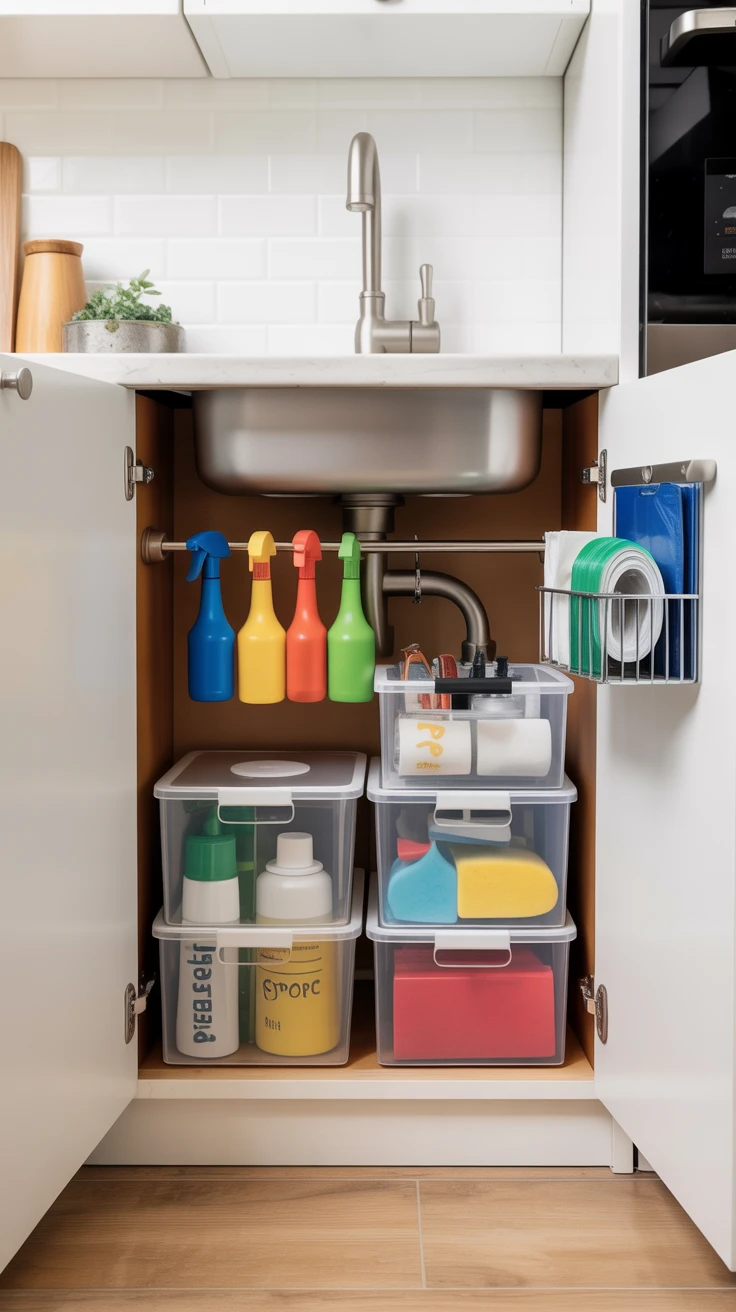
The space under the sink is often underutilized, but with the right approach, it can provide substantial storage. In my tiny house, I’ve installed a tension rod across the cabinet to hang spray bottles, freeing up the bottom for stackable bins.
I use clear plastic bins with handles that can be easily pulled out to access items in the back. One contains cleaning supplies, another holds extra sponges and dishwashing items, and a third stores backup kitchen essentials.
Don’t forget to use the inside of the cabinet door too—a small rack here is perfect for storing aluminum foil, plastic wrap, and sandwich bags.
7. Foldable and Collapsible Items
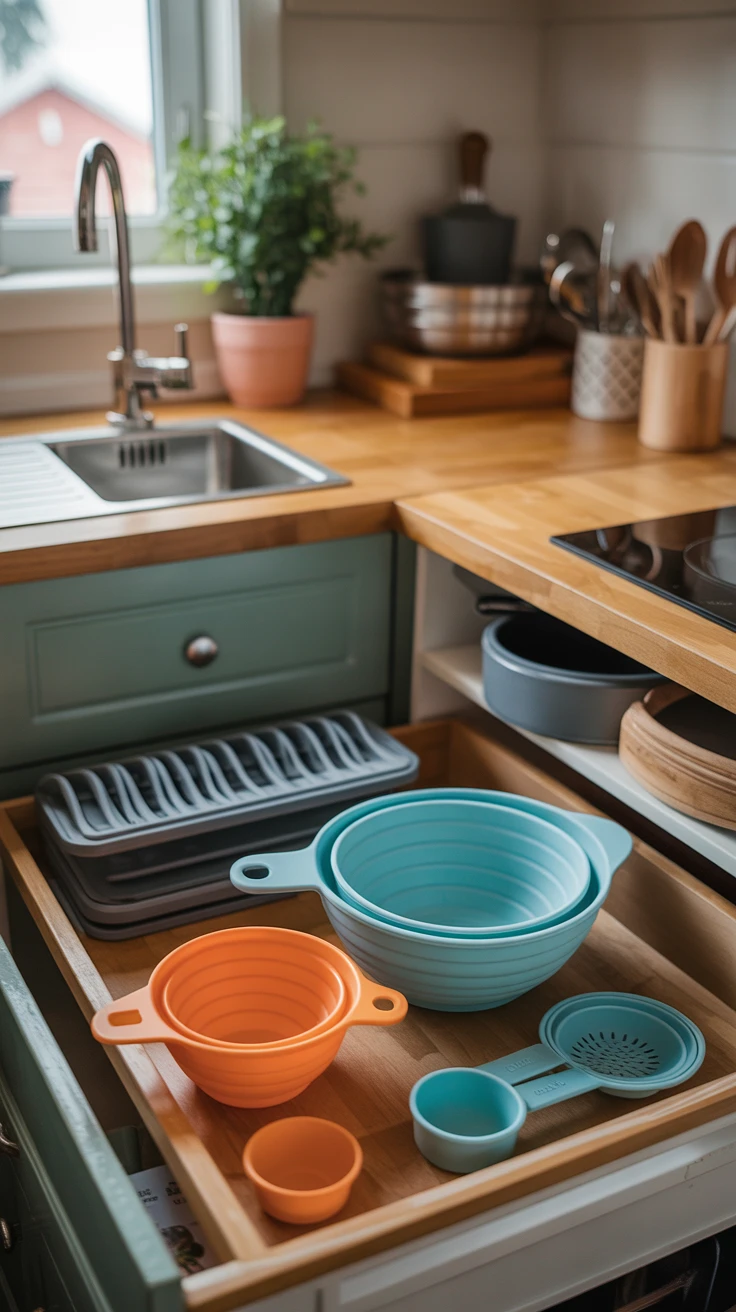
One of my early tiny house mistakes was bringing full-sized kitchen tools into my compact space. I’ve since replaced many items with collapsible versions:
- Silicone collapsible measuring cups and colanders
- Nesting mixing bowls that stack into a single unit
- Foldable dish rack that can be stored flat when not in use
- Expandable cutlery trays that adjust to fit drawer dimensions
These space-saving alternatives perform just as well as their rigid counterparts but take up a fraction of the storage space. My collapsible silicone funnel has been particularly useful—it flattens to the thickness of a pancake when stored.
Pro Tip: When purchasing new kitchen items for your tiny house, always ask yourself: “Can this be stored flat or nested with other items?”
8. Smart Cabinetry
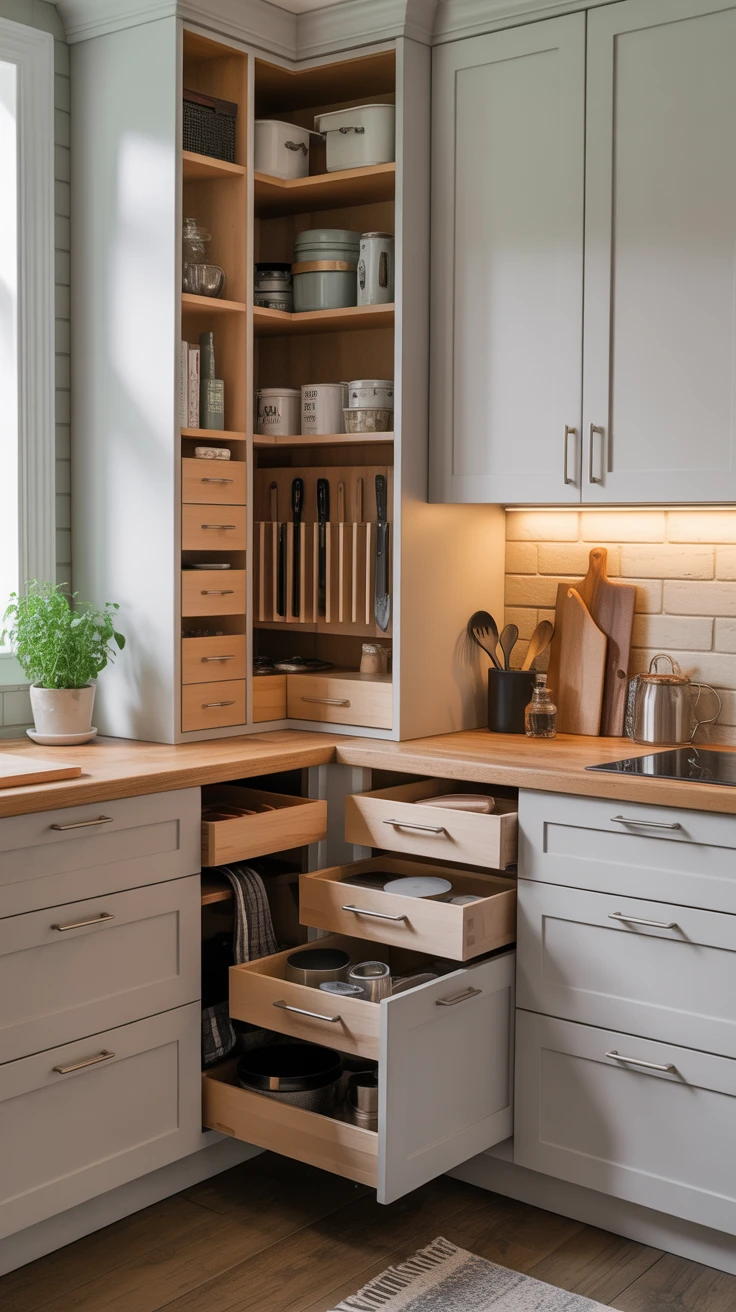
When designing my tiny house kitchen storage, I invested in custom cabinetry with built-in organizers. While this was initially more expensive, the space efficiency has been worth every penny.
My corner cabinet features a lazy Susan that makes use of otherwise inaccessible space. Pull-out drawers with dividers keep utensils organized, and a special drawer with vertical dividers stores cutting boards and baking sheets upright.
If custom cabinets aren’t an option, you can retrofit existing cabinets with pull-out wire baskets, drawer organizers, and corner optimizers available at most home improvement stores.
9. Door-mounted Racks
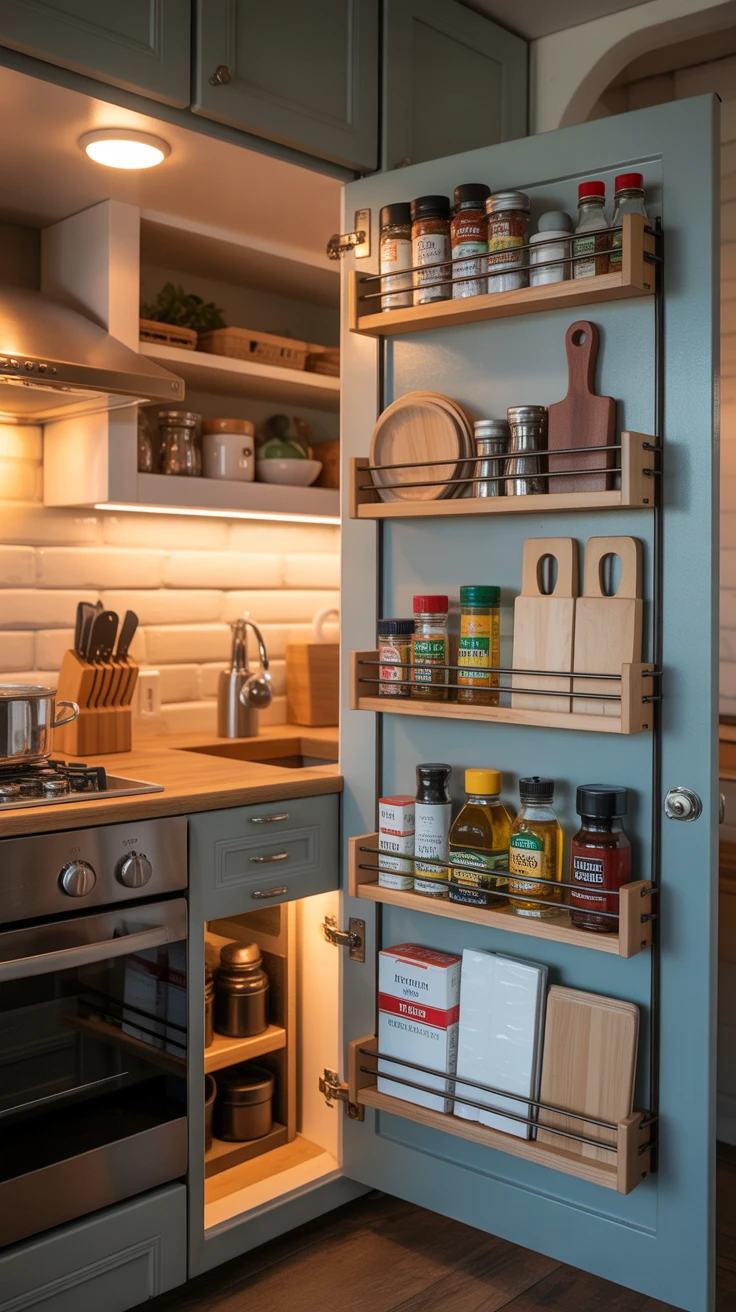
Cabinet doors offer valuable real estate in a tiny kitchen. I’ve installed narrow racks on the inside of mine to store spices, oils, and small pantry items. This keeps these frequently used items accessible without taking up shelf space.
For lower cabinets, door-mounted racks can hold cleaning supplies, cutting boards, or even pot lids. The key is choosing racks that are slim enough to allow the door to close properly.
My favorite door-mounted solution is a small rack that holds my aluminum foil, plastic wrap, and parchment paper boxes, with a built-in cutter for each.
10. Open Shelving Concepts
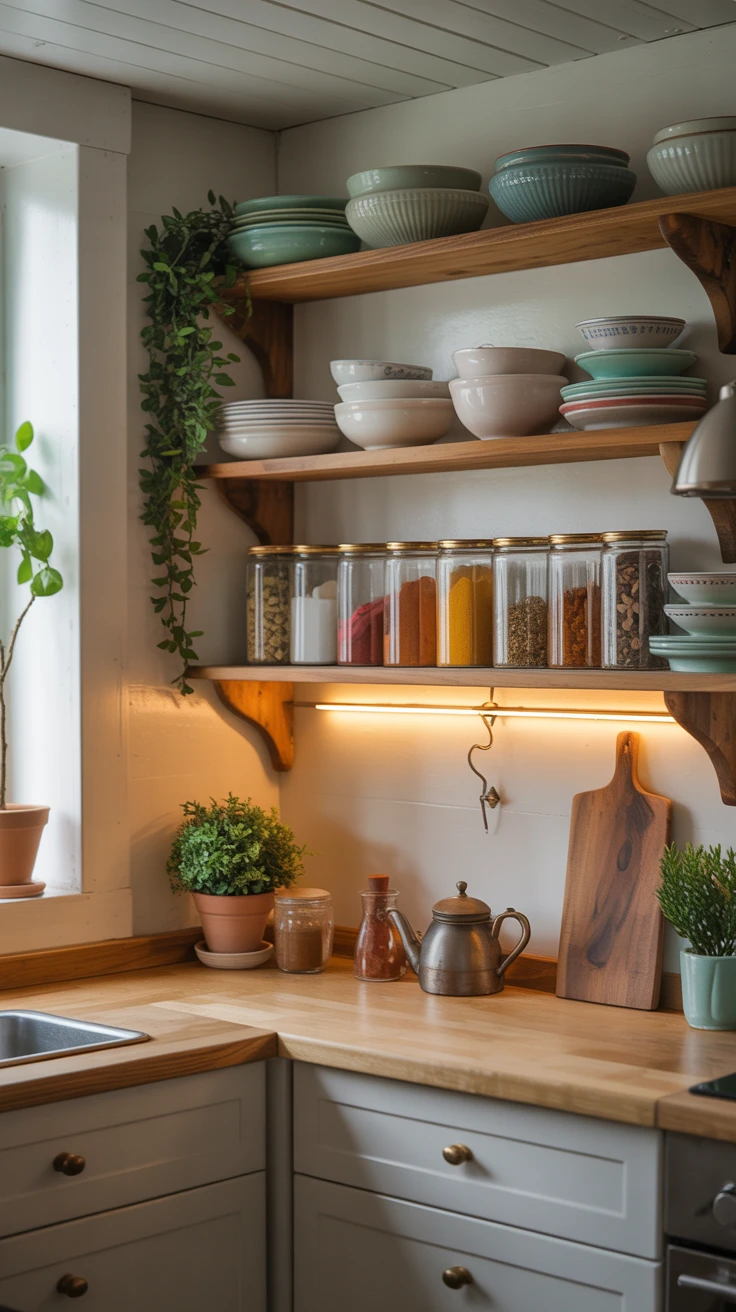
While conventional wisdom suggests closed cabinets for tiny spaces, I’ve found that strategic open shelving actually makes my kitchen feel larger and more accessible.
I use open shelves for items I access daily: dishes, glasses, and frequently used ingredients in attractive containers. This eliminates the need to open and close cabinet doors in an already tight space and creates a more open feel.
The trick is to keep open shelves meticulously organized and not overcrowded. I limit mine to two items deep and use matching containers for a cohesive look.
Pro Tip: Display your most attractive kitchenware on open shelves and keep less aesthetically pleasing items behind closed doors.
11. Compact Appliance Storage
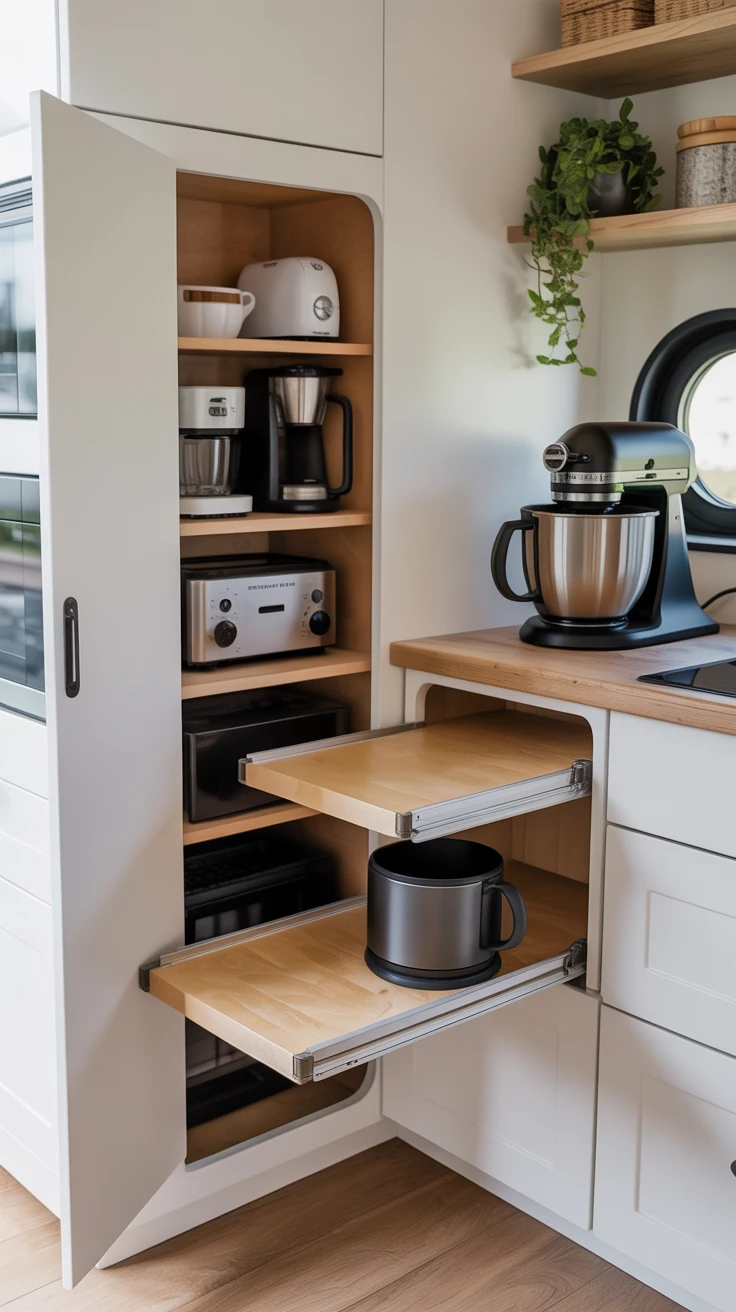
Appliances can quickly consume counter space in a tiny kitchen. I’ve created a dedicated appliance garage—a cabinet with a retractable door where I keep my coffee maker, toaster, and blender plugged in but out of sight when not in use.
For larger appliances like my stand mixer, I’ve installed a heavy-duty pull-out shelf at counter height. This allows me to use the mixer in place without lifting it, then slide it away when finished.
I’ve also invested in multi-functional appliances where possible. My Instant Pot has replaced my rice cooker, slow cooker, and pressure cooker—three appliances condensed into one footprint.
12. Pro Tips for Tiny House Kitchen Storage
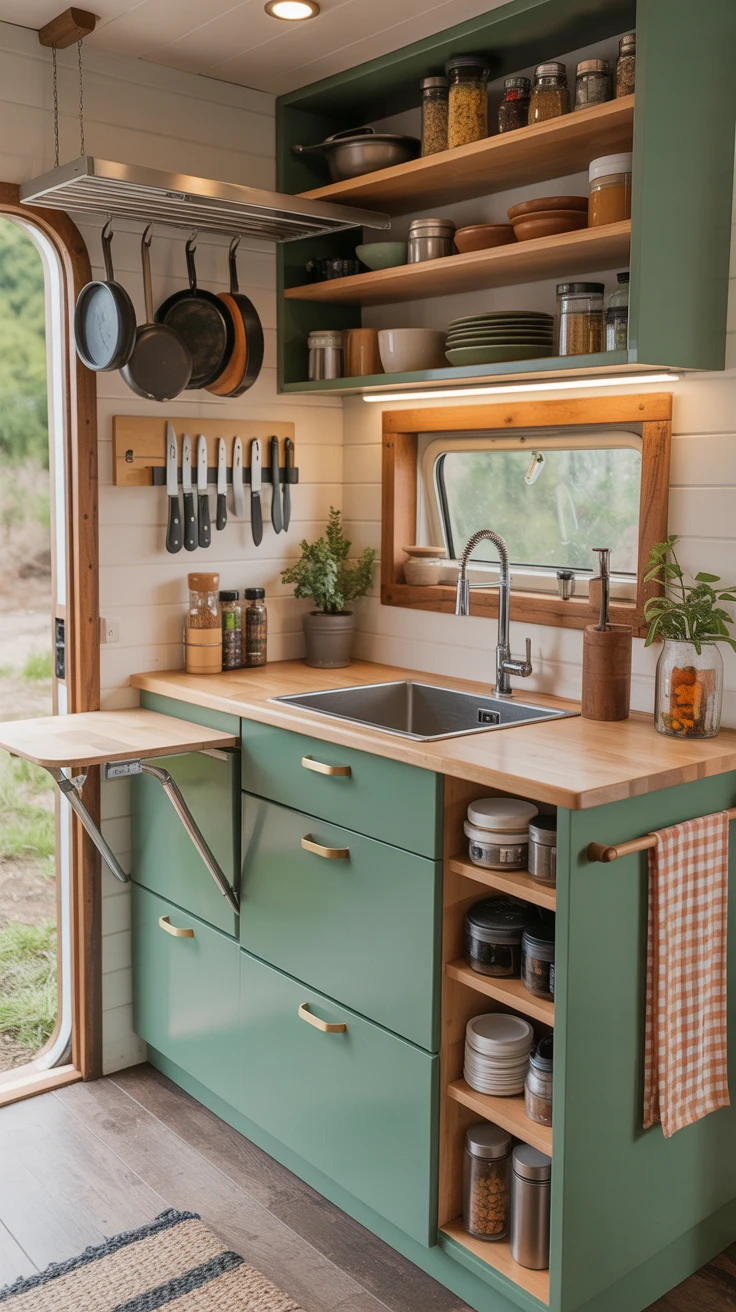
After years of tiny house living, I’ve developed some additional strategies that have made a significant difference:
- Rotate seasonal items: Store summer canning equipment and holiday bakeware in labeled bins under the bed or in other areas of your tiny house when not in use.
- Use clear containers: Transfer dry goods into stackable, clear containers to eliminate bulky packaging and easily see when supplies are running low.
- Implement the one-in-one-out rule: For every new kitchen item you bring in, remove something else to prevent accumulation.
- Digitize recipes: Instead of keeping cookbooks, transfer favorite recipes to a digital device to save precious shelf space.
- Choose multi-tasking tools: Prioritize tools that serve multiple purposes, like a microplane that works for zesting, grating cheese, and mincing garlic.
Remember that tiny house kitchen storage is an evolving process. What works during one season of life might need adjustment during another. Be flexible and willing to rethink your systems as your needs change.
Frequently Asked Questions
How can I make my tiny house kitchen feel more spacious?
Use light colors for cabinets and walls, maximize natural light, install mirrors to create the illusion of space, and keep countertops clear of clutter. Vertical storage and consistent organization systems also help create a sense of openness.
What are the best appliances for a tiny house kitchen?
Look for compact, multi-functional appliances like combination microwave-convection ovens, two-burner induction cooktops, and apartment-sized refrigerators. Consider whether you truly need specialized appliances like rice cookers or if you can accomplish the same tasks with more versatile tools.
How do I organize a tiny kitchen with no pantry?
Create pantry space using pull-out cabinets, over-the-door organizers, or dedicated drawers. Use vertical space with tall, narrow cabinets, and consider using space in other areas of your tiny house for non-perishable food storage. Clear containers that stack efficiently can maximize whatever storage space you do have.
What’s the quickest way to declutter a tiny kitchen?
Start by removing duplicate items and tools you haven’t used in the past year. Digitize recipes, transfer dry goods to space-saving containers, and eliminate single-purpose gadgets in favor of multi-functional tools. Consider whether you really need specialized items like a garlic press when a knife can do the same job.
How often should I reorganize my tiny house kitchen?
I recommend a quick reassessment every three months and a more thorough reorganization annually. As your cooking habits evolve, so should your storage solutions. Pay attention to items that are difficult to access or areas that accumulate clutter—these are signs that your current system needs adjustment.
