Introduction
When it comes to home organization, making the most of every inch of space is essential. One often overlooked area with tremendous potential is the space beneath your staircase. I’ve spent years helping clients transform these awkward nooks into functional storage solutions, and I’m convinced that under stairs storage is one of the smartest ways to maximize your home’s square footage.
Whether you live in a spacious house or a compact apartment, the area beneath your stairs represents valuable real estate that’s frequently wasted. I’ve seen firsthand how converting this space can not only reduce clutter but also add character and functionality to your home. Let me share ten creative and practical under stairs storage ideas that I’ve implemented with great success.

- Adjustable louvered roof lets you control sun, shade, and airflow.
- Built-in gutter system keeps the area dry during rain.
- Durable powder-coated aluminum frame resists rust and weather.
- Includes waterproof curtains and mosquito netting for privacy and protection.
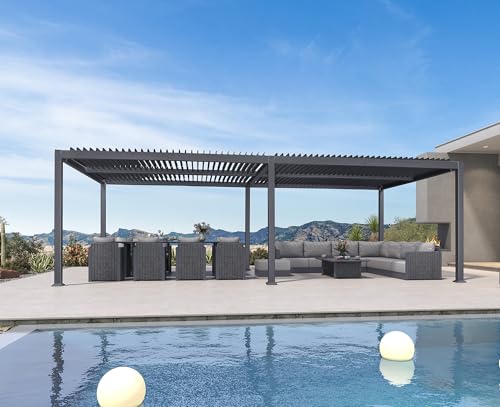
- Smooth contours and seamless design
- Up to 325 square feet of shaded paradise
- Features 4.53×4.53 inch reinforced columns
- Say goodbye to water buildup woes! Our innovative drainage system of this hardtop pergola discreetly whisks away excess water
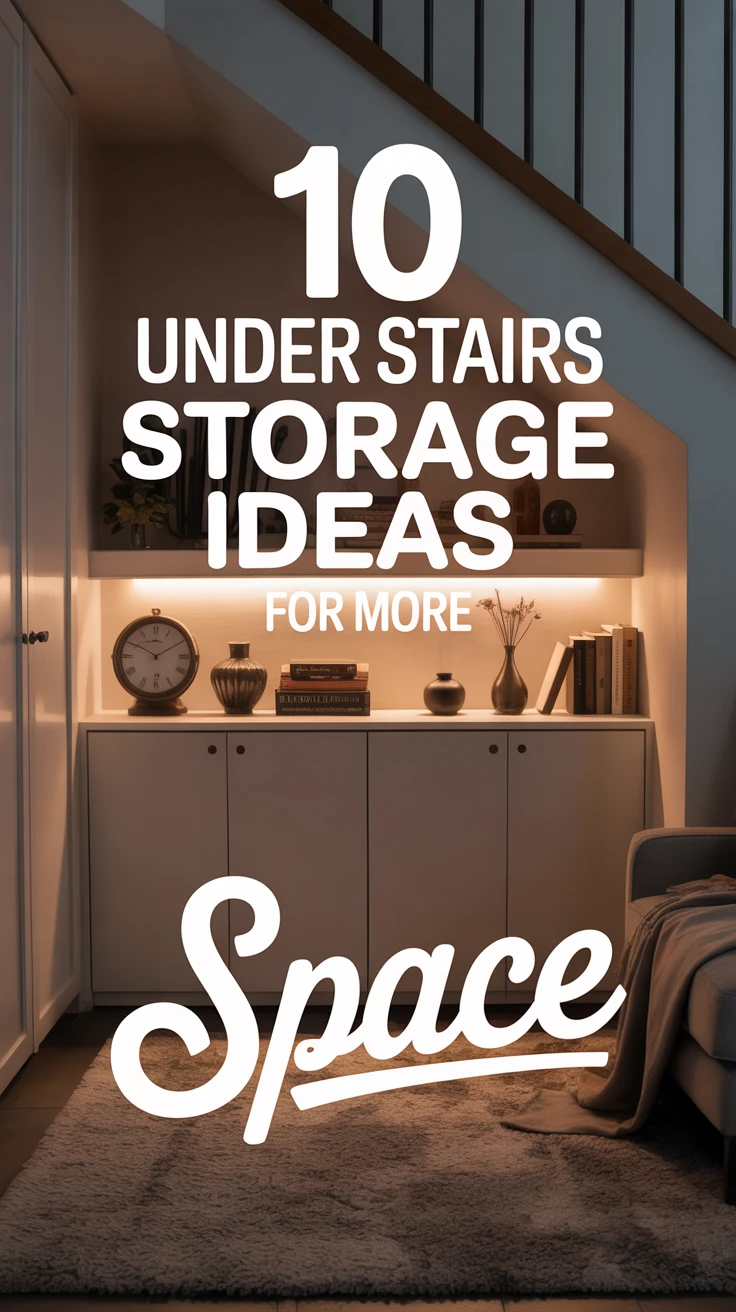
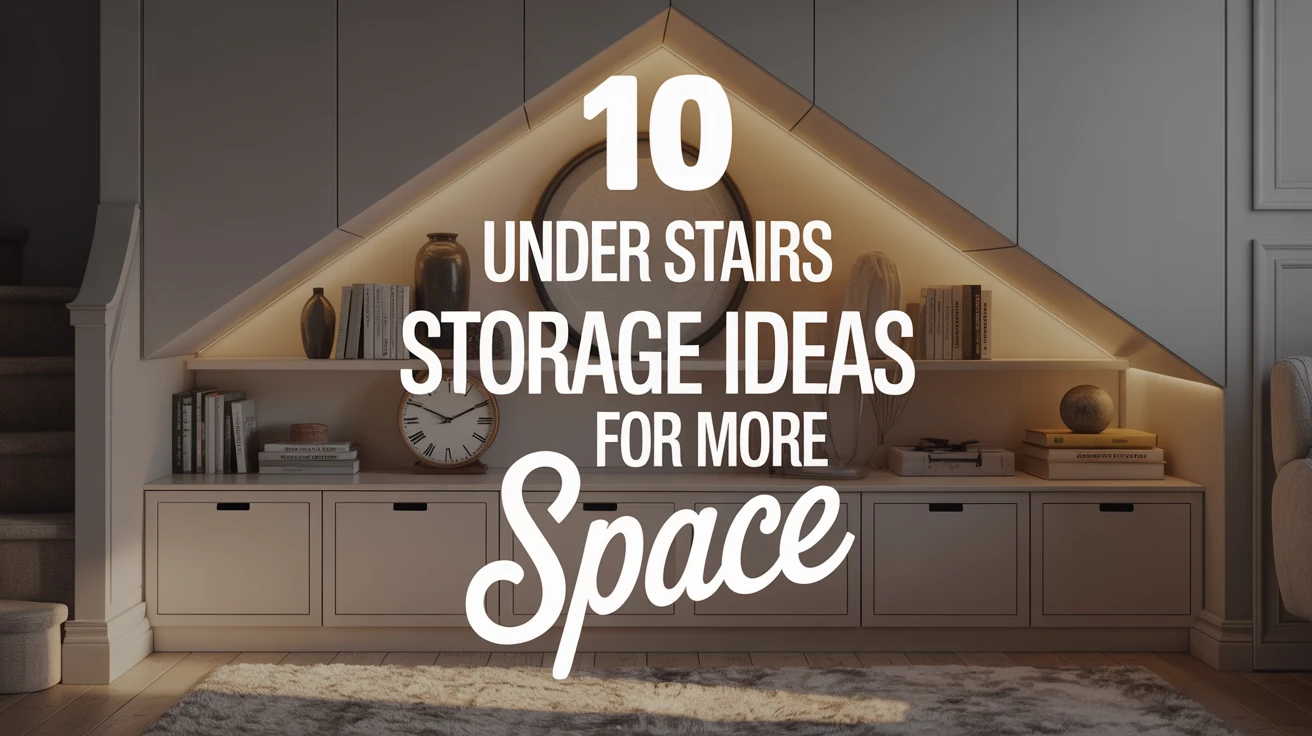
1. Built-in Cabinets
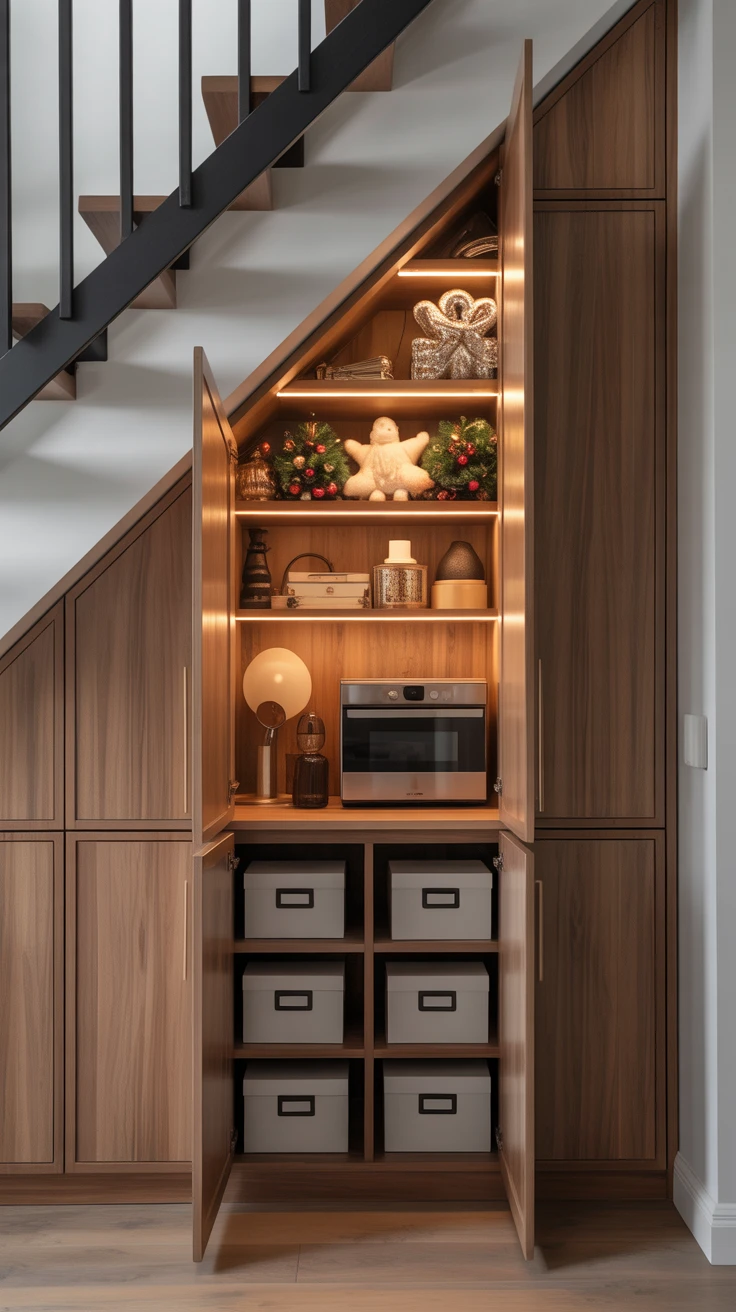
Custom built-in cabinets are perhaps the most versatile under stairs storage solution I’ve recommended to clients. These seamlessly integrate with your existing décor while providing substantial hidden storage space.
When I renovated my own home, I opted for floor-to-ceiling cabinets with adjustable shelving inside. This flexibility allows me to store everything from holiday decorations to rarely-used kitchen appliances. The beauty of built-ins is that they can be designed to match your home’s aesthetic perfectly.
- Consider push-to-open mechanisms for a sleek, handle-free look
- Install integrated LED lighting to illuminate the contents
- Use the deepest part of the under-stairs area for bulky, less frequently used items
Pro Tip: When designing built-in cabinets, create a detailed inventory of what you plan to store first. I once made the mistake of not measuring my largest items, resulting in shelves that were an inch too short for my document boxes!
2. Pull-out Drawers
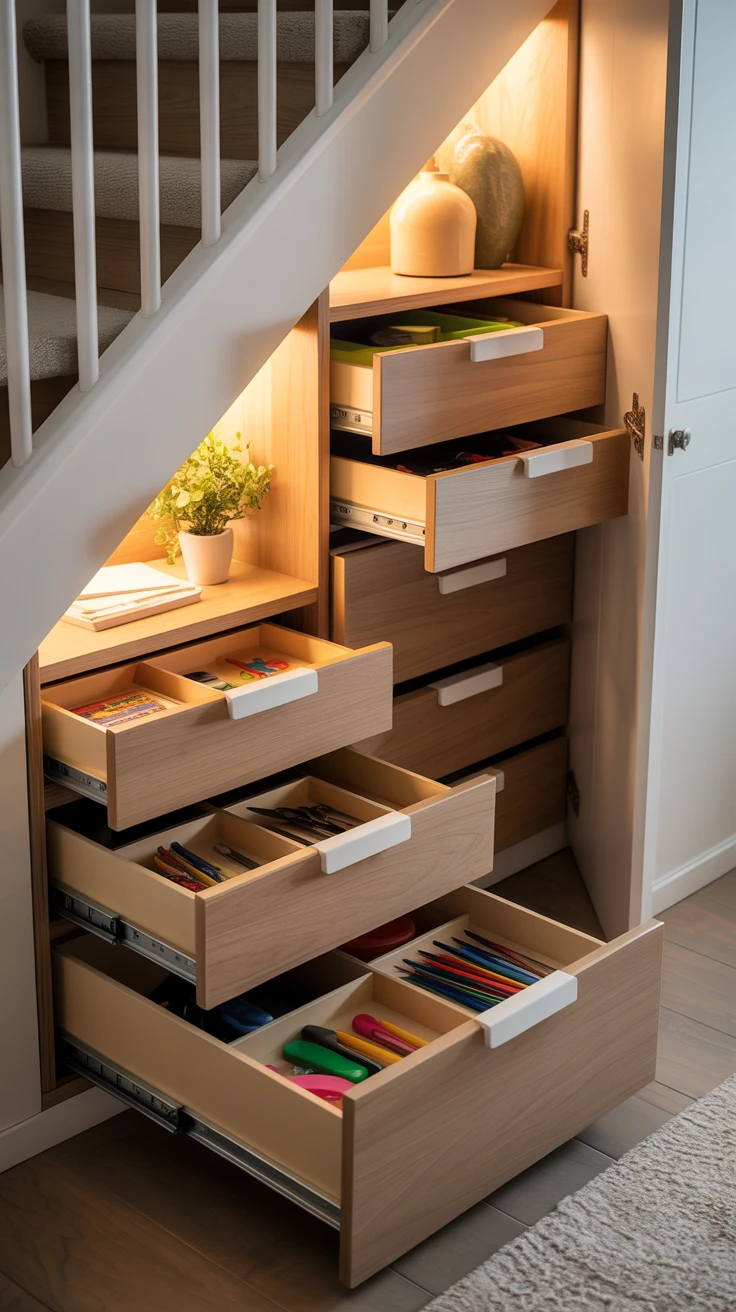
For maximum accessibility, pull-out drawers are my go-to recommendation. Unlike standard cabinets where items at the back become difficult to reach, drawers allow you to access the entire contents with ease.
I’ve installed these for clients with varying needs—from a family storing children’s art supplies to a couple who needed organized space for their extensive collection of tools. The key is to use quality slides that can support substantial weight.
- Opt for full-extension drawer slides for complete access
- Include dividers to keep smaller items organized
- Consider soft-close mechanisms to prevent slamming
Pro Tip: Install drawers of different heights to accommodate various items. I use shallow drawers for office supplies and deeper ones for bulkier items like winter blankets.
3. Book Nook
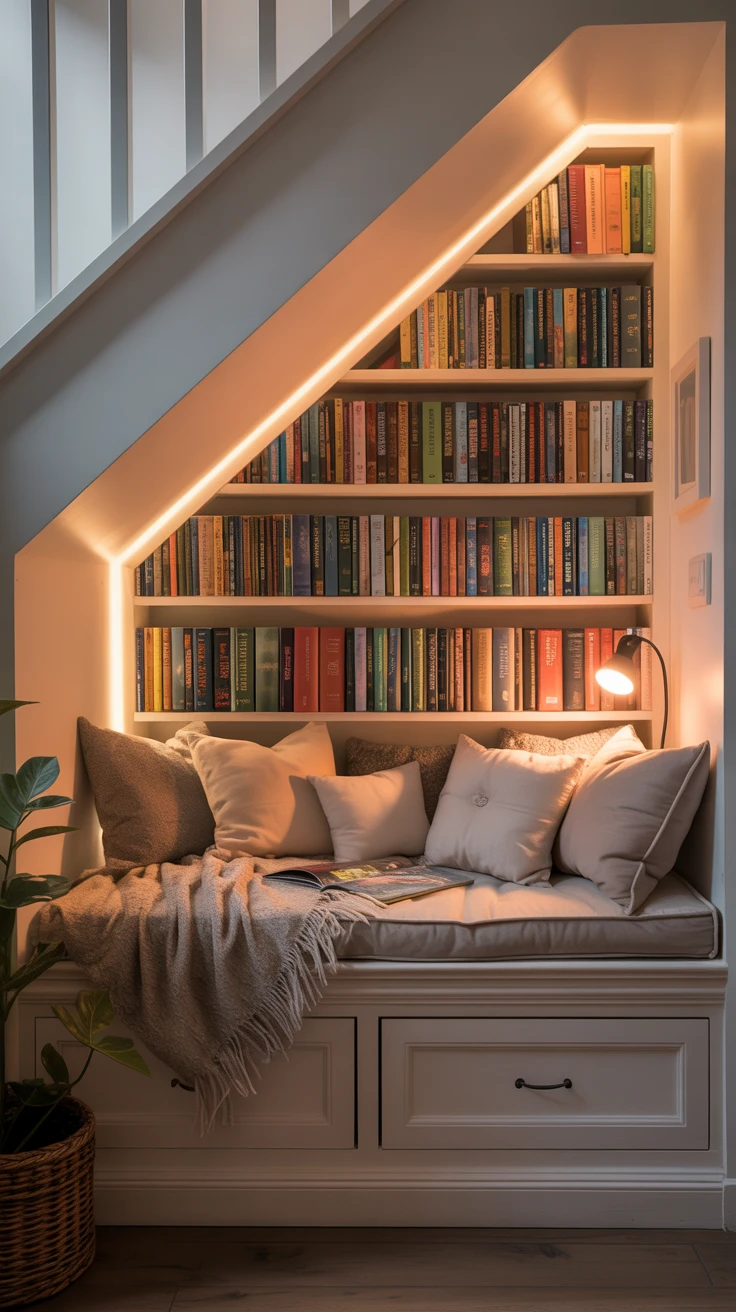
One of my favorite transformations involved turning an under-stairs space into a cozy reading nook. This solution combines storage with functionality, creating a dedicated area for literary escape.
The project involved building bookshelves along the walls and adding a comfortable window-seat style bench with storage underneath. My client, an avid reader, now has a special place to display her collection and enjoy her books.
- Include adjustable shelving to accommodate books of different sizes
- Add a cushioned seat with hinged storage beneath
- Install a small reading lamp or LED strip lighting
I’ve found that this idea works particularly well in family homes, where both children and adults appreciate having a quiet retreat for reading.
4. Wine Cellar
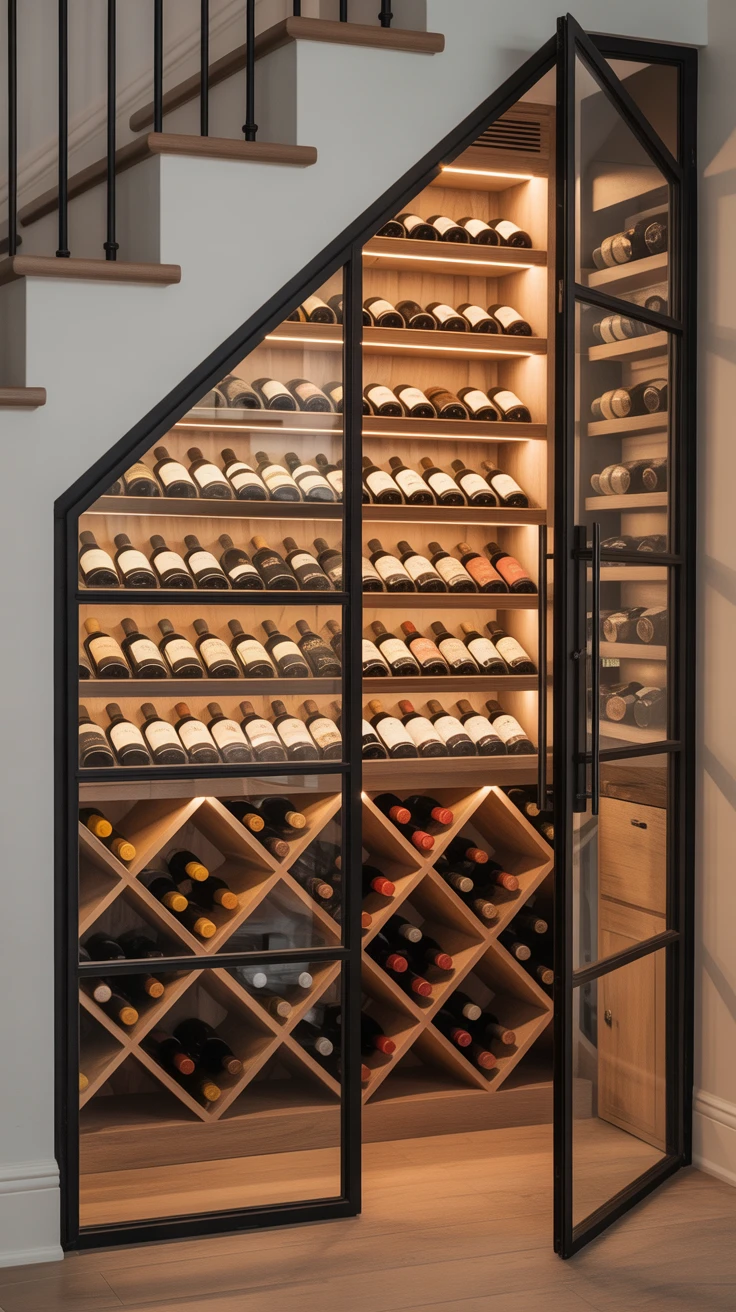
For wine enthusiasts, the space under the stairs offers ideal conditions for storage. The naturally cooler temperature and limited light exposure create a perfect environment for preserving your collection.
I converted my own under-stairs area into a wine cellar by installing diagonal bottle racks that maximize capacity while displaying labels attractively. The transformation was relatively simple but added significant value to my home.
- Use wooden or metal wine racks designed for diagonal bottle storage
- Consider a small cooling unit if temperature control is important
- Add glass doors and display lighting for a sophisticated look
Pro Tip: If you’re serious about wine storage, invest in a thermometer and hygrometer to monitor conditions. I learned this lesson after storing some special bottles in what turned out to be a slightly too-warm spot.
5. Pet Haven
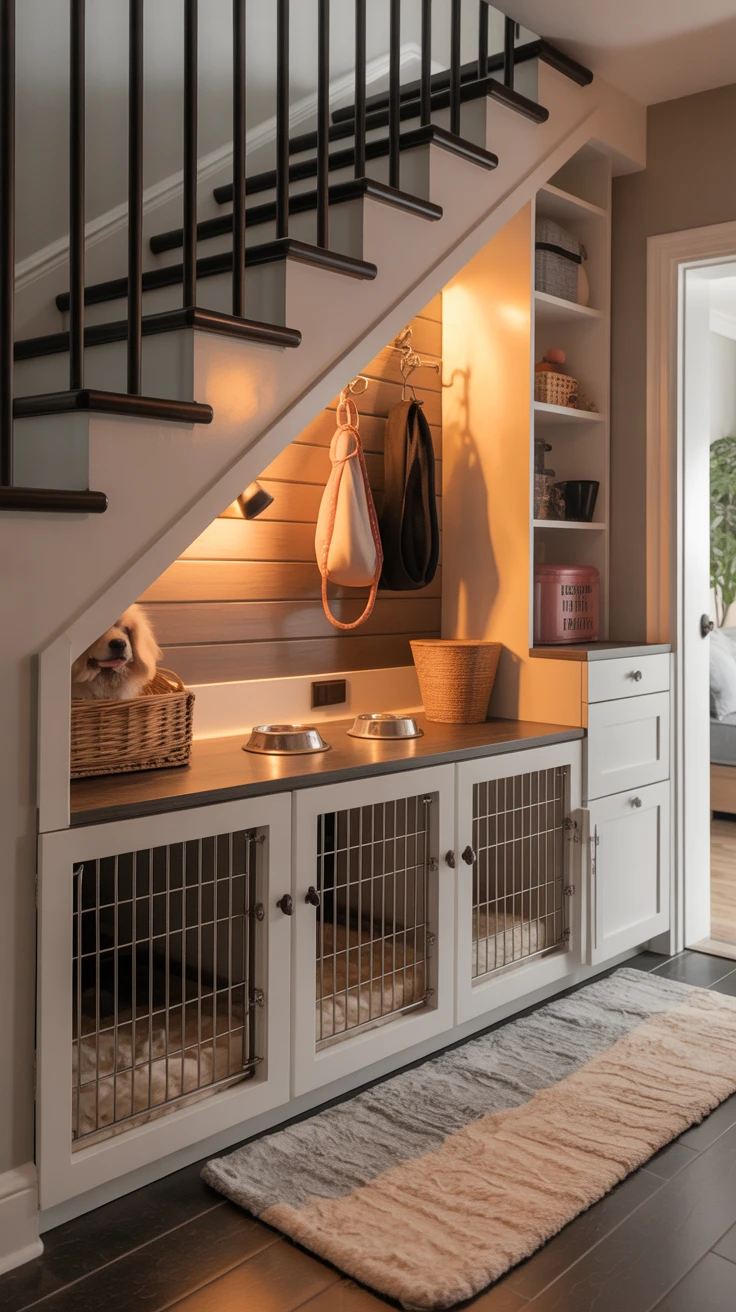
Pet owners often struggle to find space for beds, crates, and supplies. The area under your stairs can become a dedicated pet zone that keeps your furry friends comfortable while containing their belongings.
I recently helped a client with three dogs create a multi-functional pet area. We built custom kennels with comfortable bedding, installed hooks for leashes, and included cabinets for food and toys. The dogs quickly adopted their new space, and the rest of the house became noticeably tidier.
- Design a built-in pet bed or kennel that fits the space
- Include storage for food, treats, and toys
- Consider adding a small feeding station with water and food bowls
This solution works particularly well near entryways, making it convenient to access leashes and towels for post-walk cleanup.
6. Mini Office
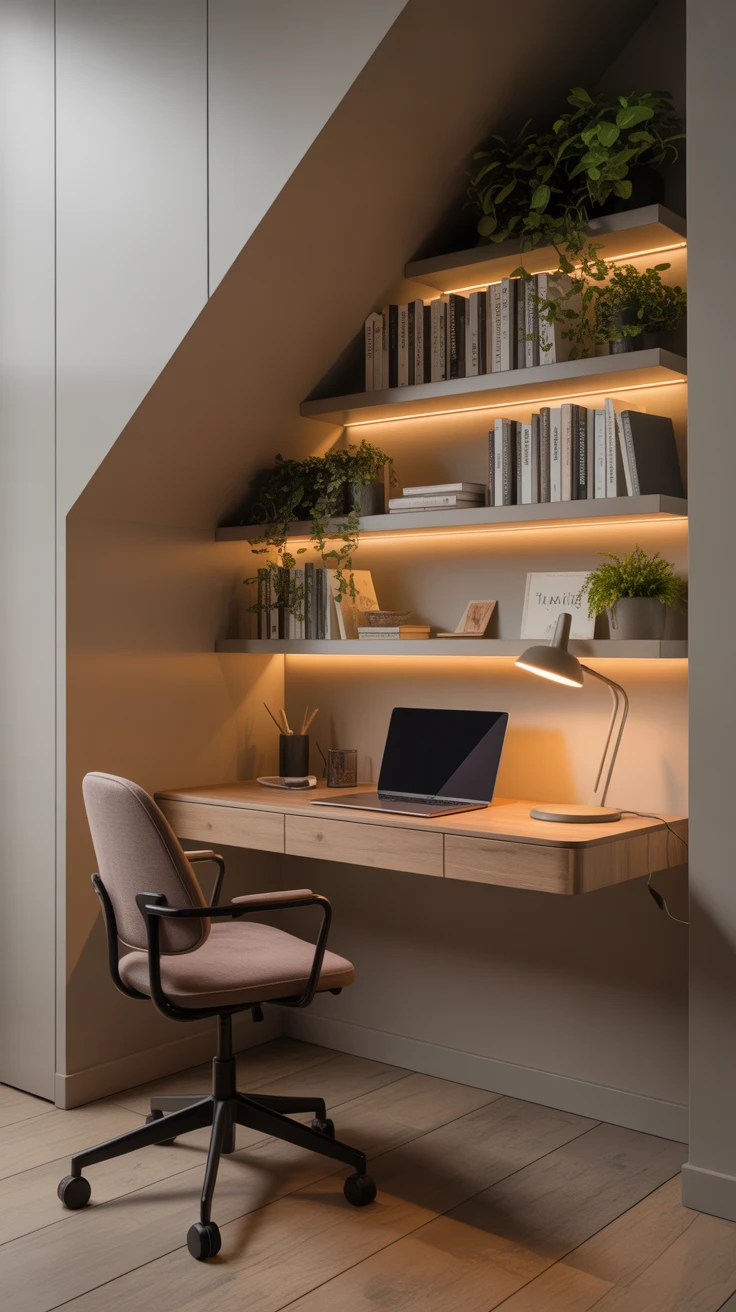
With more people working from home, creating a dedicated workspace has become increasingly important. An under-stairs office nook can provide just enough room for productivity without sacrificing an entire room.
I’ve set up several of these compact workstations, including one in my own home during the pandemic. The key is to include essential elements—a desk surface, task lighting, and storage—while keeping the design streamlined.
- Install a wall-mounted or floating desk to maximize floor space
- Add shelving or cabinets above for office supplies
- Ensure adequate electrical outlets for computer equipment
Pro Tip: Use a wall-mounted monitor and wireless peripherals to maximize desk space. In my own setup, this simple change freed up enough room for a notepad and coffee mug—small details that make a big difference in daily use.
7. Shoe Rack
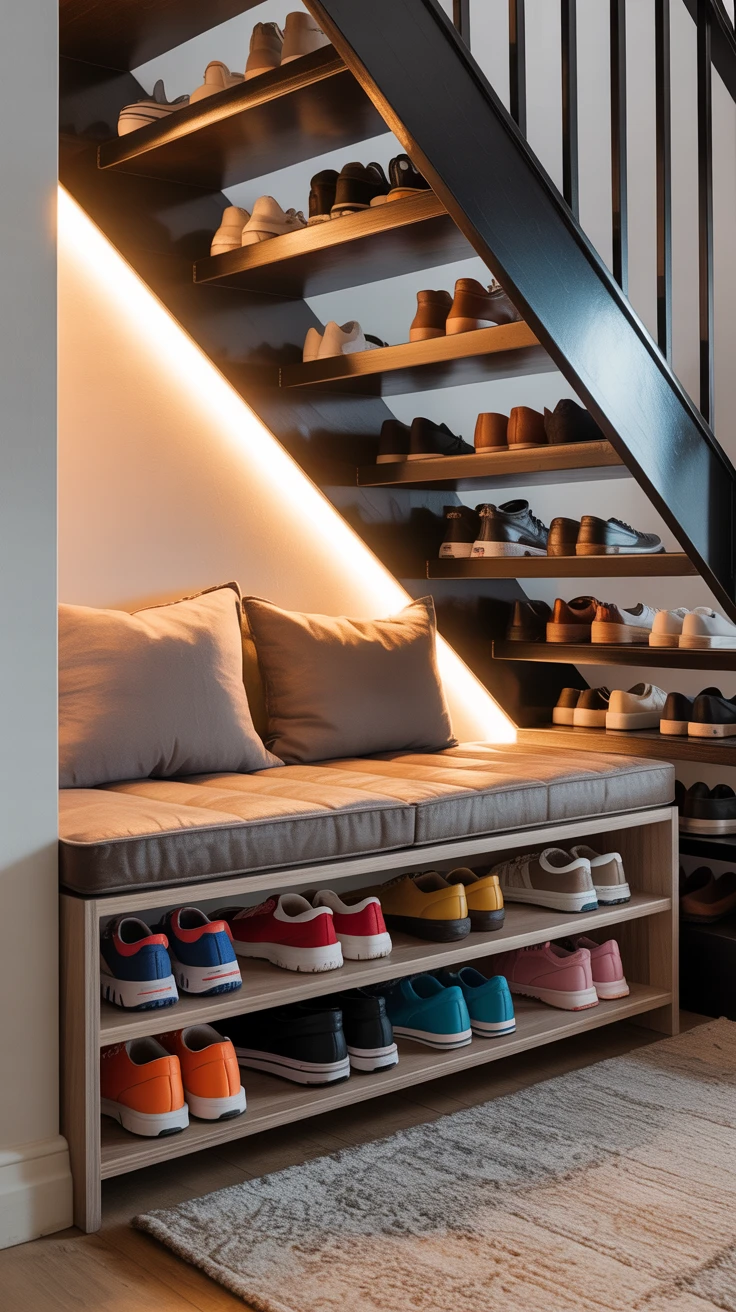
If your staircase is near an entryway, transforming the space underneath into a shoe storage system can help keep your home organized and clutter-free.
I’ve implemented various versions of this idea, from simple open shelving to elaborate pull-out racks. One particularly successful project involved angled shelves that displayed shoes while making them easy to grab on the way out.
- Design shelves at a slight angle to prevent shoes from falling off
- Include taller compartments for boots and high-tops
- Consider adding a bench on top for putting on shoes
This solution has dramatically reduced the “shoe pile” problem in many homes I’ve worked with, creating a more welcoming entrance area.
8. Laundry Station
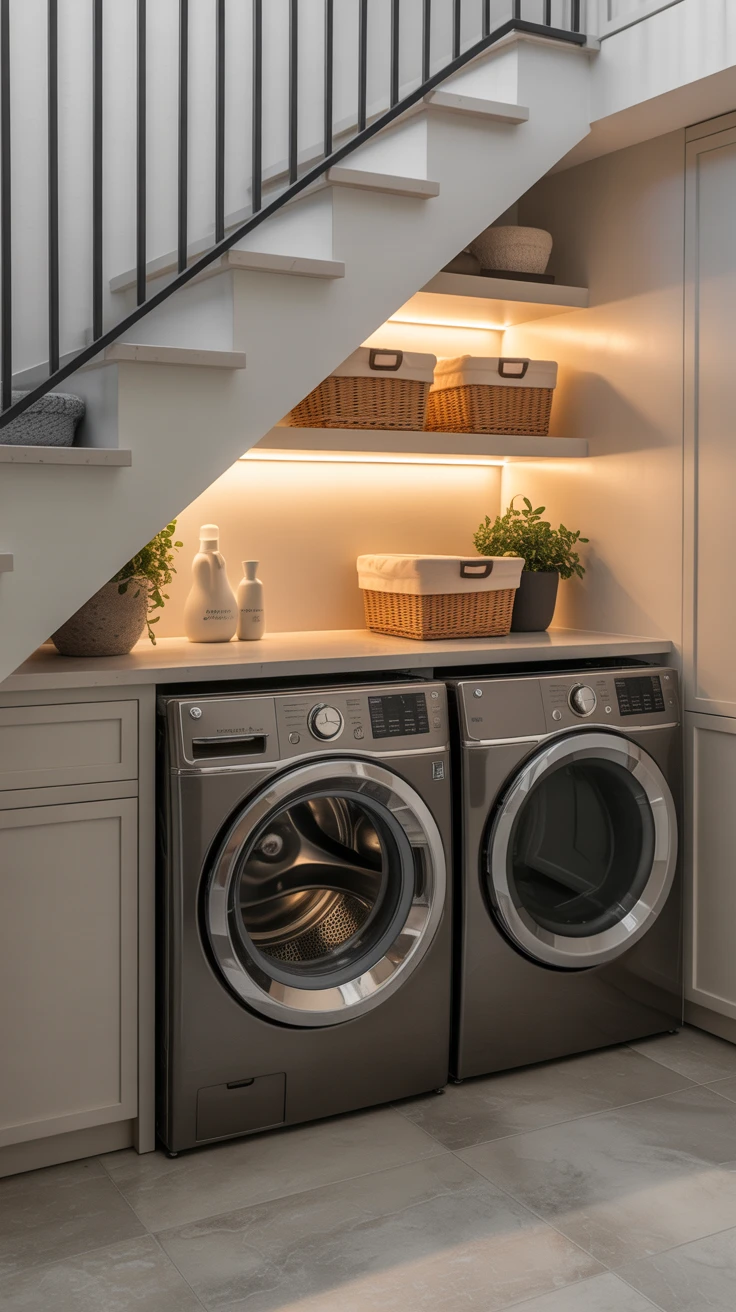
For homes where space is at a premium, tucking laundry appliances under the stairs can be a game-changer. I’ve helped several clients reclaim entire rooms by relocating washers and dryers to this often-unused area.
The project typically involves ensuring proper plumbing and electrical connections, then designing cabinetry around the appliances for detergent, dryer sheets, and other laundry essentials.
- Check with professionals about plumbing and ventilation requirements
- Include a small countertop for folding clothes
- Add cabinets or shelves above for laundry supplies
Pro Tip: If possible, include a pull-out drying rack for delicate items. This addition has saved countless sweaters in my household from accidental shrinking in the dryer.
9. Children’s Play Area
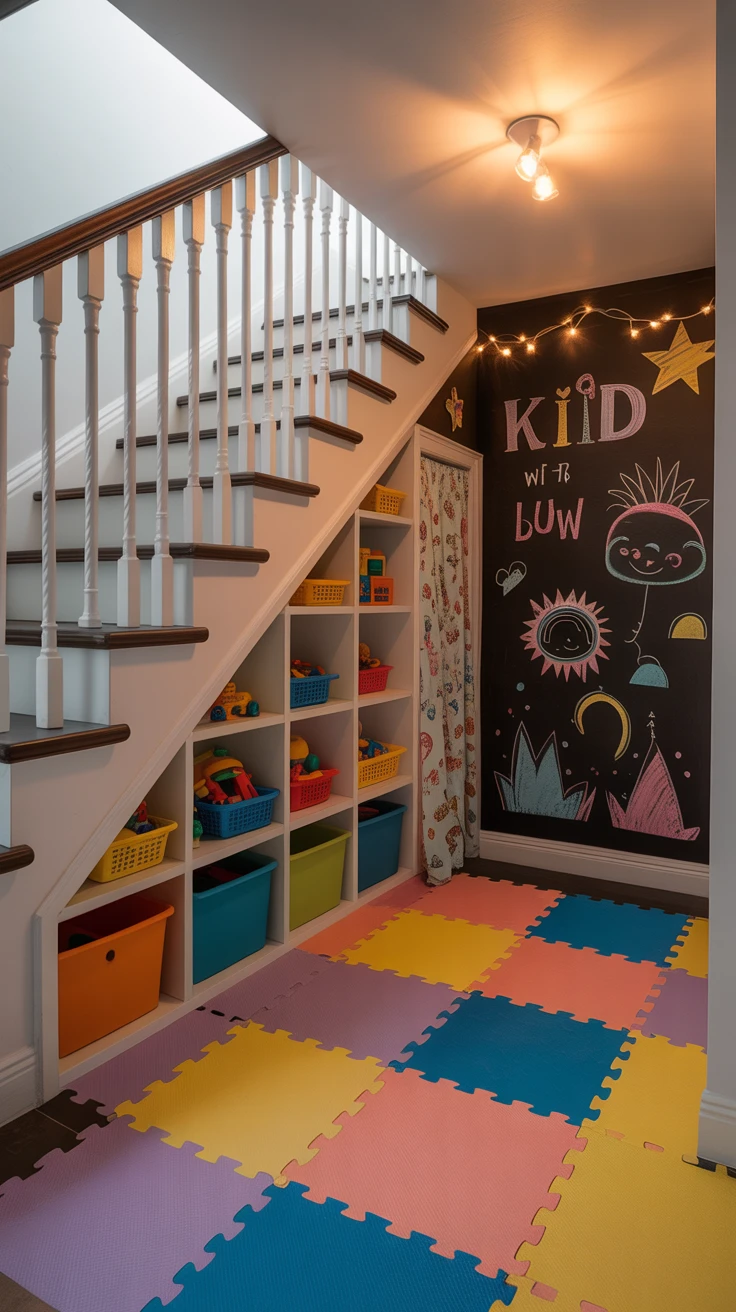
The cozy dimensions of an under-stairs space naturally appeal to children, making it perfect for a dedicated play area. I’ve created several of these “kid caves” that provide a special place for imagination while containing toy clutter.
One of my favorite implementations included colorful cushioned flooring, built-in toy storage, and a chalkboard wall. The children loved having their own special hideaway, and the parents appreciated having toys contained in one area.
- Use soft flooring materials like foam tiles or carpet
- Install low shelves or bins that children can access independently
- Consider a curtain or small door that can close off the space when not in use
This solution works best when the stairs aren’t in a high-traffic area of the home, allowing for uninterrupted play.
10. Green Oasis
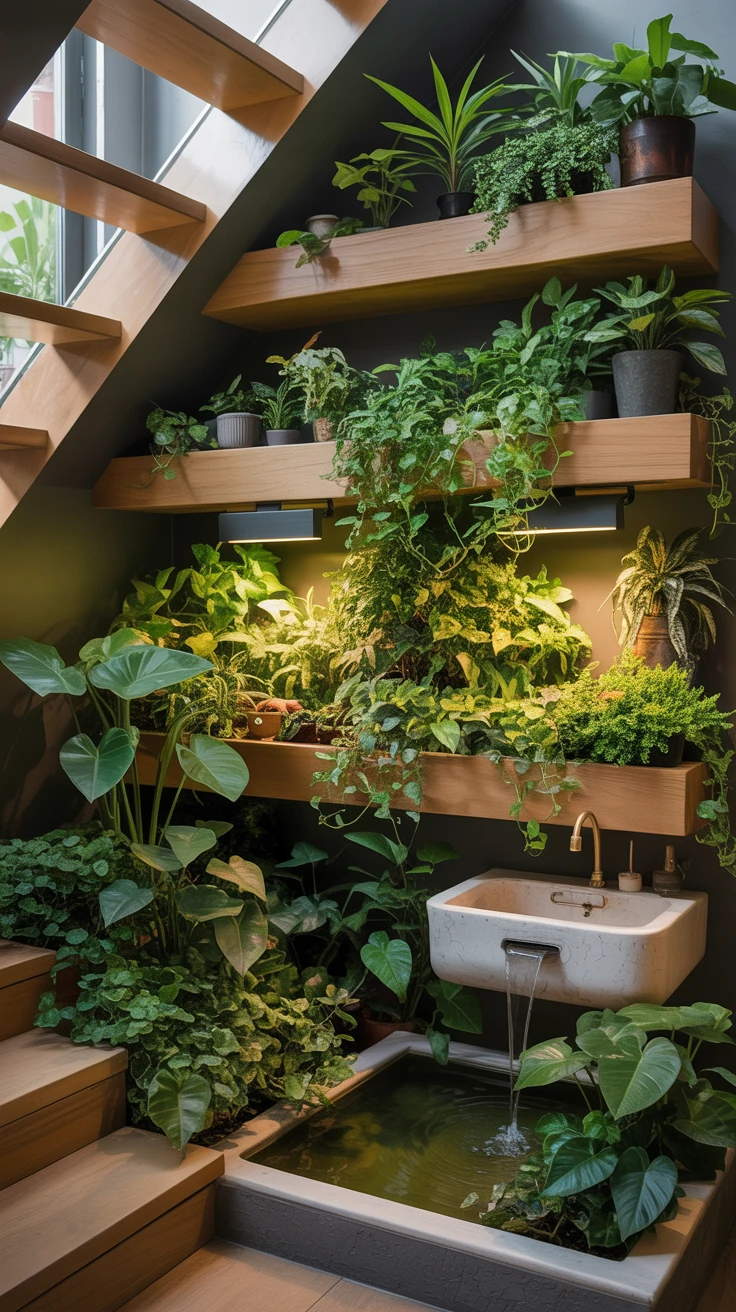
For plant enthusiasts, the area under the stairs can become an indoor garden that adds life and color to your home. I’ve created several of these green spaces, carefully selecting plants that thrive in the specific light conditions of the area.
My own under-stairs plant nook features tiered shelving, grow lights, and a small water feature. It’s become a focal point in my home and provides a surprising sense of tranquility in what was once wasted space.
- Install adjustable shelving to accommodate plants of different heights
- Consider supplemental lighting if natural light is limited
- Include a small watering station or sink if plumbing allows
Pro Tip: Choose plants based on the natural light conditions of your space. In my north-facing stairwell, I’ve had great success with snake plants, pothos, and peace lilies—all of which tolerate lower light levels.
Conclusion
The space under your stairs represents untapped potential in your home. Whether you need practical storage, a functional workspace, or a creative nook, there’s an under stairs storage solution that can transform this overlooked area into one of the most useful spaces in your house.
I’ve implemented these ideas in homes of all sizes and styles, and the results are always transformative. Not only do these solutions add valuable storage, but they also contribute to a more organized, personalized living environment. Which of these ideas will you try in your home?
Frequently Asked Questions
How do I measure the space under my stairs for storage solutions?
Start by measuring the height at both the tallest and shortest points, the width across the back wall, and the depth from front to back at several points. I recommend creating a paper template or using masking tape on the floor to visualize the footprint before building or purchasing any storage solutions.
What materials are best for durable under-stairs storage?
For built-in solutions, I typically recommend hardwood plywood with solid wood facing for a balance of durability and cost-effectiveness. MDF is another option if you’re planning to paint the finished product. For areas with moisture concerns (like laundry stations), consider moisture-resistant materials or proper sealing.
Can under-stairs storage ideas be adapted for renters?
Absolutely! I’ve helped renters implement non-permanent solutions like freestanding bookcases, decorative screens with storage behind them, and modular cube systems. Even temporary adhesive hooks can create functional storage without damaging walls. Just be sure to check your lease agreement before making any modifications.
How can I ensure adequate lighting for my under-stairs storage?
Lighting is crucial for functional storage. I typically recommend a combination of ambient lighting (like recessed ceiling fixtures) and task lighting (such as battery-operated puck lights or LED strips). Motion-activated options work well for areas you access briefly, while reading nooks or offices benefit from adjustable lighting you can control.
What is the average cost of installing custom under-stairs storage?
Based on my experience, custom under-stairs solutions typically range from $500-$1,000 for DIY projects using quality materials, to $1,500-$5,000+ for professional installations, depending on complexity, materials, and features like lighting or specialized hardware. Simple solutions like shelving can be quite affordable, while complete built-ins with drawers and specialty features represent a more significant investment.